Opinion Cyprus
The Falklands ruling, the Law of the Sea and Turkey: lessons for Greece and Cyprus
The Hamburg tribunal's November 28 order seems a distant South Atlantic matter, but it shows what a court can and cannot do when a maritime dispute hides a dispute over land.

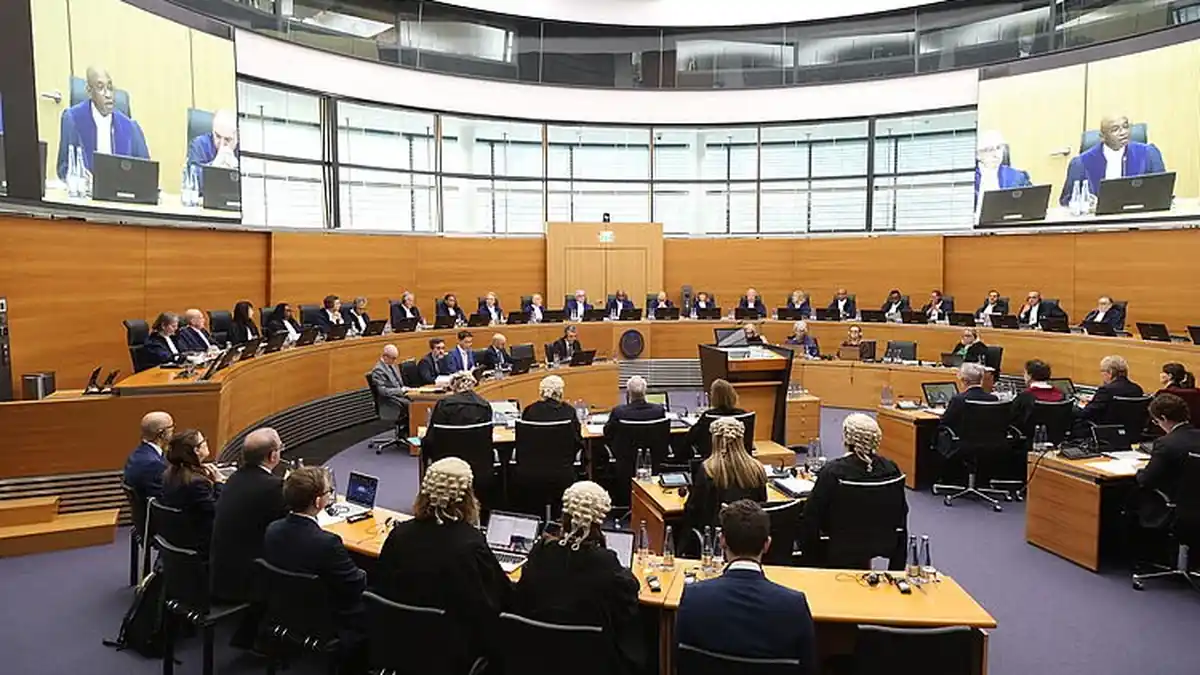
The International Tribunal for the Law of the Sea in Hamburg (file image).
The decision of the International Tribunal for the Law of the Sea (ITLOS) to reject Argentina’s request over Falklands oil seems a matter of the distant South Atlantic. For Greece and Cyprus, however, which assert their maritime rights against Turkey, the order of November 28 holds lessons worth careful study: what an international court can and cannot do when a dispute over land lies behind the sea.
What the Hamburg tribunal decided
By 18 votes to 3, the judges rejected the request for provisional measures against the United Kingdom over the Sea Lion field. They did not even need to examine urgency. They stopped at a prior question: whether the arbitral tribunal to be constituted under Annex VII of the UN Convention on the Law of the Sea (UNCLOS) would have prima facie jurisdiction. The answer was no for all four of Buenos Aires’s claims. A dispute that requires a ruling on territorial sovereignty cannot be treated as a dispute over the interpretation or application of the Convention.
Argentina’s defeat is procedural, not substantive. The Tribunal did not recognize British sovereignty or rule the drilling lawful. It recorded London’s undertaking that drilling will wait until at least March 21, 2027 and production until March 2028, with no new licences while licensing is suspended.
First lesson: sovereignty comes before the sea
Greek sovereignty over the eastern Aegean islands and the Dodecanese rests on international treaties, the 1923 Treaty of Lausanne and the 1947 Paris Peace Treaty. Legally there is no “sovereignty dispute” comparable to the Falklands. Yet since the 1996 Imia crisis Ankara has promoted its “grey zones” theory, and in recent years it openly links the sovereignty of eastern Aegean islands to their demilitarization.
The Hamburg ruling shows why this tactic is not innocent. When a maritime dispute is loaded with sovereignty questions, it escapes the competence of a Convention tribunal and complicates any judicial solution, even by special agreement at The Hague. For Greece the conclusion is simple: the only dispute it recognizes with Turkey, the delimitation of the continental shelf and Exclusive Economic Zone (EEZ), must stay clean of any territorial challenge. Every Turkish reference to “grey zones” is not rhetoric but an attempt to change the nature of the dispute.
Athens is already shielded here. With its January 2015 declaration accepting the compulsory jurisdiction of the International Court of Justice, it expressly excluded disputes over sovereignty over Greek territory, the breadth and limits of territorial waters and airspace, and military activities and measures taken to protect its sovereignty, national defense and security. Ankara’s agenda cannot, therefore, be unilaterally brought to The Hague.
Second lesson: Turkey is outside the system
Argentina and the United Kingdom are both parties to UNCLOS, which is why Buenos Aires could start arbitration and go to Hamburg. Turkey, by contrast, has neither signed nor ratified the Convention, according to the UN table. Greece ratified it in 1995 and Cyprus in 1988. So between Greece and Turkey, as between Cyprus and Turkey, the UNCLOS dispute-settlement mechanism simply does not exist. The realistic judicial route is The Hague by special agreement.
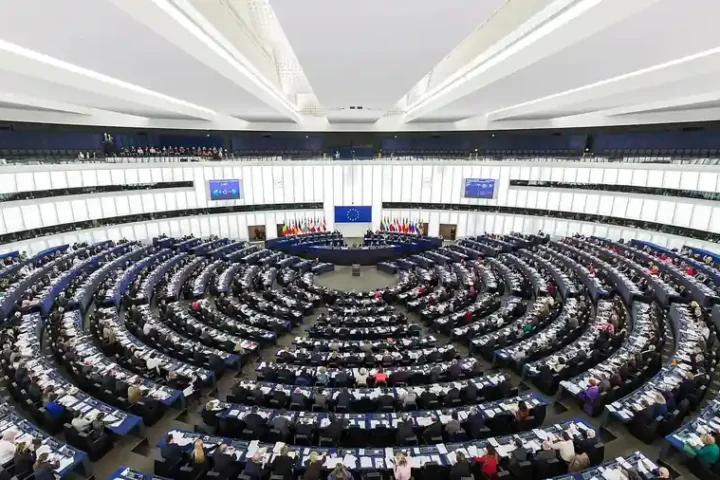
The same goes for Libya, which has signed but not ratified UNCLOS. If Tripoli or Ankara, invoking the 2019 Turkish-Libyan memorandum, challenge maritime blocks south of Crete, they cannot go to a tribunal like Hamburg’s asking for a freeze on surveys as Argentina tried. Politically, the European Parliament called the memorandum null in a November 26 resolution. Greece also filed a declaration under Article 298 of UNCLOS excluding maritime delimitation and military-activity disputes from the Convention’s compulsory procedures, so even a state party cannot impose judicial delimitation on Greece without its consent.
Third lesson: courts rarely stop ships
Greece has lived something similar. In August 1976, when the Turkish research vessel Sismik I conducted seismic surveys in the Aegean, Athens went to The Hague and asked for provisional measures. The Court found in September 1976 they were not needed and in 1978 held it lacked jurisdiction, because of a reservation Greece itself had made on acceding to the 1928 General Act. Half a century later, Argentina hit a similar obstacle: not on the merits, but on jurisdiction.
The conclusion for the Mediterranean is cold but useful. When Turkey sent Oruç Reis south of Kastellorizo in summer 2020, or its drillships into Cyprus’s EEZ in 2019, no court could stop them. What counted, where it counted, was the Navy’s presence, diplomacy and alliances. Athens answered the Turkish-Libyan memorandum by signing delimitation agreements with Italy and Egypt in 2020, states that accept the same rules.
What it means for Cyprus
The Republic of Cyprus is in an even more complex position. Turkey does not recognize the state, is not a party to UNCLOS and disputes Nicosia’s rights, invoking the rights of Turkish Cypriots, while occupying part of the island since 1974. The Hamburg order is a reminder that when a maritime case requires resolving a territorial sovereignty question, UNCLOS dispute settlement has no jurisdiction. That is why Ankara insists on presenting the Cyprus issue as a dispute over who represents the island.
Nicosia, however, has counterweights. Cyprus has delimited its EEZ with Egypt and Israel, cooperates with international energy groups and has the European Union behind it. The more stable the web of agreements with states applying UNCLOS, the harder it is for Ankara to turn the Cypriot EEZ into a “disputed area.”
The law is with us, but it does not apply itself
Greece holds that UNCLOS’s basic rules, such as Article 121, which gives islands maritime zones like mainland coasts (with the exception of rocks in paragraph 3), are customary law binding Turkey too. The International Court of Justice already treated Article 121 as customary law in Nicaragua v. Colombia in 2012.
The Falklands, however, also show the limits. On today’s facts no court can stop a Turkish research vessel south of Crete or annul the Turkish-Libyan memorandum. What protects Greek and Cypriot rights is a combination of three elements: the firm position that sovereignty over the islands is not up for discussion, the continued delimitations with neighbors who accept the Law of the Sea, and the readiness of the Armed Forces to back in practice what international law recognizes on paper.