Cyprus
Istanbul pogrom of 1955 explained: what US records show
US State Department records describe the anti-Greek violence of 6-7 September 1955 in Istanbul and Izmir, the police that did not act, and the effect on Cyprus at the UN.

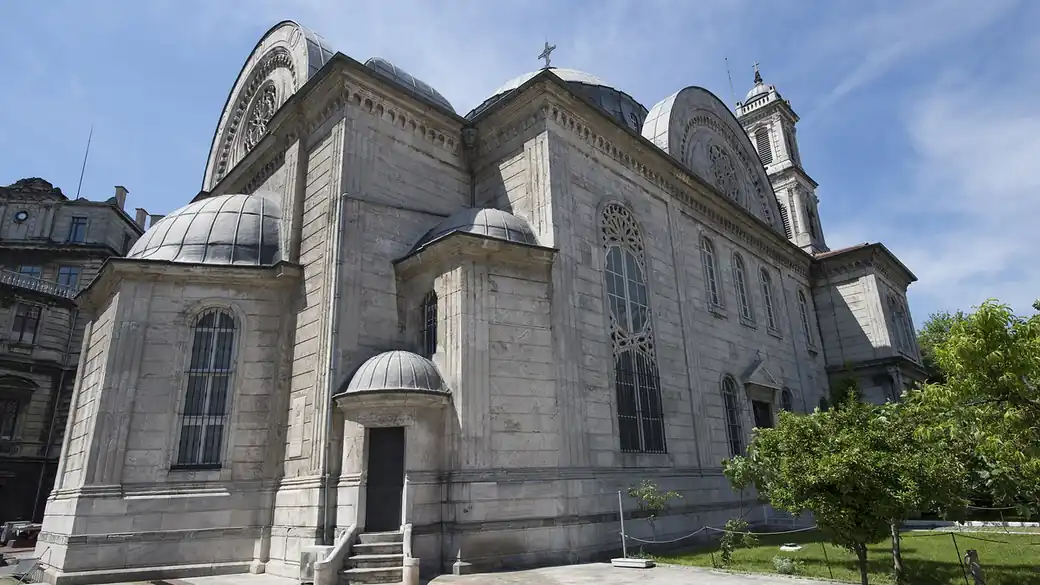
The Istanbul pogrom of 6 and 7 September 1955 was a night of organised mob violence against the Greek community of Istanbul, with attacks that also reached Izmir (Smyrna). US diplomatic records published by the State Department describe “anti-Greek rioting”, a police force that did not stop it and what Washington called an “apparent lack effective police intervention in what appears to have been result coordinated planning”. The events came in the middle of the London conference on Cyprus and changed how Greece, Turkey and the United States dealt with each other.
Key points
- The violence began on 6 September 1955, while Britain, Greece and Turkey were meeting in London to discuss Cyprus.
- A US message from Athens dated 12 September says the Greeks were the primary target, with Armenians, Jews and some foreigners also hurt, and that the army finally intervened.
- On 9 September the State Department told its embassy in Turkey it was “shocked” and pointed to apparent coordinated planning.
- Greek officials and the Greek public felt abandoned by Washington, which then voted against putting Cyprus on the UN General Assembly agenda.
What happened on 6 and 7 September 1955?
The best contemporary record in the English-language archives is the US diplomatic correspondence in Foreign Relations of the United States, 1955–1957, volume XXIV. A US message sent from Athens on 12 September 1955 summarises the first assessment: the destruction in Istanbul was “massive” after the “anti-Greek rioting on 6 September”, and the authorities were hurrying to clean up the city before the World Bank and IMF meeting opened there on 12 September.
The same message gives the sequence as the writer understood it. Demonstrations started in Istanbul and Izmir “with the acquiescence of the local police”. The rioting “quickly got out of hand”, and looting became indiscriminate. Although the “primary target was Greek”, Armenians, Jews and some foreigners “had a rough time of it” and even some Turks suffered. Only when the army intervened did the mobs disperse. The writer cautioned that this was a preliminary size-up, subject to confirmation.
The archival pages quoted here give no casualty or damage totals, so this article gives none. Anyone who needs figures should take them from a source that documents them, not from round numbers repeated online.
Why was Cyprus at the centre of it?
The riots fell while the three-power conference in London was under way. Britain had brought Greece and Turkey together to discuss Cyprus, where the Greek campaign for union with Greece (enosis) and the question of self-determination were the heart of the dispute. A US telegram from London dated 7 September records that Greece’s delegate, Foreign Minister Stephanopoulos, expressed “profound regret over incident in Salonika” and gave assurances that the Greek government was doing everything possible to maintain law and order.
The Turkish delegate, according to the same telegram from the US Embassy in London, said that the tension over Cyprus “had resulted in violence in Turkey”, the American author noting that the “implication being that ultimate responsibility lay primarily with Greeks”. The records therefore show the Turkish side already presenting the riots as a consequence of Greek policy on the first day.
What did Washington say at the time?
The clearest US position is the instruction of 9 September sent to the embassy in Turkey, reproduced in document 125. Diplomats were told to say that the US government had “taken note” of Turkey’s statement and welcomed the intention to offer “full reparations”. A footnote in the volume records that on 7 September the Turkish government had expressed regret for damage to Greek property and promised quick compensation.
The telegram then went further. Washington was “shocked” by the events, and by the “apparent lack effective police intervention in what appears to have been result coordinated planning”. It added a concern that a quarrel between two NATO members, who were also partners in the Balkan Alliance, had “obvious advantage only to USSR”. In the same text the State Department observed that recent events in Turkey had “caused world sympathy to redound to Greek benefit”.
What did Greece say?
On 12 September the Greek ambassador in Washington, Melas, gave the acting Assistant Secretary of State, Jernegan, his reading, recorded in a State Department memorandum of conversation. He said the fact that demonstrations began simultaneously in widely scattered areas, and that “bombs” were set in Greek churches, pointed to advance planning. He also rejected in “most vehement terms” the suggestion that the explosion at the Turkish consulate in Thessaloniki, which the US texts call Salonika, had been the work of a Greek hand. Jernegan replied that the US was shocked by the violence and had made its views known to Ankara.
The Greek reaction at home was angrier than the diplomatic language. A telegram from the US Embassy in Athens on 13 September warned of a “real feeling of abandonment and isolation” because the United States had not spoken out, and said US prestige in Greece had taken “sharp downward turn”. Three days later the embassy reported that US silence on the events in Turkey had become “dominant theme” in Greece, with the government, opposition, army, press and public all taking part, and that Greeks said a further public expression of contrition by Turkey was essential to progress.
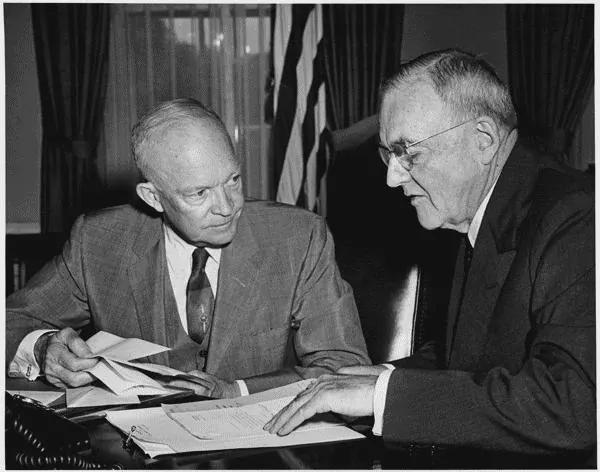
A footnote to that exchange records that on 17 September Secretary of State John Foster Dulles sent personal messages to the Prime Ministers of Greece and Turkey, and that the Department planned a press statement for 18 September expressing “deep concern” over the violence in Istanbul and Izmir.
How did it affect Cyprus at the United Nations?
Greece had asked the UN General Assembly to take up the Cyprus question. On 21 September the US embassy in Athens reported a late-night talk with the Greek deputy prime minister, Canellopoulos, about the US decision not to support inscription. According to that telegram, the reaction to Dulles’s message on “Turkish outrages” had been violent, and the embassy warned that a government that dropped the demand would not survive.
The outcome is set out in an editorial note in the same volume. On 23 September 1955 the General Assembly voted 28 to 22, with 10 abstentions, to accept its General Committee’s recommendation not to inscribe the Cyprus question. Both the United States and the United Kingdom voted against inscription.
Why does 1955 still matter?
The documents show three things that remain relevant to Greek-Turkish relations. First, the violence was not read in Washington as spontaneous: the State Department itself spoke of coordination and of a failure of the police to act. Second, the Greek community of Istanbul, whose standing rests on the Treaty of Lausanne as discussed in our explainer on Treaty of Lausanne explained: borders, islands and minorities, was the target. Third, the events were tied to the Cyprus question from the first day, a link that returned in the island’s later history, set out in Cyprus problem explained: 1960, 1974 and the UN buffer zone.
For the earlier destruction of the Greek presence in Asia Minor, see Smyrna 1922 explained: what US diplomatic records show, which draws on the same series of US records.
Sources
All quotations come from the US State Department Office of the Historian, Foreign Relations of the United States, 1955–1957, Soviet Union, Eastern Mediterranean, volume XXIV: document 124, 125, 127, 128 and 137, plus editorial note 138. The telegrams are contemporary US diplomatic reports; the article reports what they say and does not treat any single report as a complete account.