Asia-Pacific
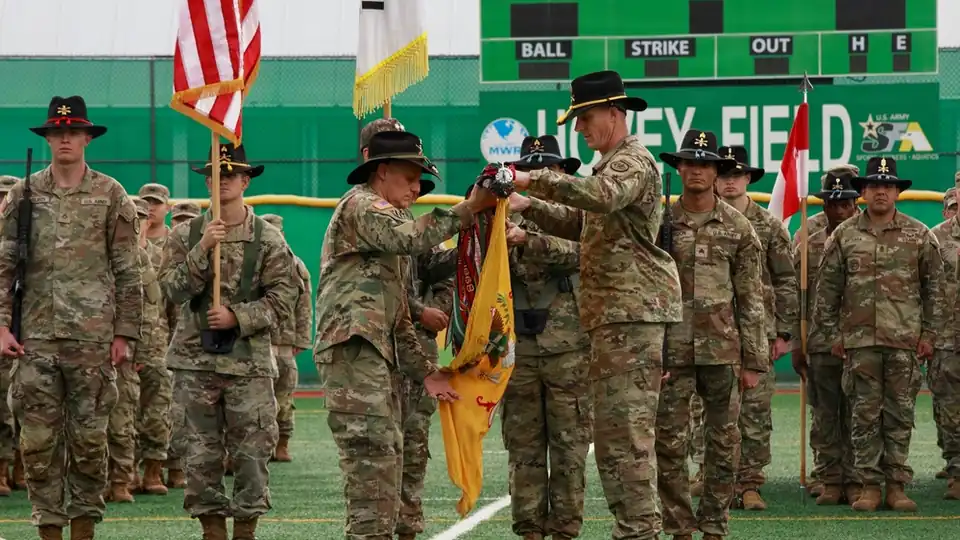
3rd Cavalry Regiment uncases its colors in Korea to begin a nine-month rotation at Camp Hovey
The U.S. Army's 3rd Cavalry Regiment has begun its mission as the 18th Korea Rotational Force, replacing a Stryker brigade within the 2nd Infantry Division.

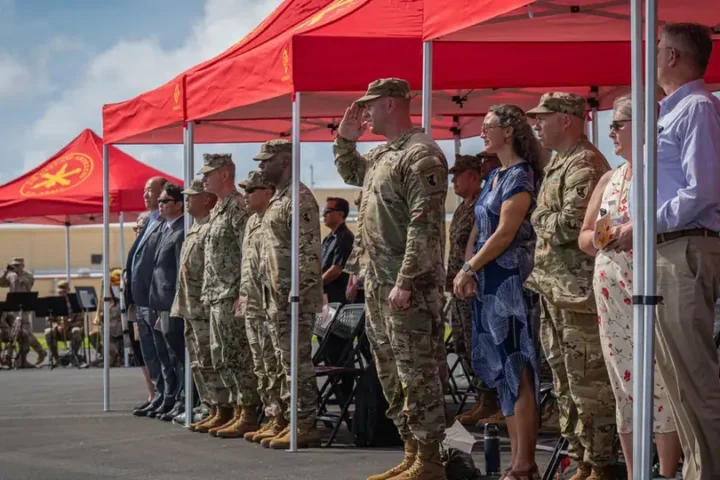
The U.S. Army’s 3rd Cavalry Regiment has formally begun its nine-month tour in South Korea, uncasing its colors at Camp Hovey on 16 October as the 18th Korea Rotational Force, the 2nd Infantry Division said in an account of the ceremony published on 21 October.
The regiment, known as the “Brave Rifles”, takes over from the 2nd Stryker Brigade Combat Team, 2nd Infantry Division. During its deployment it will add maneuver strength to the 2nd Infantry Division/ROK-U.S. Combined Division, which the Army describes as its only permanently forward-stationed division.
Uncasing is the traditional act by which a unit’s colors are unfurled to mark its arrival and the assumption of its mission. The ceremony took place on Hovey Field. “Today, we are uncasing the colors of the 3rd Cavalry Regiment as we begin our mission here on the Korean Peninsula,” said Col. William B. Chastain, the regiment’s commander.
A second rotation on the peninsula
This is not the regiment’s first time in Korea. According to the division, the 3rd Cavalry Regiment served as the 14th Korea Rotational Force in 2024, when it took part in live-fire exercises and operations at the Korea Combat Training Center alongside Republic of Korea Army counterparts.
The division says the regiment will concentrate on generating and sustaining combat power through training, combined-arms maneuver and the integration of fires, intelligence and sustainment, working with ROK Army units to improve interoperability. The rotation is meant to give the Warrior Division, as the formation is known, a greater ability to respond to potential threats.
“We are here to keep the peace and honor the sacrifice of those who came before us,” Chastain said, adding that the regiment “is ready to fight tonight”.
Part of a busy week for U.S. forces in Korea
The arrival comes as U.S. forces in Korea are in the news on several fronts. Geopolitiki reported that the 8th Fighter Wing drilled fighter recovery after a simulated radiological release during Radiant Falcon at Kunsan, in Kunsan Air Base drills fighter recovery after a simulated radiological release in Radiant Falcon, and that the top U.S. commander in Korea spoke in Washington about allied industry’s role in sustaining forces, in US commander in Korea: allied industry should help sustain forces in the region, Gen. Brunson tells Washington audiences.
The division describes the rotational force as part of the wider Indo-Pacific picture, arguing that keeping capable combat formations forward-deployed shows U.S. commitment to regional security and supports deterrence. Those are the Army’s own characterisations of the mission; the account gives no troop numbers for the regiment and no equipment list.