Greece
Analysis: the MEKO 200HN upgrade, what changes on the Hydra-class frigates, what it costs and when it ends
Three contracts worth about €279 million bring TACTICOS, the NS100 radar and new fire control to the four Hydra-class frigates, with completion targeted for 2030.

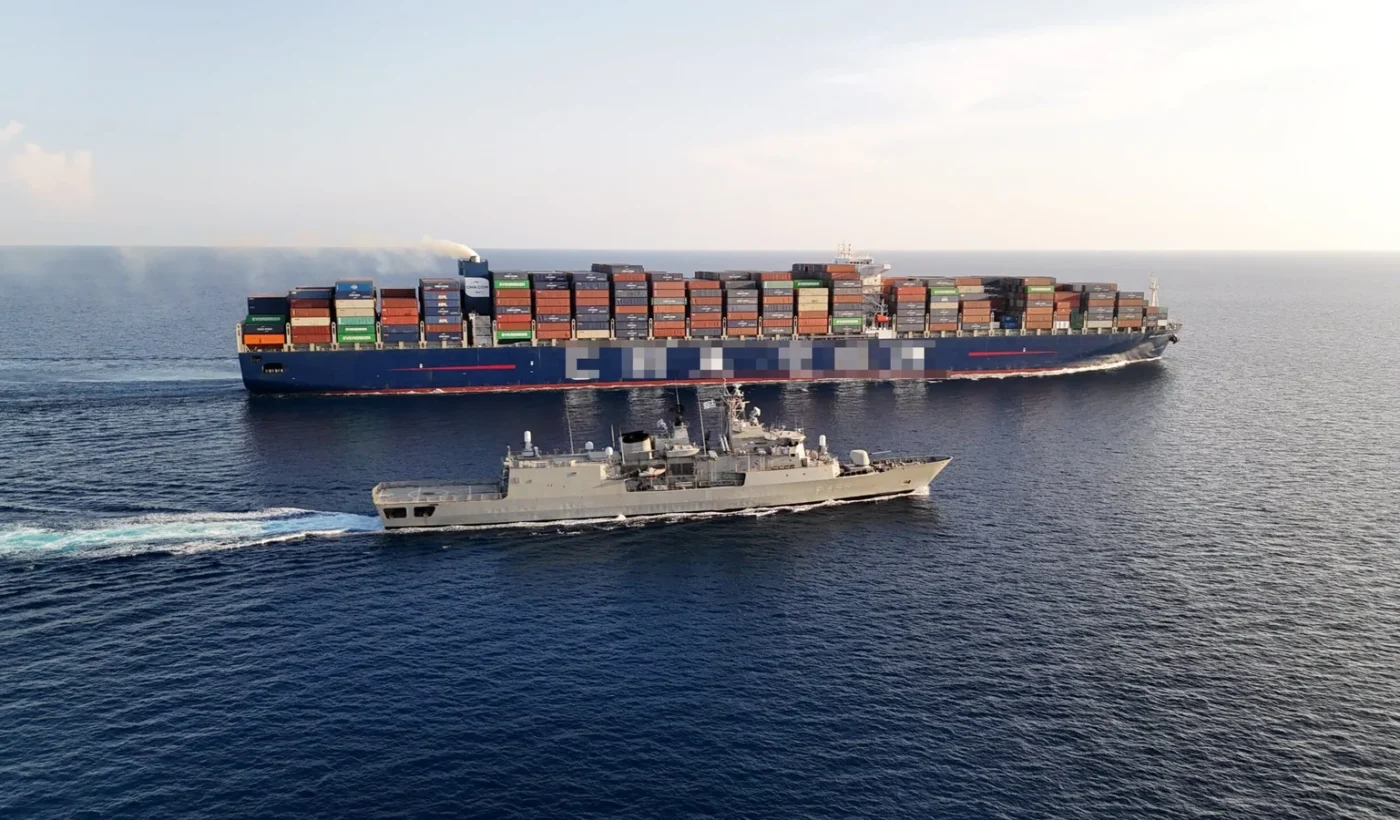
The modernisation of the Hellenic Navy’s four MEKO 200HN frigates, the Hydra class, entered the contract phase in 2026. Three contracts have been signed: with Thales Nederland for €248.7 million, with the Greek company SSMART for €11.55 million and with Skaramangas Shipyards for €19 million, all excluding VAT.
The ships will receive a new TACTICOS combat management system, an NS100 digital radar, new fire control systems and a radar designed specifically for drones, linked to the Greek Kentavros (Centaur) system. The publicly stated goal is to complete the upgrade of all four ships by 2030.
In brief
This is a mid-life upgrade (MLU) that changes mainly the ships’ “brain” and “eyes”: the combat management system, the surveillance radar and the fire control systems. The main weapons fit stays: the 127 mm gun, Harpoon, the vertical-launch ESSM and Phalanx. The frigates remain in the front line for at least 15 more years.
The cost of the three main contracts is about €279 million, far below the €600 to 700 million estimates discussed in 2023 and 2024.
The four Hydra-class frigates
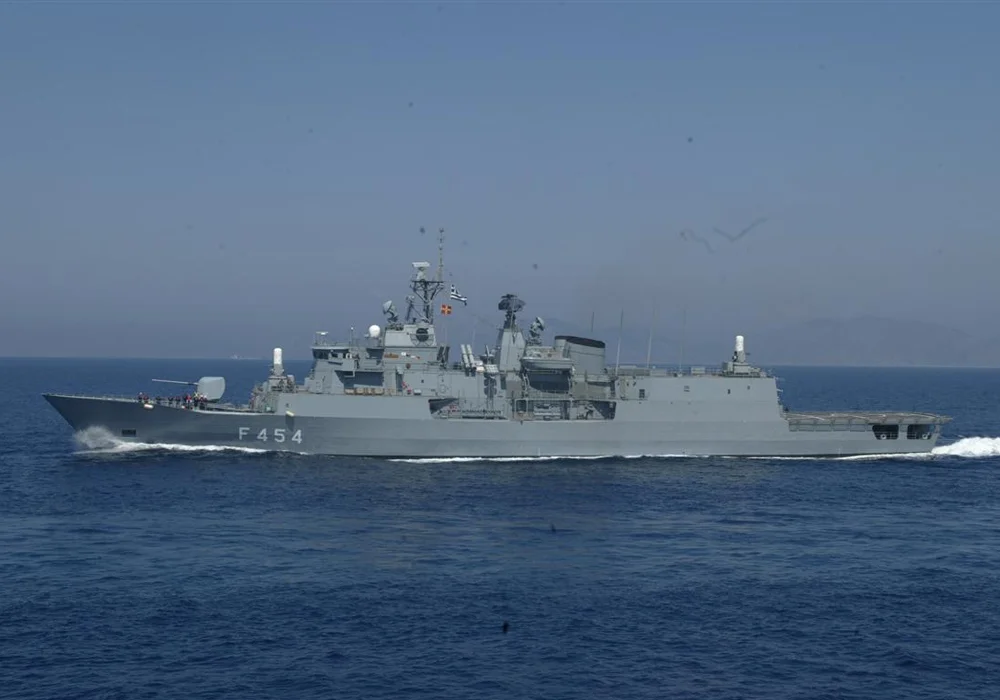
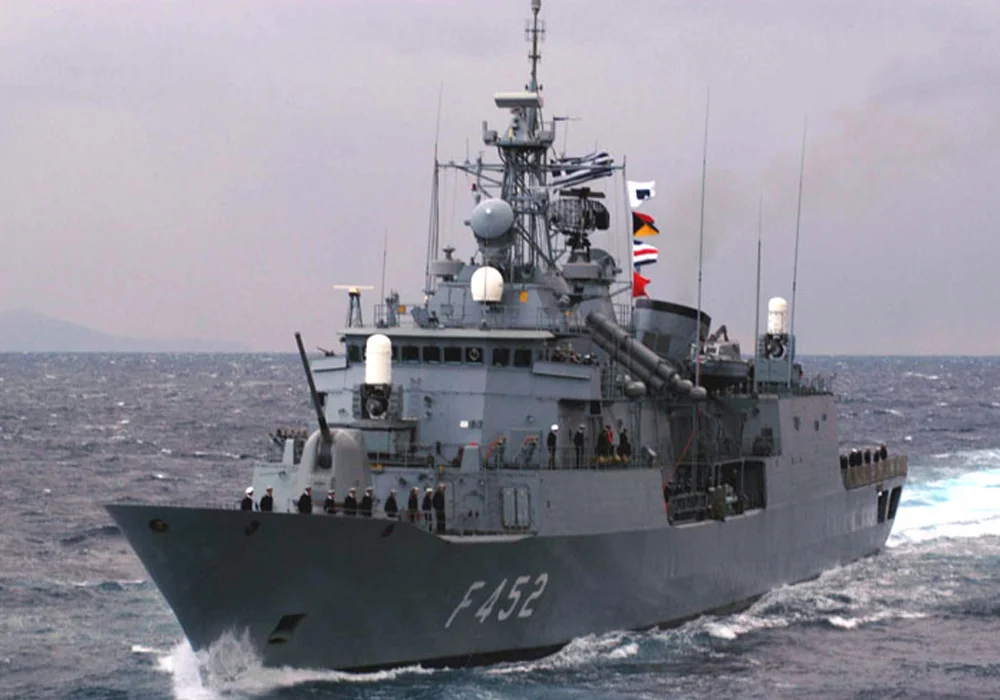
The MEKO 200HN is the Greek version of the MEKO 200 family from Blohm + Voss, today part of thyssenkrupp Marine Systems (TKMS). The first ship was built in Hamburg and the other three at Hellenic Shipyards in Skaramangas.
- Hydra (F-452): built by Blohm + Voss, in service since November 1992.
- Spetsai (F-453): Hellenic Shipyards, in service since October 1996.
- Psara (F-454): Hellenic Shipyards, in service since April 1998.
- Salamis (F-455): Hellenic Shipyards, in service since December 1998.
The frigates displace about 3,360 tonnes (4,000 tonnes at full load) and are 117.5 metres long. Propulsion is CODOG, with two General Electric LM2500 gas turbines and two MTU diesels, and top speed reaches 31 knots. They were delivered with the DA08 and MW08 radars of what was then Signaal, two STIR fire control systems and the STACOS Mod 2 combat system.
The only substantial combat upgrade since they entered service came in 2007-2008, when the STIR systems were modified so the ships could fire the RIM-162 ESSM surface-to-air missile from the 16-cell Mk 48 Mod 2 vertical launcher. The search radars and the combat system stayed the same for about three decades.
A programme that changed shape many times
The upgrade was planned from the late 2000s but froze with the debt crisis. In May 2019 the Chiefs of Defence Council (ΣΑΓΕ) decided to start it, and in April 2023 the Parliament’s Armament Programmes Committee approved the programme, with TKMS and Thales as original equipment manufacturers.
The cost cited in public debate kept shifting. In 2023 it reached about €600 million for the mission systems, and in early 2024 estimates reached €700 million. In 2025, with the new twelve-year armaments programme, the budget line for the electronics of the four ships was reported at around €300 million. In July 2025 the Government Council for Foreign Affairs and Defence (ΚΥΣΕΑ) approved, according to press reports, a programme of about €290 million. The contracts signed in 2026 add up to about €279 million excluding VAT.
The upgrade now being carried out is targeted at the electronics and the combat system, not the full regeneration of the ships that the Navy had originally asked for.
The 2026 contracts
- Thales Nederland: TACTICOS, the NS100 radar and STIR 1.2 EO Mk2. €248,665,400, signed May 25, 2026.
- SSMART: integration of weapon systems into the combat system and multi-function consoles. €11.55 million, May 2026.
- Skaramangas Shipyards: work on the ships (contract 003Β/26). €19 million, signed July 2, 2026.
- Intracom Defense: communications systems, up to €9.98 million (budget). Still at tender stage.
Thales: combat system, radar and fire control
The Directorate General for Defence Investments and Armaments (ΓΔΑΕΕ) signed with Thales on May 25, 2026. The contract covers all four frigates and includes the following, as published on the Diavgeia transparency portal:
- TACTICOS, in its latest version. This is the combat management system that links sensors and weapons into a single tactical picture. It replaces STACOS, the previous generation from the same company. According to Thales, TACTICOS is used by more than 25 navies.
- NS100 radar, a rotating digital active electronically scanned array (AESA) radar for medium- and long-range surveillance and weapons support. It takes over the role that two different radars, the DA08 and the MW08, share today.
- STIR 1.2 EO Mk2, the new fire control system, which combines a tracking radar with electro-optical sensors (an infrared camera and a laser).
“The new operational baseline, built around the latest version of TACTICOS, will be a reference point for the Hellenic Navy’s future capabilities,” said Vincent Megaides, Thales director for Greece, Cyprus and Malta.
SSMART: the Greek integration work
The Greek company SSMART signed with Thales Nederland for the development of the software that links the weapon systems to the ship’s combat system, as well as the assembly of multi-function consoles. Its involvement, and that of Skaramangas Shipyards, serves the Ministry of National Defence policy of at least 25% Greek defence industry participation in armament programmes.
Skaramangas Shipyards: work on the ships
Under contract 003Β/26, titled “Capability upgrade of the MEKO-type frigates of the Hellenic Navy – Combat systems work”, Skaramangas Shipyards takes on the work on the ships themselves. The Defence Minister’s award decision sets the value at €18,997,000 excluding VAT, with funding from 2027 to 2031. The work includes removal of the old electronic equipment, new positions for the sensors, new cabling to the consoles and a complete rebuild of the Combat Information Centre.
SCANTER 6002 radar and Kentavros: defence against drones
In September 2026 the Hellenic Navy and Hellenic Aerospace Industry (HAI) announced, together with Denmark’s Terma, that the four frigates will receive the SCANTER 6002 radar. It is an X-band radar using gallium nitride (GaN) technology, designed for small targets with a low signature on the surface and at low altitude. It has a classifier that separates drones from other targets.

The radar will be linked to TACTICOS and to Kentavros, HAI’s Greek counter-drone system, so that information on a drone passes from detection to engagement with no gaps in between. Kentavros has already operated on Greek frigates in the Red Sea during the EU’s ASPIDES operation, as in the engagement of a Houthi drone swarm by the frigate Psara. Now it becomes a permanent part of the MEKO configuration.
Communications: Intracom Defense
For the communications upgrade the ΓΔΑΕΕ accepted the technical offer of Intracom Defense, the only company to submit a final bid. The budget is up to €9.98 million, and the opening of the financial offers was set for October 12, 2026.
What changes and what stays
- Combat management system: from STACOS Mod 2 to TACTICOS (latest version).
- Search radar: from the DA08 and MW08 to the NS100 (AESA).
- Fire control: from two STIR systems (modified 2007-08) to the STIR 1.2 EO Mk2 with electro-optics.
- Low-altitude and drone surveillance: from none to the SCANTER 6002.
- Counter-drone: from case-by-case installation of Kentavros to Kentavros on all frigates, linked to the combat system.
- Communications: from existing systems to new systems (at tender stage).
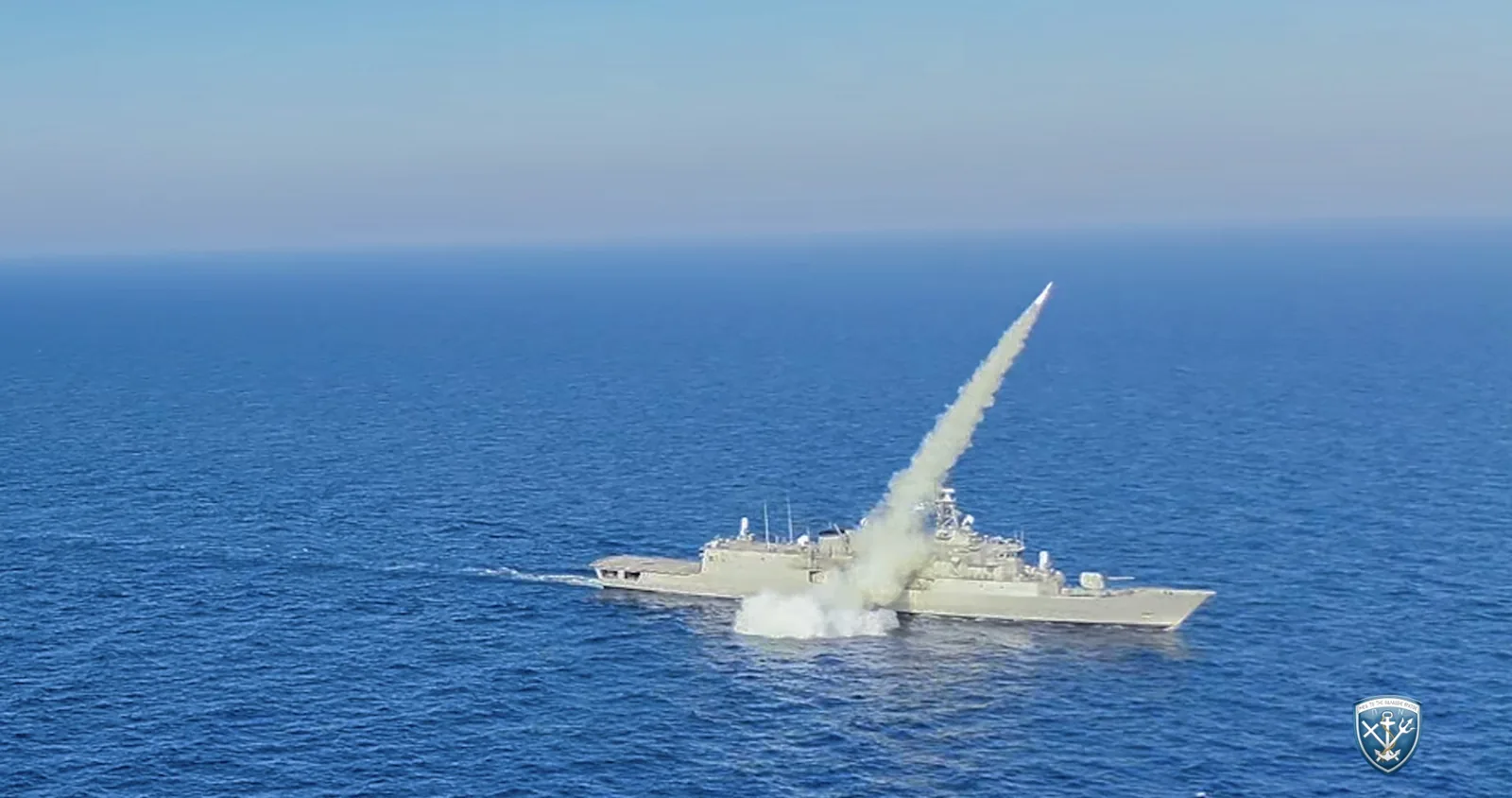
- Surface-to-air missiles: ESSM and the Mk 48 Mod 2 (16 cells) today; the same launcher after the upgrade, with ESSM Block II in the approved package.
- Anti-ship: Harpoon and 2 × Mk 141 remain.
- Gun and CIWS: the Mk 45 Mod 2A 127 mm gun and 2 × Phalanx remain.
- Anti-submarine: hull-mounted sonar, Mk 32 torpedo tubes and the S-70B-6 helicopter; no new sonar in the contracts.
ESSM Block II: what is known
According to press reports on the July 2025 ΚΥΣΕΑ decision, the upgrade package includes the acquisition of ESSM Block II missiles. In April 2026 Raytheon received a contract modification of about $833 million for ESSM Block 2. It concerns the United States and its allies in the NATO SEASPARROW consortium, to which Greece belongs, and part of the work is carried out in Greece by Intracom Defense.
The big advantage of Block II is its active radar seeker: the missile completes the engagement without the ship continuously “illuminating” the target, so it can engage more targets at the same time.
What was left out
The upgrade does not include everything the Navy originally requested. According to information, already left out in 2024 were a CAPTAS-2 variable-depth sonar, an electro-optical search and track system (IRST), new decoy systems and the upgrade of some electronic systems. The 2026 contracts did not change this picture.
The difference shows mainly in anti-submarine warfare. The new FDI HN frigates carry the CAPTAS-4 Compact variable-depth sonar, which “sees” below the thermocline. The upgraded MEKOs will continue to rely on the hull sonar and the helicopter.
Timeline
- 1992-1998: the four frigates enter service.
- 2007-2008: STIR modification for ESSM firings.
- May 2019: ΣΑΓΕ decision to start the upgrade.
- April 2023: approval by Parliament’s Armament Programmes Committee.
- July 2025: ΚΥΣΕΑ approval (about €290 million, according to press reports).
- May 5, 2026: the contracts go to Parliament’s Armament Programmes Committee.
- May 25, 2026: ΓΔΑΕΕ–Thales contract signed.
- July 2, 2026: ΓΔΑΕΕ–Skaramangas Shipyards contract signed.
- September 2026: SCANTER 6002 and the link to Kentavros announced.
- 2027: probable start of general work on the ships.
- 2030: target for completing all four frigates.
The programme has a history of schedule changes.
What it means for the fleet
After the upgrade the MEKOs will share with the FDI HN frigates the maker of the combat system and radars, but not the same class of capabilities. The FDIs are area air-defence ships, with Aster 30 missiles and the Sea Fire radar. The MEKOs, with ESSM and the NS100, remain general-purpose frigates with point and local-area air defence. The shared Thales “family” may nevertheless make training, support and the exchange of the tactical picture between ships easier.
By 2030 the core of the fleet will consist of three types of frigate: the FDI HN, the two Italian FREMM frigates of the Bergamini class, which are being received in 2028 and 2029, and the upgraded MEKOs. Because each MEKO will be absent from the fleet for a long period, the speed of the work matters as much as the equipment. The first ship will show early whether the schedule is realistic. The ships are 28 to 34 years old, many new systems must be connected to older equipment, and Skaramangas is returning to a major warship programme.