
Drones
Drone Dome: the €26 million Israeli counter-drone system Greece is buying against Turkish drones
A drone costing a few thousand euros can knock out a radar worth millions, and that is the cheapest threat Greek air defence faces today. Greece’s answer is Rafael’s Drone Dome, bought under a separate €26 million contract.

A drone costing a few thousand euros can put a radar worth millions out of action, and that is the cheapest threat Greek air defence faces today. The answer cannot be one missile for every drone. That is why Greece, on the same day it signed the Achilles Shield agreement, also signed a separate €26 million contract for Rafael’s Drone Dome.
Drone Dome is not a missile system. It is a counter-unmanned-aircraft system (C-UAS): it detects the drone, identifies it and “blinds” it with electronic warfare. Its role is to guard airfields, radars and gun or missile batteries, which are exactly the targets a swarm of Turkish drones would try to hit first.
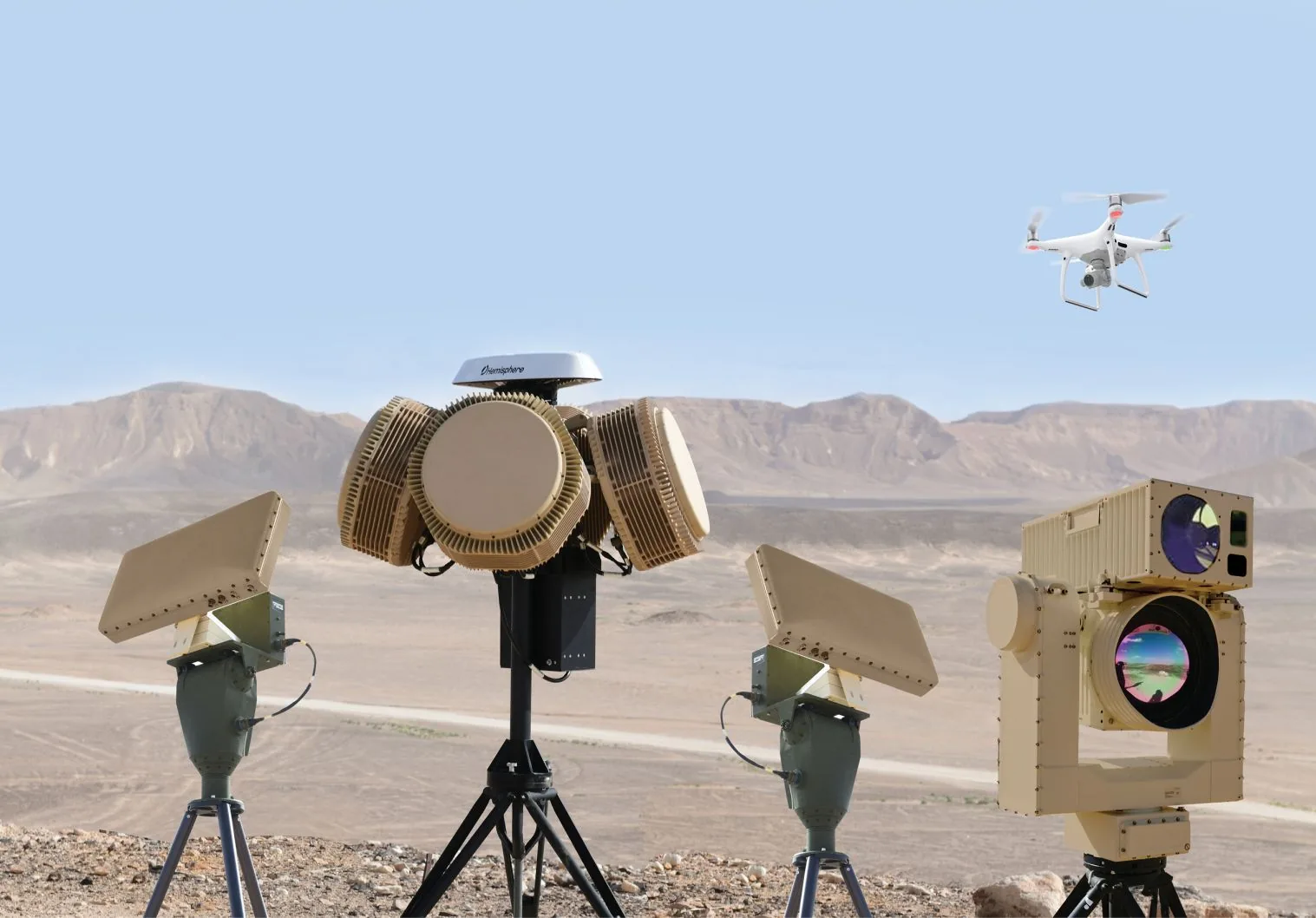
The video below is Rafael’s official presentation of Drone Dome. It was uploaded to the company’s channel in 2026 and has passed 200,000 views. It does not show real shoot-downs, but animated graphics and footage of the equipment. In the first part Rafael describes the sky as a new battlefield, with swarms of drones threatening military bases and critical infrastructure. In the second it shows the building blocks of the system: the radars, the camera, the jammer and the command centre, joined in an open architecture. This means other sensors and weapons, even from other manufacturers, can be plugged into the same system.
Rafael’s Drone Dome presentation video (YouTube)
How Drone Dome works
According to Rafael’s official brochure, the system rests on four elements.
The first is the radar. The RPS-42 has a range of up to 5 km and the larger RPS-82 up to 10 km. Both are active electronically scanned array (AESA) radars, meaning they have no rotating antenna. With four 90-degree panels they provide full 360-degree coverage.
The second is a passive radio-frequency sensor that “listens” to frequencies from 70 MHz to 6 GHz. It does not only detect the drone. It also finds the position of its operator and, in some configurations, even reads the drone’s serial number.
The third is the SPEED-ER electro-optical camera with thermal imaging, which Rafael says identifies the target at up to 8 km.
The fourth does the actual job: the jammer. Drone Dome uses “reactive jamming” technology, which cuts the commands from the remote controller and the video the drone sends to its operator. At the same time it jams the signal of satellite navigation systems (GNSS, such as GPS), so that the drone loses its bearings. Reactive jamming transmits only on the frequency the target is using at that moment, instead of “blurring” the whole spectrum, so it disturbs friendly communications less.
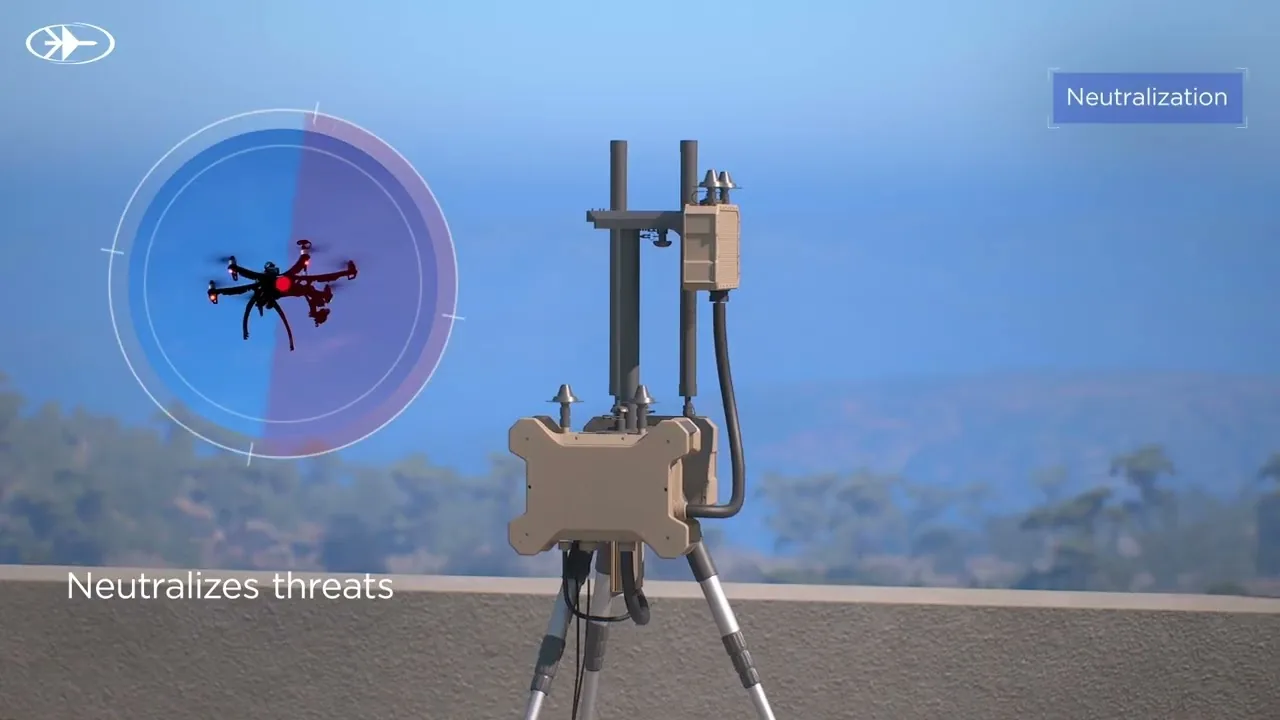
Rafael stresses that the whole chain, from detection to neutralisation, is run by a single operator, aided by artificial-intelligence algorithms in the command centre. Detection of small targets, according to the company’s older brochure, exceeds 3.5 km.
Why Greece needs it against Turkish drones
Turkey does not only field the large Bayraktar TB2 and AKINCI. It also produces a whole family of small drones and loitering munitions, such as STM’s KARGU. These are small, cheap weapons that fly low, leave a small radar signature and can be launched in large numbers. Against such threats a system like SPYDER AIO or David’s Sling is far too expensive. Every missile spent on a drone is one fewer for a fighter jet or a ballistic missile.
Drone Dome covers exactly that gap: it neutralises the threat without spending a missile and leaves the expensive systems for the targets that really need them.
The contract
The contract was signed in Tel Aviv on August 31, 2026, as a supplement to the intergovernmental agreement on Achilles Shield. According to the Israeli Ministry of Defense, the systems will protect strategic installations and strengthen existing Greek defences. The number of systems, their configuration and the deployment sites have not been announced.
It is likely that for €26 million Greece acquires a limited number of systems, which would go first to the most vulnerable sites, such as airfields and island radars. According to Cypriot reports, the same system has begun arriving in Cyprus as well, which opens the way for joint training and a shared threat picture in the Eastern Mediterranean, as in the Cypriot National Guard’s third Barak MX battery and Drone Dome Lite Beam.
What remains to be decided
Drone Dome will not work alone. Greece already has the Greek Centaur system of Hellenic Aerospace Industry (EAB), an electronic-warfare system against drones, as well as older domestic systems. The crucial question is whether all of these will be joined into a common picture with the new national command-and-control system of the Shield.
The second question is “hard” neutralisation. Jamming does not stop a drone flying autonomously, without a link and without GPS, using visual navigation. For that case Rafael also offers Drone Dome with a laser weapon, but it has not been announced whether the Greek contract includes it. The first phase appears to be mainly electronic, and how it is complemented will show how seriously the threat of drone swarms is being taken.