Military & Defense
Frontier Sentinel 2026: U.S. and Canadian staffs finish a five-day Atlantic command post exercise ahead of a live drill in summer 2027
Staffs from U.S. 2nd Fleet, the U.S. Coast Guard and Canadian forces finished a simulated Atlantic maritime security exercise in Norfolk, a step towards live drills at sea in summer 2027.

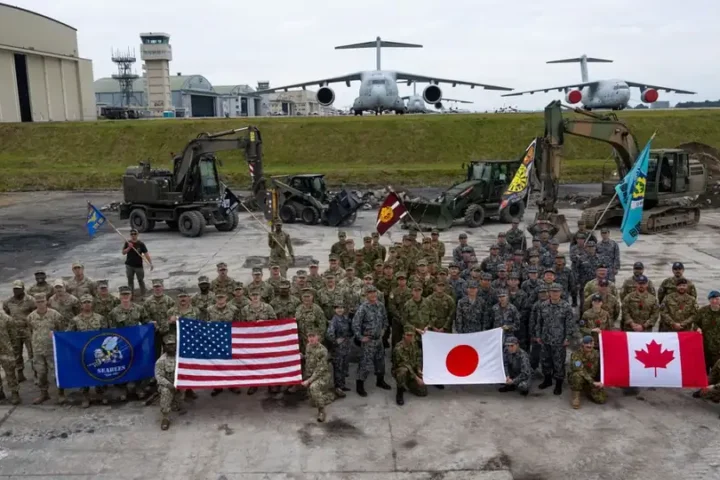
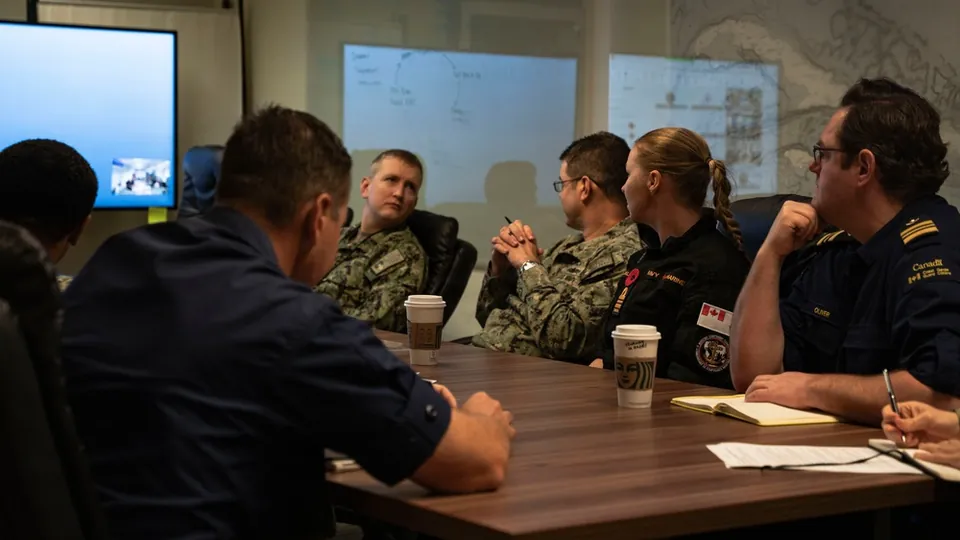
U.S. and Canadian naval and coast guard staffs wrapped up a five-day simulated maritime security exercise in Norfolk, Virginia, on 30 October, using it to test shared procedures before ships and aircraft train together at sea next summer. The Frontier Sentinel 2026 command post exercise, hosted by U.S. 2nd Fleet from 26 to 30 October, was described by the fleet as a bilateral event for the Atlantic Maritime Security Coalition.
No ships or aircraft took part. Instead, planners and decision-makers from U.S. 2nd Fleet, U.S. Coast Guard Atlantic Area, Canada’s Joint Task Force Atlantic and the Canadian Coast Guard worked through a synthetic scenario on command-and-control simulation systems, rehearsing response options and communication lines.
What was being tested
According to U.S. 2nd Fleet, the core aim was to pressure-test a combined playbook, the Atlantic Maritime Security Coalition Memorandum of Intent Annex A standard operating procedures. The document governs how the two countries share information and coordinate during a maritime crisis. U.S. Marine Corps Maj. Logan Baisden, the lead exercise planner, said the scenario included simulated undersea threats and was built to push the bilateral communication channels to their limits.
Rear Adm. Mark Behning, acting commander of U.S. 2nd Fleet, said that sharing maritime domain awareness and coordinating early would allow the partners to “deter and address crises before they develop”. Royal Canadian Navy Rear Adm. David Mazur, the fleet’s vice commander, said the scenario was developed jointly across four headquarters and gave the staffs a setting to test systems and refine communications.
Rear Adm. Pascal Belhumeur, commander of Maritime Forces Atlantic and Joint Task Force Atlantic, said the exercise helped to strengthen interoperability. U.S. Coast Guard Rear Adm. John Vann, deputy commander of Atlantic Area, spoke of working to deter adversaries who would seek to harm the partners’ strategic mobility.
What comes next
The command post exercise is a prerequisite for the Frontier Sentinel 2027 live exercise, planned for the summer of 2027, when the same organisations are due to move from simulation to manoeuvres at sea. Planners will now compile lessons learned and use them to finalise the operational design of that live phase, the fleet said.
The exercise reflects a broader pattern of North American defence cooperation. Geopolitiki reported earlier on Canada receives its first two F-35As at Luke Air Force Base as Ottawa keeps the rest of the order under review.