Middle East & North Africa
Iran and the US: Trump says Vance’s letter is about medical supplies, Tehran sticks to its “seven-day plan”, and Adm. Cooper briefs Trump on strike options
Two opposite signals reached Tehran within 48 hours: a letter from Vice President Vance that Trump describes as humanitarian, and a White House briefing by CENTCOM chief Adm. Brad Cooper on options for resuming strikes.

Washington is sending Tehran two opposite signals within the same 48 hours. On one side is the “Vance letter”, a message from the US vice president to the secretary of Iran’s Supreme National Security Council, Maj. Gen. Mohsen Rezaei, which President Donald Trump presents as a humanitarian gesture over medical supplies. On the other, America’s top commander in the Middle East briefed the president at the White House on options for resuming strikes on Iran.
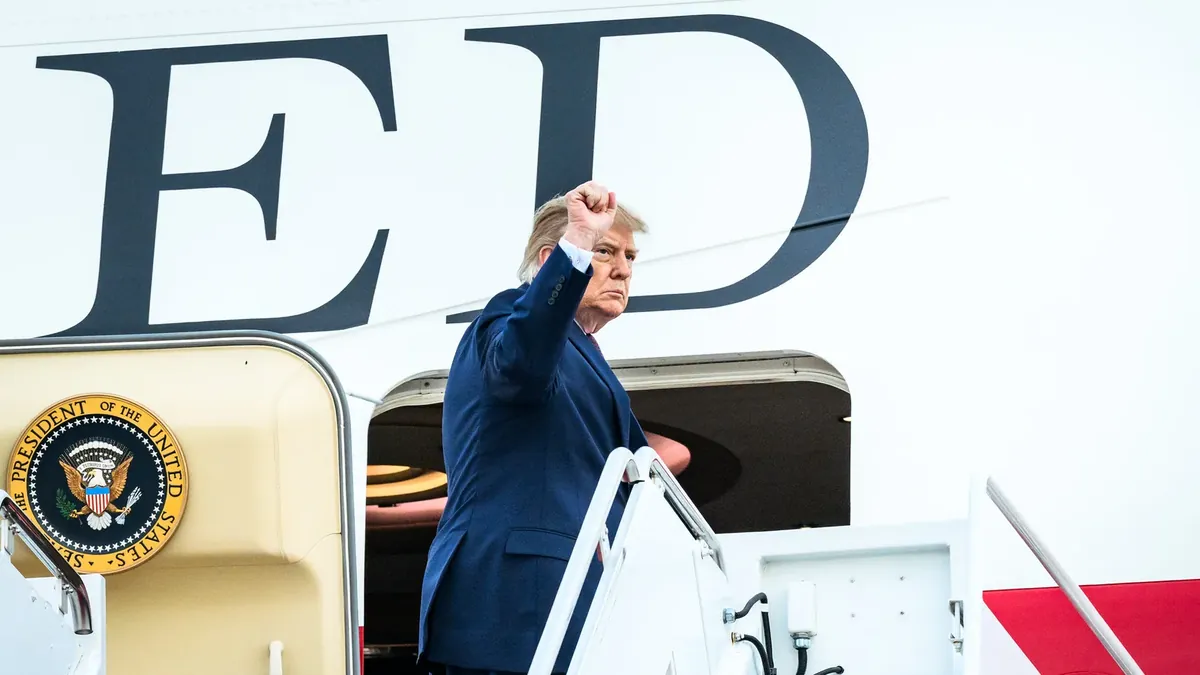
The letter became known on Wednesday, October 28, through the Wall Street Journal, which described it as an attempt to restart peace talks. Asked by reporters on his arrival at Joint Base Andrews, according to the White House video, whether he had asked Vice President JD Vance to open a channel for negotiations, Trump answered “no”. “What’s happening is that they need help with medical supplies and various things. He asked me what I thought. I said if he wants to do it, fine. Basically it’s about supplies that will help people who are not well,” he said.
Tehran: no answer, and the content is “not accurate”
In Tehran, a “senior security source” told the state news agency IRNA on Thursday, October 29, that Vance did send a message to Rezaei, that Iran has not replied and that what is being written about its content is not accurate. That evening Parliament Speaker and chief negotiator Mohammad Bagher Ghalibaf wrote on X, as relayed by IRNA, that Tehran’s terms have been given “repeatedly and clearly” to the mediators, that the “carrot and stick” tactic has no effect, and that progress is possible only after Iran’s seven terms are agreed. These are Iranian statements and are reported as such.
Iranian diplomacy keeps promoting its own timetable. Foreign Minister Abbas Araghchi wrote on Wednesday that while the armed forces are “fully ready” to defend the country, Iran is giving diplomacy a chance and is in “close and constant contact” with mediators, to examine ideas that would allow the “seven-day plan” to be implemented even in under a week. As we reported earlier, the plan provides for the Strait of Hormuz to reopen on day six if the US accepts Tehran’s terms.
Cooper in the Oval Office
On Thursday, October 29, CENTCOM commander Adm. Brad Cooper met Trump face to face at the White House. The Wall Street Journal revealed the meeting first, and a person familiar with the discussion told Al-Monitor that Cooper presented updated assessments of options for resuming operations against Iran. Joint Chiefs Chairman Gen. Dan Caine and Secretary of War Pete Hegseth were present. CENTCOM had already submitted plans in October for new and more intense strikes across Iran.
Trump and administration officials have said they do not intend to launch new strikes before the midterm elections on November 3. But at a rally in Florida on October 23 Trump said “maybe we’ll do another little Epic Fury”, referring to the campaign that began on February 28. The meeting took place the same week Hegseth removed the Joint Staff’s chief planner. For the wider background see our Iran war timeline.