Greece
Mitsotakis to Reuters: the Turkish-Libyan memorandum is “blatantly illegal, null and void” and ignores the Greek islands
In an interview with Reuters at the end of Greece’s UN Security Council presidency, Prime Minister Kyriakos Mitsotakis called the Turkish-Libyan memorandum “blatantly illegal”, urged Libya to negotiate with Athens and asked the EU to strengthen Aspides.

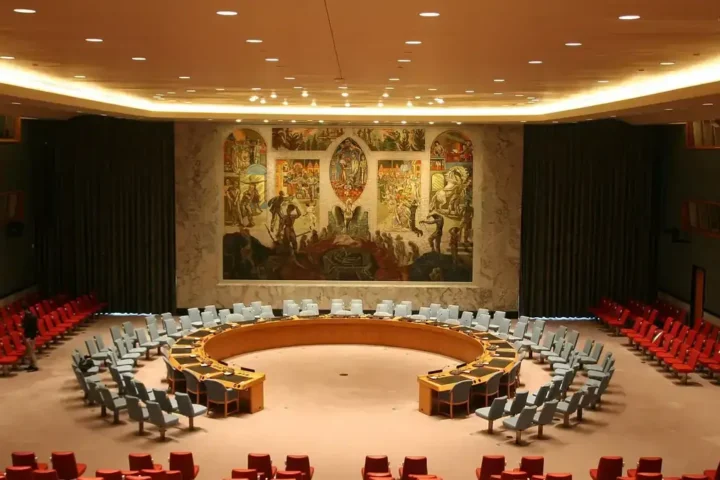
Hours after chairing the UN Security Council in New York, Prime Minister Kyriakos Mitsotakis returned to the illegal Turkish-Libyan memorandum with even sharper wording. In an interview with Reuters on Thursday, October 29, at the close of Greece’s October presidency of the Council, he called the deal, recently approved by the parliament of eastern Libya, “blatantly illegal, null and void and without legal effect”.
“It completely ignores geography, the reality that Greek islands exist. They seem to disappear entirely from the thinking of Turkey and Libya,” he said. He accused both sides of trying to create faits accomplis while bypassing the UN Convention on the Law of the Sea (UNCLOS). The text, first signed in 2019, returned to the fore when the House of Representatives in eastern Libya endorsed it last week. That drew condemnation not only from Athens but also from Egypt, Bahrain and the United Arab Emirates, which joined Greece, the EU and Cyprus in a joint statement at the UN declaring the memorandum null and void.
“It defies geography itself”
Earlier, from the presiding chair, the prime minister used the memorandum as a “concrete example” from the Eastern Mediterranean of threats that come not only from non-state actors but also from states “that openly disregard international law”. “The rules governing our seas cannot be rewritten to serve the ambitions of individual states,” he said, according to excerpts released by UN Video. The full speech is covered in our report on Mitsotakis at the Security Council.
Of the memorandum he said it is a “flagrant violation of the fundamental principles of the law of the sea”, adding: “It is illegal. It is arbitrary. And it defies geography itself.” His argument rested on the position of the coasts. Greece and Libya have opposite coasts, are “natural maritime neighbours” and are entitled to delimit their maritime zones by agreement. Turkey and Libya, by contrast, have neither opposite nor adjacent coasts, yet tried to draw an “artificial” maritime boundary. “It is absurd. There is no precedent for such a diagonal delimitation,” he said.
On Greek hydrocarbon exploration south of Crete, where the country has licensed a Chevron-led consortium, Mitsotakis said: “There is no risk whatsoever of these surveys being challenged in any way.” To Libya he sent a message of dialogue, inviting it to negotiate directly with Athens on delimitation and to take the discussions “very seriously”. Ankara’s position is already clear: Recep Tayyip Erdoğan has dismissed the EU’s reactions as having no legitimate basis.
A truce in the Black Sea and more ships for Aspides
The second major theme was the Black Sea, a day after the sinking of the Greek-interest container ship Contship Jet by sea drones off Bulgaria, as we reported. “We need some kind of international truce on freedom of navigation,” he said, calling it a “top priority” that the region’s grain can reach world markets. Greek shipowners, he argued, would be the first to return to Black Sea routes, including from Ukraine, once safe passage is secured, while chartering and insurance costs have soared. Ukraine had a rich harvest, but its grain is “sitting in silos, at risk of rotting”, and Russia, he judged, “does not seem, for now, interested in a substantive discussion”.
The prime minister also asked the EU to strengthen Operation Aspides in the Red Sea, launched in 2024 to protect shipping from the Houthis. Greece, Italy and France have provided assets, but that is “clearly not enough”, he said, adding that Europe has an interest in a “concrete presence with real assets” in the area and that more countries are needed in the mission. On sanctions, after Donald Trump’s recent lifting of US sanctions on Russian diesel exports, he repeated that Greece supports economic pressure on Moscow.
The open debate he chaired dealt with emerging technologies and maritime security. Michail Bletsas, head of Greece’s National Cybersecurity Authority, called for faster work at the International Maritime Organization on the code for autonomous ships, so that human oversight, algorithmic transparency and AI safeguards are built into international law. The meeting followed the October 23 announcement by Greece and Latvia, with eight other Council members, of an informal expert group on technology, peace and security, expected to meet for the first time in November.