Drones
FT: Russian order for 90 missile launchers for Iran’s Mi-28 helicopters – US sanctions on Tehran’s MANPADS middlemen
The Financial Times, citing Russian defence-industry documents, reports an order for 90 APU-L launchers for Iran’s Mi-28 helicopters, a day after US sanctions on intermediaries in Tehran’s MANPADS procurement.

Russia has agreed to supply Iran with 90 missile launchers mounted on Mi-28 attack helicopters, the Financial Times reported on Thursday, November 5, citing internal documents from the Russian defence industry. The report came a day after the State Department imposed sanctions on two individuals and a company, the head of a Belarusian company, a Russia resident and a Nigerian company, for their role in Tehran’s efforts to acquire man-portable air-defence systems (MANPADS).
The code “K-10” in Vympel’s documents
The documents reached the British newspaper through Dallas Analytics, a Ukrainian private intelligence company. Among them is a 2024-2025 production programme of Vympel, a subsidiary of the state missile maker KTRV. It shows an export order for 90 APU-L launchers with the buyer “K-10”. With this code, according to the paper, the state arms exporter Rosoboronexport refers to Iran, and the same code appears in contracts for the Yak-130 trainer aircraft delivered to Tehran. The same programme also shows China, with 192 APU-305 launchers, and seven Russian customers.
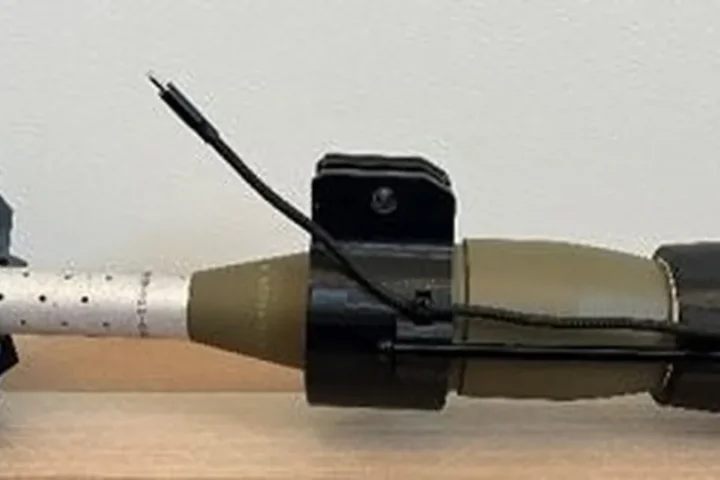
Each APU-L carries two LMUR missiles, also known as “Product 305”. It is a light, multi-role guided weapon, in service since 2022, which the Russian army uses extensively in Ukraine. The operator can correct the missile’s course after launch, and the missile hits moving targets at up to 14 kilometres. “It is much faster than a drone. At about 230 metres per second it covers 14 kilometres in about a minute,” a Dallas Analytics spokesman explained. The tactic, he said, is for the helicopter to reach a firing position, launch, hit the target and withdraw quickly.
Iran has already acquired Mi-28s. Iranian officials announced in November 2023 that arrangements for their delivery had been finalised, and photographs from January 2026 showed a Mi-28 at an air facility in Tehran. The Financial Times notes however that it remains open whether the 90 launchers actually reached Iran. In a May 2024 letter, Vympel asked another Russian design bureau to speed up the shipment of components, warning that delays put nine contracts at risk.
The paper revealed in September that Russian engineers helped Tehran develop supersonic cruise missile technology, and has also written about a deal to supply Verba man-portable air-defence systems. The new report adds to a series of revelations about the two countries’ military cooperation, such as the reports of an Iranian purchase of Russian Su-35 fighters. “It shows that Russia is willing to keep supplying Iran despite its own war needs, and with far less concern about Western reactions than in the past,” Nicole Grajewski, a researcher at the Carnegie Endowment for International Peace, told the FT. Our report on the Russian-Iranian meeting: Putin and Rezaei at the Kremlin.
The State Department targets the MANPADS middlemen
Washington’s sanctions were announced on Wednesday, November 4 and target Tehran’s efforts to acquire man-portable air-defence systems. In a fact sheet the State Department names Mohammad Ali Tolibov, chief executive of Armory Alliance. The Belarus-based company acted as an intermediary between Chinese companies and Iran and took part in efforts to buy hundreds of MANPADS. Nigeria’s Vanguard Tactical Supply Limited is accused of trying to secure Chinese-origin MANPADS for Iran using false end users. The third, Alisher Domulojanov, lives in Russia and has been involved in similar efforts. Armory Alliance, Tolibov and Vanguard were already on sanctions lists.
The measures freeze any of their assets in the US, while Domulojanov was added the same day to the SDN list of the Treasury’s OFAC. They follow similar actions on May 8, June 10 and July 15 and, according to the State Department, support enforcement of the UN arms embargo on Iran, which was reinstated in September 2025. The measures “close more channels Tehran uses in its effort to rebuild its arsenal,” the statement says. The same day OFAC imposed sanctions on an Indian network and on a Turkish ground-handling company, and issued a warning about the use of false flags by Iran’s “shadow fleet”.