

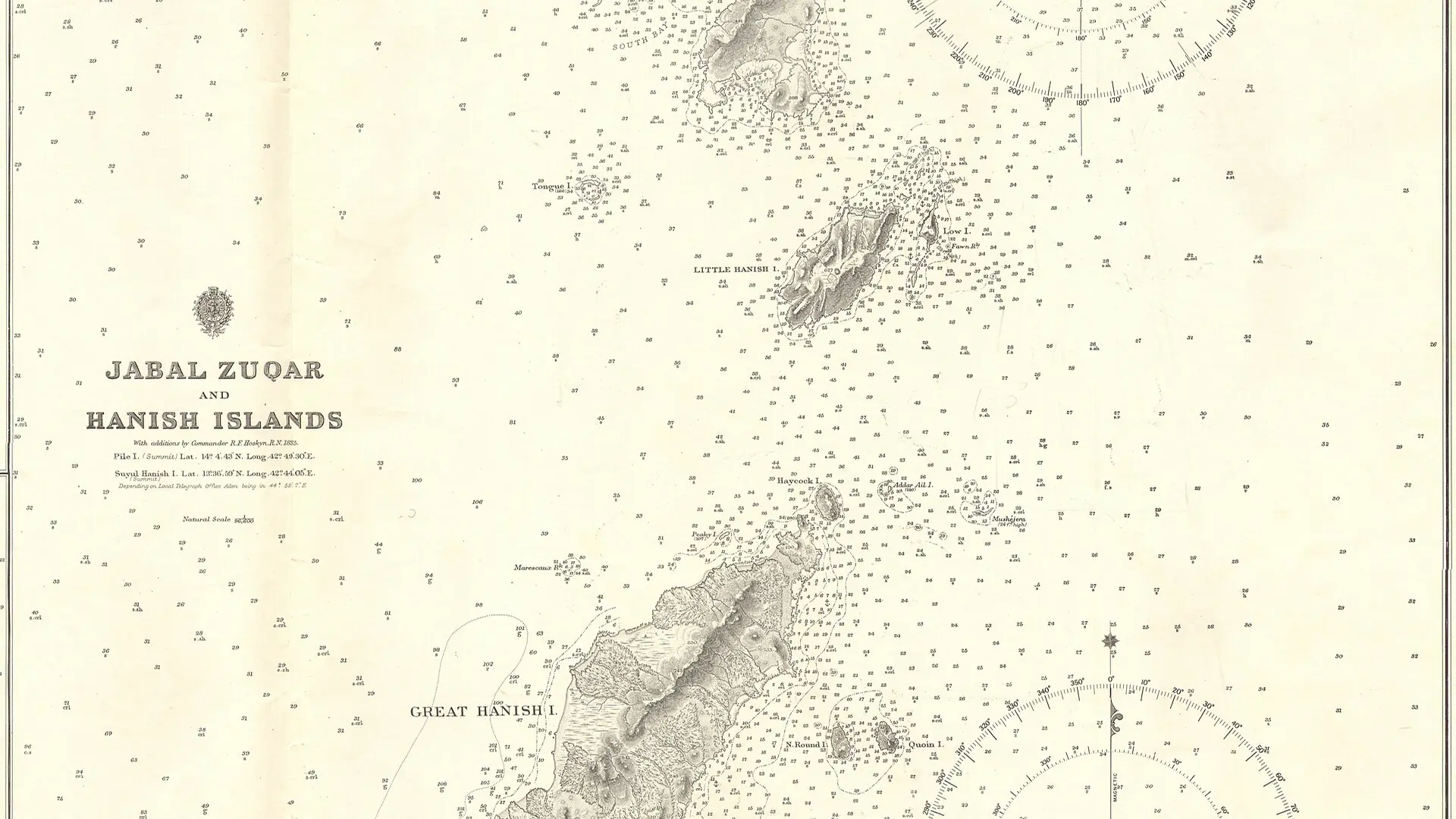
Houthi forces have captured Greater and Lesser Hanish in the southern Red Sea, according to Yemeni government and Houthi officials, extending a rapid offensive that has changed control of territory around one of the world’s most important shipping routes. The new gains follow the seizure of Mokha and Mayun Island near the Bab el-Mandeb strait.
The Hanish islands lie north of Bab el-Mandeb and offer positions from which forces can observe maritime traffic. Control of an island does not automatically give the Houthis the ability to close the strait, and no verified declaration of a complete closure accompanied the reports. The advances nevertheless increase the number of coastal and island positions available to the movement.
Saudi-backed government forces have struggled to organize a stable defensive line after losing key locations. The United Arab Emirates, which previously supported forces controlling some southern Red Sea islands, reduced its direct presence earlier in 2026. That shift left local formations responsible for positions that have now come under renewed pressure.
The fighting has displaced more than 80,000 people in recent weeks, according to figures cited by officials and humanitarian reporting. Precise casualty totals remain contested, but civilians have been killed and communities along the western coast have fled as front lines moved rapidly.
The Houthis also continue missile and drone attacks against Saudi Arabia. Riyadh has responded with air strikes inside Yemen while seeking military coordination with the United States. The escalation risks undoing years of efforts to limit cross-border fighting and move toward a political settlement.
Shipping companies and governments are watching the developments because Bab el-Mandeb connects the Red Sea to the Gulf of Aden. Vessels using the Suez Canal normally pass through this corridor, making security on both shores and nearby islands relevant to trade between Europe and Asia.
The islands’ military value depends on what the Houthis can deploy and sustain there. Observation posts, small drones, radar or anti-ship weapons would require transport, power, communications and protection from air attack. Satellite imagery and maritime warnings may eventually show whether the movement is building permanent facilities or merely establishing political control. Until then, the capture of territory is confirmed more clearly than any specific weapon deployment. Shipping risk should be assessed from verified attacks and notices, not from maximum-range assumptions alone.
The islands are separated from major population centres, making resupply and medical evacuation difficult under attack. That geography can favour surveillance but also exposes fixed positions. Control must therefore be evaluated over time rather than inferred from a single announcement or the raising of a flag.
The capture claims were reported by officials from both sides, but the military situation can change quickly and access for independent observers is limited. The confirmed strategic development is the expansion of Houthi-controlled positions in the southern Red Sea, adding a maritime dimension to the renewed civil war and to the wider confrontation involving Saudi Arabia and Iran-aligned forces.