Land Forces
Lebanon: Lebanese and British troops conclude exercise “Pegasus Cedar 2026” with an air assault
Lebanese and British soldiers ended the three-week joint exercise Pegasus Cedar 2026 with a mock helicopter assault. It is the first joint exercise of the two countries since October 7, 2023, as the Lebanese Army is tasked with disarming Hezbollah.

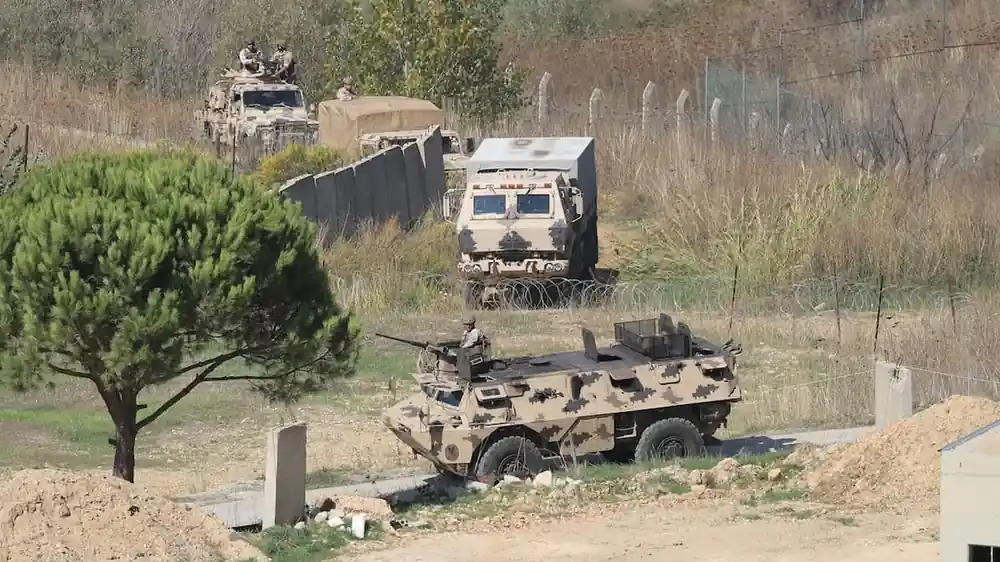
Lebanese and British soldiers have completed the joint exercise “Pegasus Cedar 2026”, which lasted three weeks at the Hamana barracks, east of Beirut. The exercise culminated in a mock assault: Lebanese Army helicopters flew low over the valley and dropped British and Lebanese soldiers onto the roof of a building, from where they launched the attack. The scenario involved neutralising a terrorist group, using drones, helicopters and medium-calibre weapons.
The exercise involved Lebanon’s elite Airborne Assault Regiment and the 4th Battalion of the Royal Regiment of Scotland. Elements of the US and Italian armies also took part, with observers present from France, Cyprus, Qatar and Jordan. The final phase was watched by the Lebanese Army Chief of Staff, Brigadier General Hassan Aouidi, second in the army’s hierarchy.
“It is extremely important to build a relationship of mutual support and develop our professionalism as armies in the region,” the British commander, Lieutenant Colonel Alex Phillips, told reporters, calling the exercise an opportunity for mutual learning. The British element is normally based at the Dhekelia garrison in Cyprus.
The first joint exercise since October 7
The exercise built on an earlier one in September 2023, described as the largest involving British and Lebanese soldiers. It is the first joint exercise between the two countries since the attack of October 7, 2023 and the start of the Gaza war.
It comes at a critical time for the Lebanese Army, which has been tasked with disarming Hezbollah and extending state control across the country. The task is made harder by Israel’s occupation of parts of southern Lebanon, while Lebanon and Israel have begun military talks mediated by CENTCOM. The US-backed peace process foresees the Lebanese Army regaining control and disarming Hezbollah in exchange for the withdrawal of Israeli troops. The process has, however, almost frozen, since Hezbollah, which did not sign the agreement, rejects disarmament.
The Lebanese Army enjoys great respect in the country but has limited funding and equipment and relies mainly on foreign aid. The European Union recently launched a mission to support the Lebanese Army.