Military & Defense
Minuteman III: unarmed ICBM test launch from Vandenberg while Trump was flying to China
The US Air Force launched an unarmed Minuteman III ICBM from Vandenberg in test GT-257 as Trump flew to China. The service says the launch was scheduled for years and is not a response to world events.

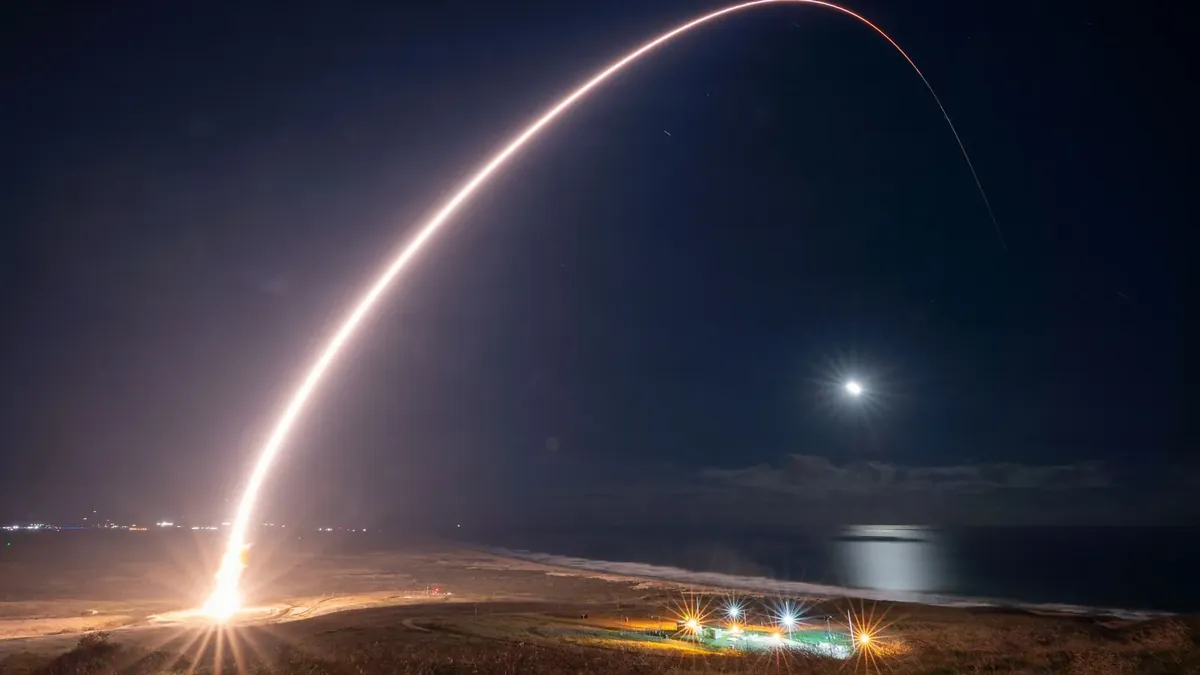
The US Air Force launched an unarmed Minuteman III intercontinental ballistic missile (ICBM) from Vandenberg Space Force Base in California at 23:01 Pacific time on Tuesday, November 17, which is 09:01 Greek time on Wednesday, November 18. The test, named Glory Trip 257 (GT-257), was conducted by Air Force Global Strike Command (AFGSC) while Donald Trump was flying on Air Force One to China. After the test, on Wednesday, November 18, Xi Jinping received the US president in Shenzhen, where the trilateral meeting of Mr Trump, Mr Putin and Mr Xi had been scheduled on the sidelines of the APEC summit.
AFGSC insists the launch was scheduled years ago and “is not a response to international events”. The tests “evaluate the entire ICBM system” and give various government agencies data for maintenance, engineering support and life-cycle analysis of the weapon, the Command says; it has carried out more than 300 Minuteman III test launches. “The ability to conduct these rigorous, realistic tests rests on the dedication of our personnel and is fundamental to the safety and reliability of the Minuteman system,” said AFGSC commander Gen. S.L. Davis.
The missile came from the silo complex of Minot Air Force Base in North Dakota, which also provided maintenance support, and the launch crew was drawn from personnel of all three missile wings. Two officers of the 625th Strategic Operations Squadron aboard a Navy E-6B Mercury aircraft were responsible for the launch through the Airborne Launch Control System (ALCS). The Air Force did not give details of the trajectory. In routine tests the unarmed missile travels about 4,200 miles to targets at Kwajalein Atoll in the Marshall Islands, the US Army’s Ronald Reagan Ballistic Missile Defense Test Site. It was the first test in six months and the third of 2026, after the March test with two reentry vehicles and that of May 20, Air & Space Forces Magazine notes.
A weapon that has to last into the 2030s
The United States has 400 Minuteman III (LGM-30G) missiles at F.E. Warren Air Force Base in Wyoming, Malmstrom in Montana and Minot in North Dakota. Crews of two officers stand alert around the clock in underground launch control centres. The system entered operational service in 1970 and must stay in service for years more, since its successor, the LGM-35A Sentinel, is not expected to begin entering service before the early 2030s. Earlier this month a flight test of the Mk21A reentry vehicle that will carry the new ICBM’s warhead also took place over the Pacific.