Asia-Pacific
Trump on the South China Sea after ASEAN closed without a Code of Conduct: “not concerned at all”
Donald Trump said the Philippines–China tension in the South China Sea does not worry him, a day after ASEAN's Manila summit ended without a finished Code of Conduct. Marcos says talks are 85–90% complete.

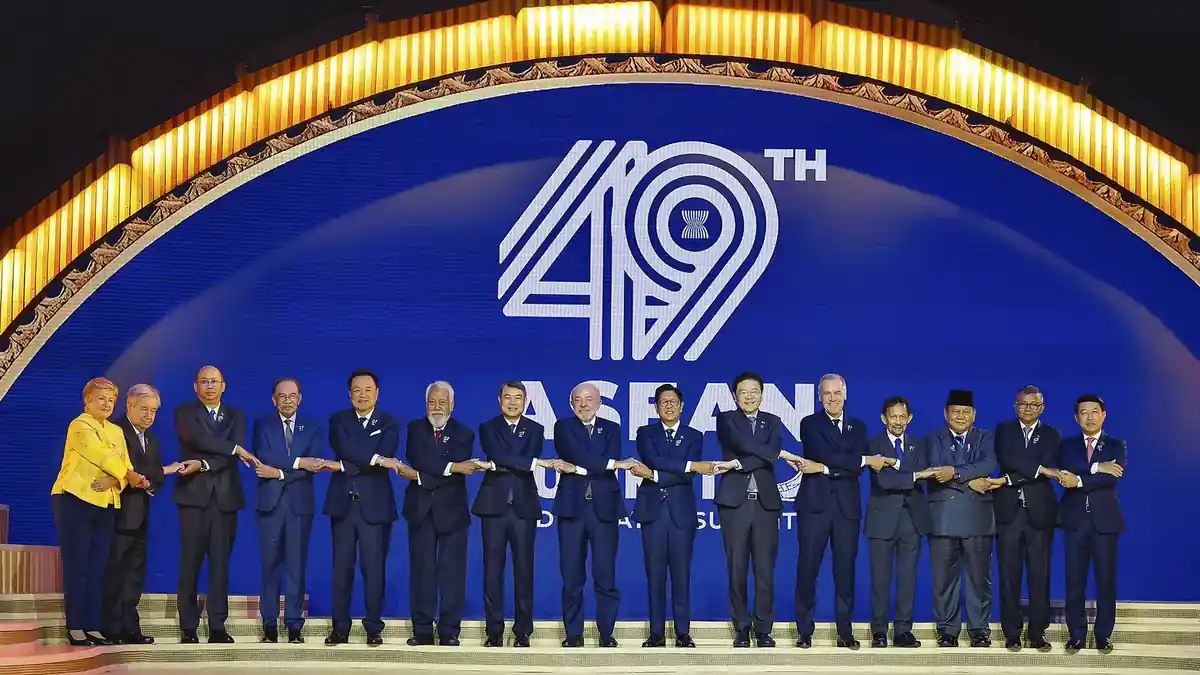
Donald Trump said he is not troubled by the Philippines’ tension with China in the South China Sea, a day after the 49th ASEAN summit in Manila closed without completing the Code of Conduct (COC). The US president spoke on Wednesday, November 18 at Malacañang Palace, in his bilateral meeting with Ferdinand Marcos Jr. Asked about the tension in the West Philippine Sea, despite continuing Chinese actions against Philippine vessels, he replied: “It doesn’t concern me at all. That will get taken care of.” The statement was recorded by the state-run Philippine News Agency.
The two countries are bound by the 1951 Mutual Defense Treaty and are marking 80 years of diplomatic relations this year. The meeting covered defence, trade and investment, economic security and transnational threats. A day earlier, at the special US–ASEAN summit, Mr Trump had told the region’s leaders that relations with the Philippines are closer than ever, with expanded joint training of Special Forces and cooperation on modernising the armed forces.
The Code of Conduct, still unfinished
Concluding the Code of Conduct was among the ambitions of the Philippines’ 2026 ASEAN chairmanship. Mr Marcos admitted at his press conference on Tuesday, November 17 that Manila wanted to announce its completion, which did not happen. He said negotiations with China are 85% to 90% complete, with “the big issues already decided”, and what remains is mainly agreement on the definition of terms. Until it is concluded, ASEAN and China will follow the 2002 Declaration on the Conduct of Parties (DOC).
Foreign Secretary Maria Theresa Lazaro had said on Monday, November 16 that Chinese Premier Li Qiang committed to a “substantive, effective and timely conclusion” of the code. She attributed the delay to “lack of time” and said another five to six months would have closed the deal. “We have done 80% or more. I don’t consider it a failure,” she noted, leaving the continuation to Singapore. Singapore’s Prime Minister Lawrence Wong took over the ASEAN chairmanship for 2027.
On the sidelines of the summit, the leaders of the United States, India, Japan and Australia issued a joint Quad statement on Tuesday, November 17, saying they “strongly oppose any destabilising or unilateral action that seeks to change the status quo”, in particular by force or coercion. The four committed to open, secure and resilient sea lanes in the Indo-Pacific and announced a new maritime-surveillance information-sharing initiative. Earlier this month Australia and the Philippines signed a new defence agreement in Manila.