Greece
PULS: the 36 launchers with a 300 km reach that change Greek artillery against Turkey
Under intergovernmental agreement 009A/26, Greece is buying 36 Elbit PULS launchers for €690 million with the full munitions family, from 35 km rockets to the 300 km Predator Hawk, giving Greek artillery for the first time a weapon that outreaches its Turkish counterparts.

For the first time in decades, Greek artillery is acquiring a weapon that reaches further than its Turkish counterparts. Under intergovernmental agreement 009A/26 of April 6, 2026, Greece is buying 36 PULS launchers from Elbit Systems for €690 million, together with the system’s whole family of munitions: from 35 km guided rockets to the 300 km Predator Hawk missile. PULS is not simply a new multiple launcher. It is a “carrier” that accepts different munition pods, so the same launcher can strike Turkish batteries across the Evros today and a radar or depot on the Asia Minor coast tomorrow. Its value was also shown on October 19, when Elbit announced a new $235 million contract for PULS and EXTRA-MR rockets with a European country. The Greek choice fits a trend that already includes NATO states.
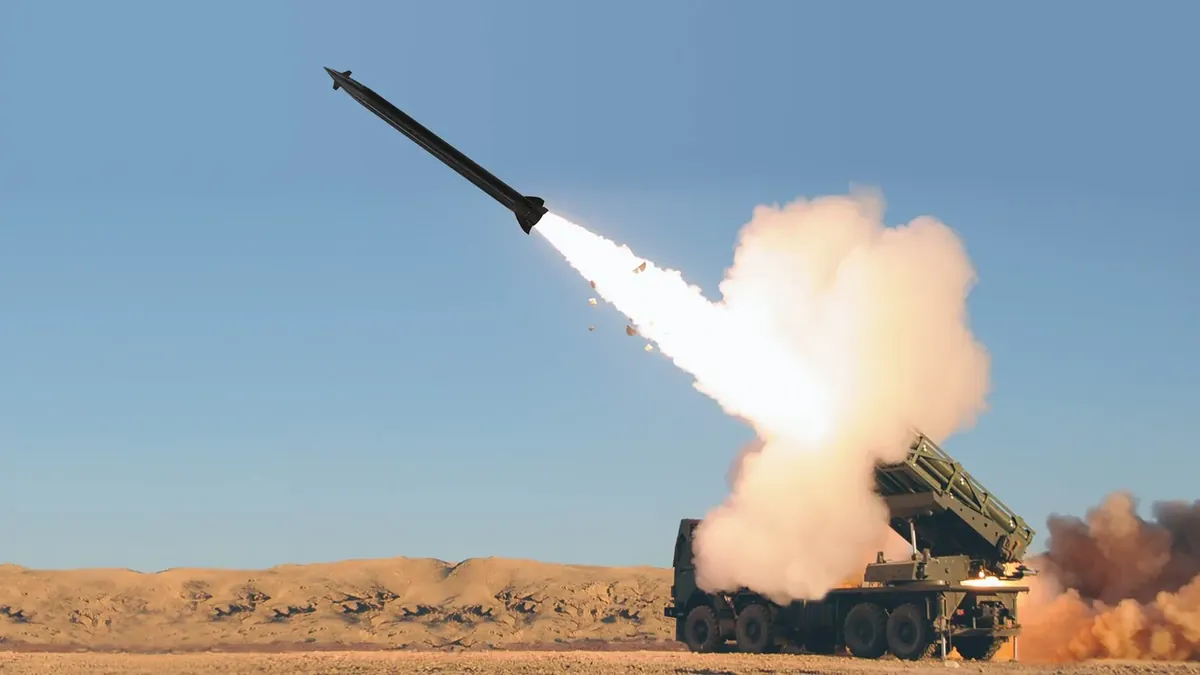
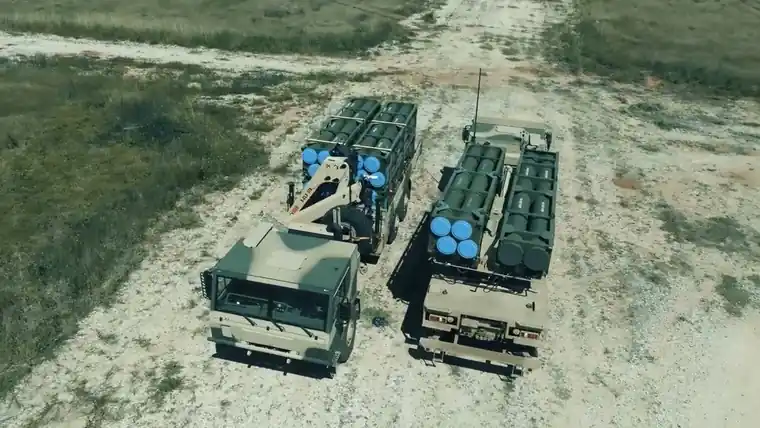
The video below is Elbit Systems’ official presentation of PULS, with more than 130,000 views on the company’s channel. It shows the launcher on two different vehicles, an 8×8 truck with a crane for autonomous reloading and a 6×6, with the two pods raised to fire. That image condenses the philosophy of the system: Elbit does not sell a vehicle but a launch system that “sits” on whichever truck the customer chooses, with or without a crane. For the Hellenic Army this means the choice of vehicle can be made on support and spare parts, an issue Greek artillery knows well from the years of abandoning the M270.

One launcher, four weapons: what PULS fires
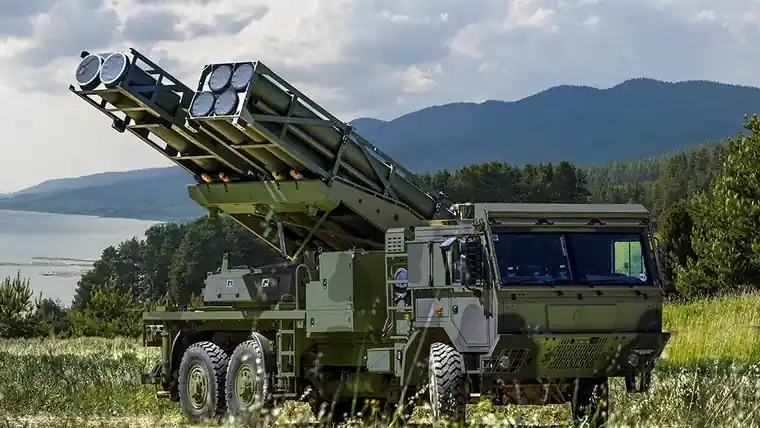
The heart of PULS is two independent pods, loaded sealed from the factory. Each pod carries a single type of munition, but the launcher can carry two different pods at once. According to Elbit’s official data, each pod holds 18 Accular 122 mm rockets with a range of 35 km, or 10 Accular 160 mm rockets for 40 km, or 4 EXTRA rockets for 150 km, or 2 Predator Hawk missiles for 300 km. With two pods, one launcher can therefore fire 36 rockets of 122 mm or 4 Predator Hawks. The Accular are guided rockets for fire near the line of contact, against batteries, mortars and concentrations. The EXTRA and Predator Hawk are in practice precision ballistic weapons for targets in depth: command centres, radars, airfields, air defence batteries and ports.
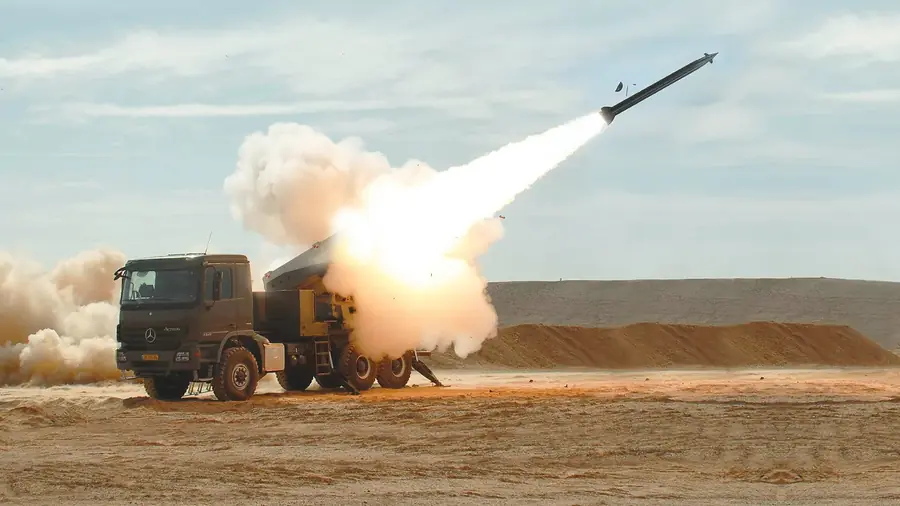
Elbit also gives the time each munition needs to reach its target, a detail often forgotten. The EXTRA-MR, the newer medium-range version, covers 80 km in under 3 minutes. The EXTRA reaches 150 km in under 5 minutes and the Predator Hawk 300 km in about 8 minutes. These times matter for moving targets, such as a mobile air defence battery or a launcher that changes position after firing. PULS can also fire the SkyStriker loitering munition, which Elbit says reaches 250 km, searches for the target from the air and strikes when it finds it.
What changes for Greek artillery
The launcher needs a crew of 2 to 3 in an armoured cab and fires about 30 seconds after receiving coordinates, while the two pods are changed in under 10 minutes. Elbit says the system is ready to fire in less than a minute after stopping. In practice this is the “shoot and scoot” tactic: the launcher arrives, fires and moves away before the enemy counter-battery radar locates its position and directs fire. For the Greek islands, where room to manoeuvre is small, this speed is a matter of survival, not a luxury. It is no accident that Ankara reacted sharply to the prospect of PULS with Predator Hawk being deployed in the Aegean.
PULS does not replace the Army’s M270s, which are due to be upgraded, but complements them. The M270s with American munitions remain the heavy “carpet” of fires, while the 36 PULS add something Greece did not have: guided strikes out to 300 km from a land platform, far beyond the roughly 165 km of ATACMS. Israel, through SIBAT, has released the whole range of the system’s munitions for Greece. This means the range is not limited by the political decisions of third parties, as often happens with exports of American missiles. PULS thus fits the same logic as the “Achilles Shield”: air defence protects, artillery deters.
PULS against Turkey’s TRG-300 and TRLG-230
Turkey has invested for years in its own guided rockets. According to Roketsan, the TRG-300 Kaplan has a range of 20 to 120 km, with the Block-III version carrying a 105 kg warhead to the same 120 km, while the smaller TRLG-230 covers 20 to 70 km and is laser-guided in the terminal phase. In rockets, then, PULS with the EXTRA outranges the TRG-300 by 30 km, and with the Predator Hawk reaches 300 km, two and a half times further. The Turkish side answers at that level with the Tayfun ballistic missile, which belongs to a different category: it is a separate, heavier weapon and not a pod that fits the same launcher as the rockets. The advantage of PULS is precisely that the same launcher and the same crew cover the whole spectrum from 35 to 300 km.
PULS has already been selected by the Netherlands, Denmark and Spain, while a Euro-PULS version is being developed for the European market. The new $235 million European contract shows that medium-range precision rockets such as the EXTRA-MR are becoming a NATO standard. For Greece this has practical value: a system with many users in Europe means common training, common munitions stocks and greater support security for the next 30 years.
Key questions on PULS
How many PULS is Greece buying? Greece is buying 36 PULS launchers from Elbit Systems under intergovernmental agreement 009A/26, signed on April 6, 2026, for €690 million, together with a munitions package.
What is the range of PULS? It depends on the munition: 35 km with the Accular 122 mm rockets, 40 km with the Accular 160 mm, 80 km with the EXTRA-MR, 150 km with the EXTRA and 300 km with the Predator Hawk missile.
How many rockets does a PULS launcher carry? The launcher carries two pods. Each pod holds 18 Accular 122 mm rockets, or 10 Accular 160 mm, or 4 EXTRA, or 2 Predator Hawk, according to Elbit.
How does PULS compare with Turkey’s TRG-300? Roketsan’s TRG-300 has a range of up to 120 km. PULS reaches 150 km with the EXTRA and 300 km with the Predator Hawk, from the same launcher.
Does PULS replace the Greek Army’s M270s? No. The M270s are due to be upgraded and will continue to serve. PULS complements them with precision strikes at greater depth.