Middle East & North Africa
Revolutionary Guards: the limit on Iran’s missile range “has been lifted” – what they said about a new underground “missile city”
An IRGC spokesman says Iran’s self-imposed missile range limit no longer applies, and that a new underground “missile city” will be unveiled. The claims about downed aircraft and failed air defences are unverified.

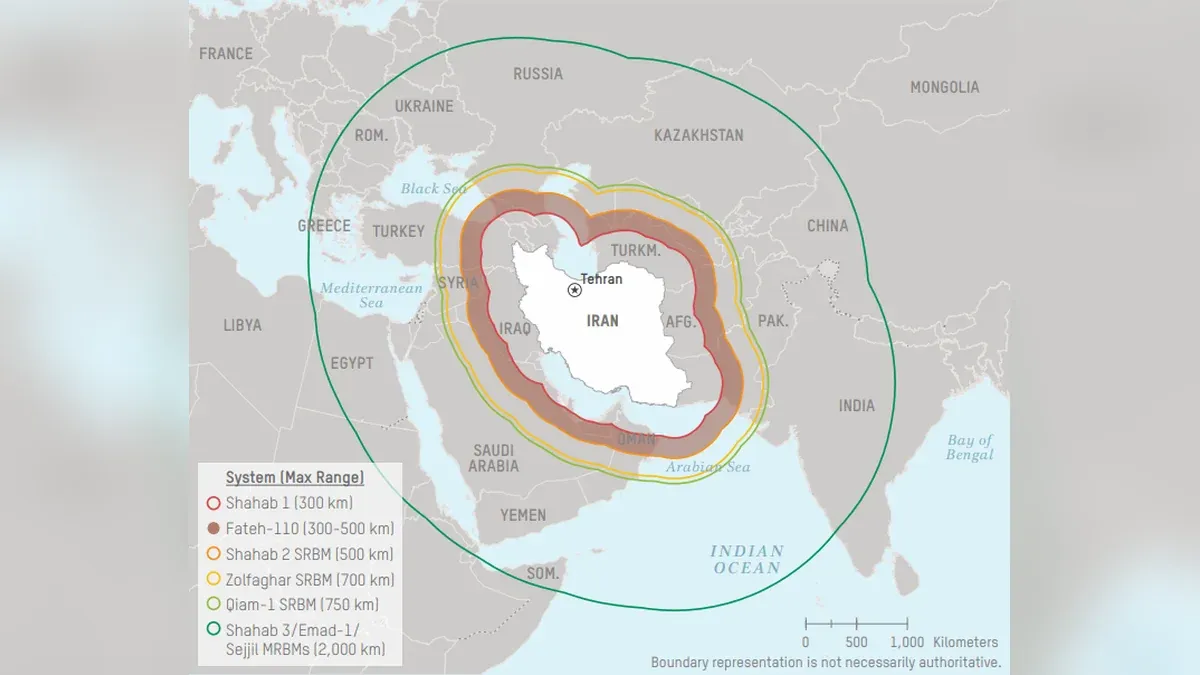
The Islamic Revolutionary Guard Corps (IRGC) says the limit on the range of Iran’s ballistic missiles no longer applies. “This restriction has been lifted for us,” the corps’ spokesman, Brigadier General Hossein Mohebbi, replied on Saturday, November 7, when asked at the margins of a press conference whether the Supreme Leader’s recent order to respond “without geographical limits” also means an end to range limits. The statement was published by the IRGC-affiliated news agency Tasnim.
For years Tehran has publicly presented a range of 2,000 kilometres as the ceiling it set for its own missiles. Mohebbi stressed, however, that the Islamic Republic must show its capabilities “on the battlefield,” not through statements ahead of their use. He described the confrontation with Iran’s adversaries as an “asymmetric war” and argued that the country can strike where the enemy does not expect, using its “material and immaterial” assets.
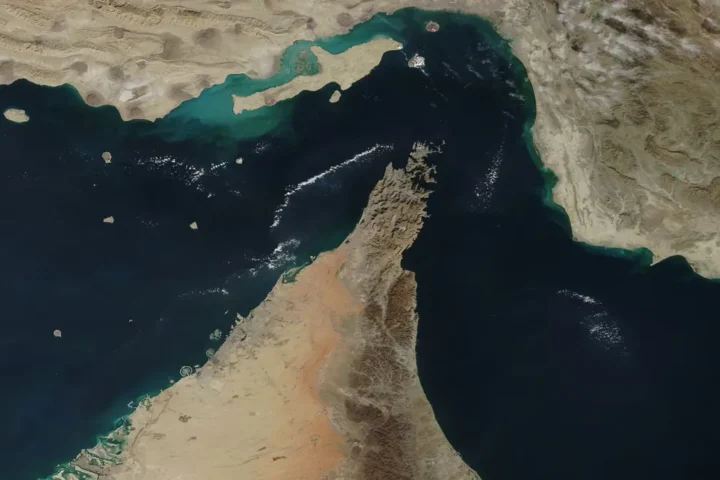
The remark follows Mojtaba Khamenei’s meeting with the military leadership, in which the Supreme Leader ordered an immediate response “without geographical limits” and a full update of the target database, as we reported, so that every material and immaterial US and Israeli asset is within reach of the armed forces. The range claim was also among the statements analysed in our report on the night of the US strikes on Qeshm.
Underground “missile cities”
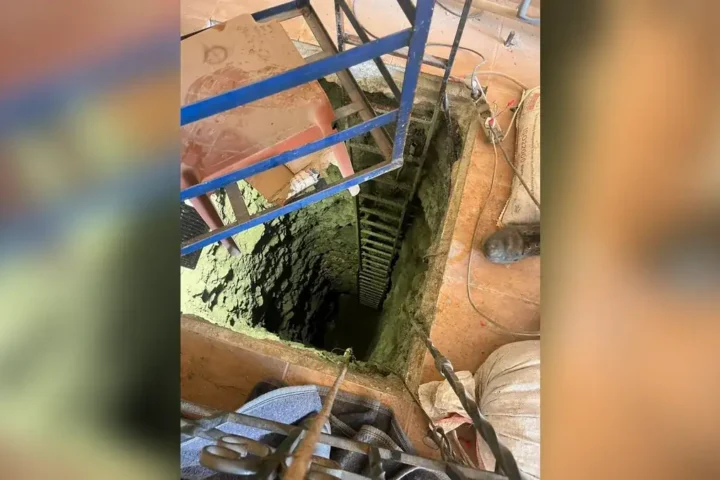
At the same press conference, held for the IRGC Aerospace Force Week, Mohebbi announced that the corps will present a new underground “missile city”. According to him, missile and drone production lines were moved quickly from the surface to underground sites. The Guards, he said, are no longer limited to underground depots but are building entire “production cities” at great depth, so that factories do not stop even under heavy bombardment. He also claimed that production continues normally, despite the adversaries’ assessment that Iranian missile stocks would run out.
The spokesman listed a series of claims about the war with the United States and Israel. He maintained that the Aerospace Force shot down more than 260 enemy aircraft and unmanned systems, among them F-35, F-16, F-5 and F-18 jets and MQ-1, RQ-4, Orbiter and Lucas drones, without counting the successes of the regular army. He added that reducing the radar cross-section (RCS) of Iranian missiles and drones allowed them to penetrate several layers of air defence, that THAAD “proved ineffective” and that Patriot systems had failures. None of these figures has been confirmed by an independent source.
Mohebbi also referred to exports of Arman missiles, “358” drones and the “3rd Khordad” air-defence system, and hinted at new capabilities that, he said, will be revealed if a “third wave” of the conflict breaks out. He was answering a question about the warning to Tehran’s adversaries after the US elections, when Mojtaba Khamenei warned that a new attack would bring a bigger response.