Defense Industry
Royal Navy plans £233 million contract to keep Merlin Mk2 helicopters flying to 2040, awarded directly to Lockheed Martin
DE&S published a transparency notice on November 26 for the Merlin OSDEP demonstration and manufacture phase; signature is not expected before June 2027.

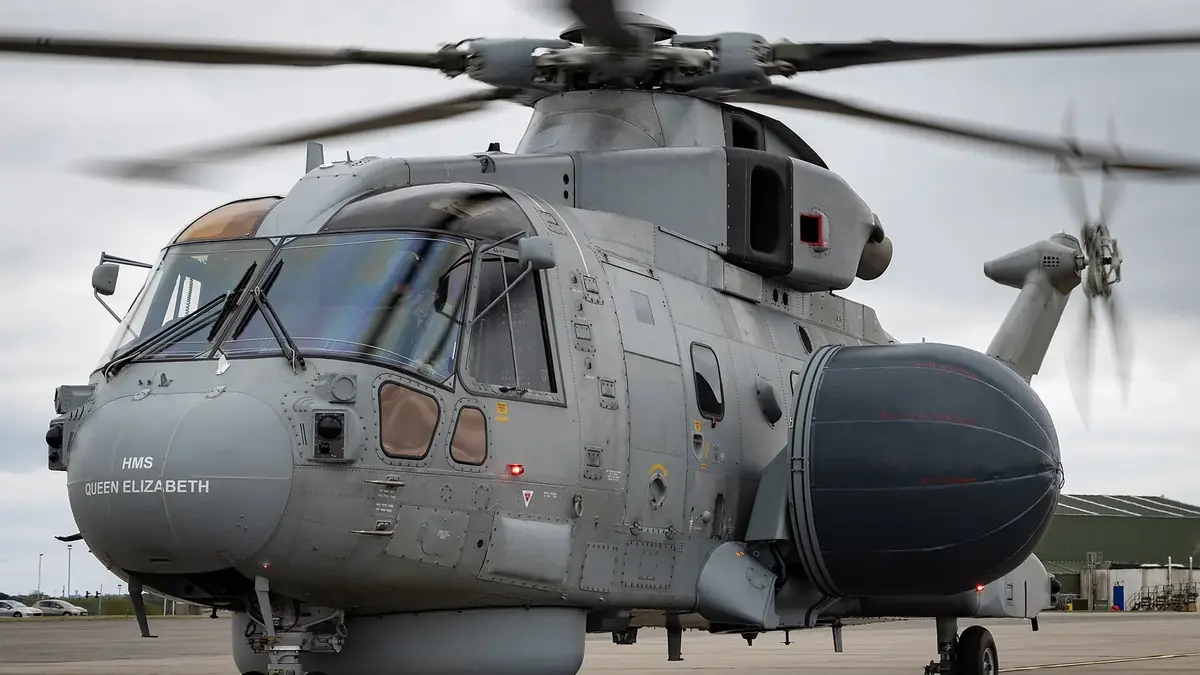
Britain’s Ministry of Defence has started the process for a contract of about £233 million (roughly $306 million) that would keep the Royal Navy’s Merlin Mk2 anti-submarine helicopters in service until 2040. The procurement agency Defence Equipment and Support (DE&S) published on November 26 a transparency notice for the demonstration and manufacture phase of the Merlin Out of Service Date Extension Programme (OSDEP).
According to the notice, the contract will cover demonstrating and integrating the modifications identified by earlier engineering studies, for airframe life and equipment obsolescence. Signature is planned no earlier than June 1, 2027, work will run to March 2035 and options extend to March 2040.
The contract will be awarded without competition. DE&S explains that Lockheed Martin UK, as the Merlin Mk2’s design authority, has the sole expertise, engineering experience and production capability for the modifications, as well as responsibility for certification and continuing airworthiness. An alternative contractor, the ministry says, would mean unacceptable cost and safety risks. Leonardo Helicopters, the original manufacturer, which already supports the fleet under a contract worth over £165 million since 2025, also appears in the procedure’s documents.
The Merlin Mk2 is the Royal Navy’s main anti-submarine warfare helicopter. Armed with Sting Ray torpedoes, it operates from frigates, protects the nuclear deterrent and escorts carrier strike groups, where a version with the Crowsnest airborne surveillance and control system performs those missions. The fleet numbers 30 helicopters, those of the original 44 upgraded to the HM2 standard. Such Merlins recently shadowed the Russian spy ship Viktor Leonov off Scotland.
The decision to fly the Merlin to 2040 was taken as early as 2022 as part of planning for future naval aviation. Original retirement dates were 2029 for the Mk2 and 2030 for the Royal Marines’ Mk4. The outline business case for the extension was approved in October 2023, followed in August 2024 by £1 million contracts for preliminary studies.
The Royal Navy is also examining uncrewed solutions that may someday take over part of the mission, with Leonardo’s uncrewed technology demonstrator Proteus having flown for the first time in January. Such scenarios are also being tested in NATO anti-submarine exercises in the Baltic.