Defense Industry
Arthur D: Saab’s new weapon-locating radar detects 300 mm rocket launchers at up to 100 km – and Greece already uses ARTHUR
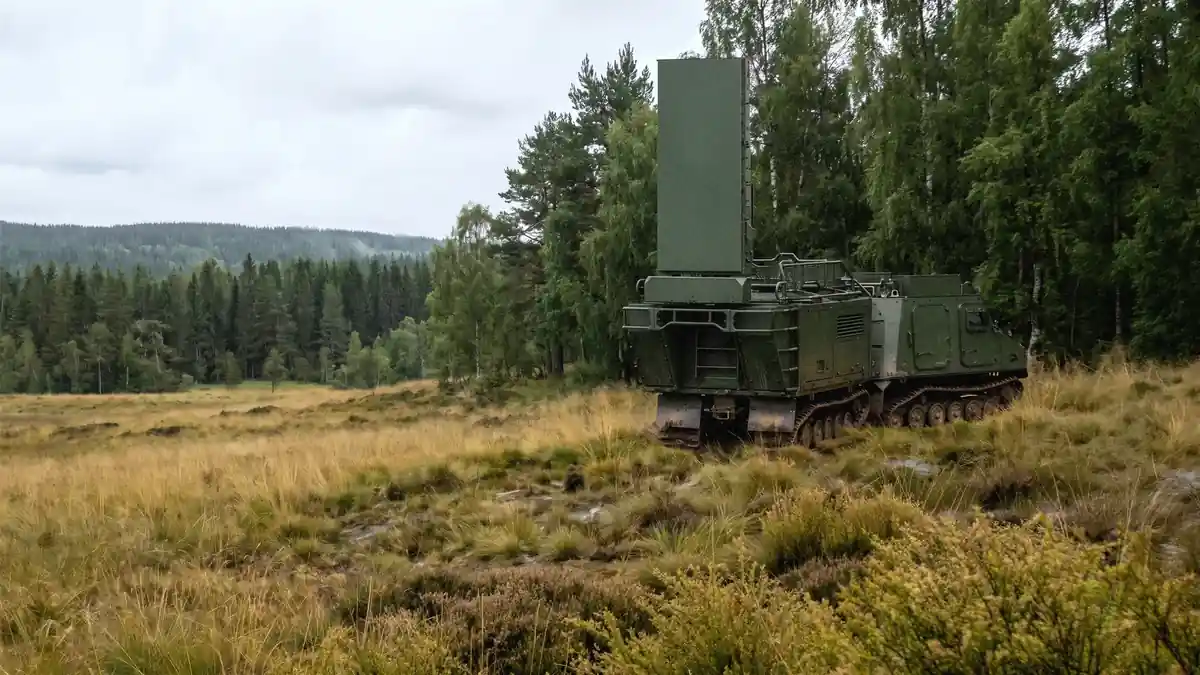
Saab has unveiled the new generation of its ARTHUR weapon-locating radar. The Arthur D uses AESA technology and, according to Saab, finds 300 mm multiple rocket launchers at up to 100 km. The Hellenic Army has used ARTHUR radars since the mid-2000s.

In artillery warfare it is critical to locate the enemy gun quickly, and that is the role of Saab’s new Arthur D. The Swedish company has presented the new generation of its ARTHUR weapon-locating radar which, according to Saab, finds 300 mm multiple rocket launchers at distances of up to 100 kilometres. The subject concerns Greece directly, as the Hellenic Army has used ARTHUR radars since the mid-2000s.
A weapon-locating radar tracks the projectiles passing through its sector, calculates their trajectory and finds where they were fired from. With this data friendly artillery carries out counter-battery fire before the enemy can change position. The same radar also shows where hostile projectiles will land, so threatened units can be warned, and, according to Saab, it can correct friendly fire by calculating the mean point of impact of friendly shells.
What changes in the Arthur D
The key step is the antenna. The ARTHUR Greece received had, according to Ericsson’s announcement of the Greek contract, a C-band Doppler radar with a phased-array antenna. The Arthur D uses solid-state digital technology with AESA (active electronically scanned array) transmit-receive modules, also in C-band (G/H under NATO designation). According to Saab’s brochure it covers a 120-degree sector, has a maximum range of 100 km, consumes less than 15 kW and locates the firing point with a CEP better than 0.15% of range. At 40 km that means half of the locations fall within a circle of radius under 60 metres around the true firing position.
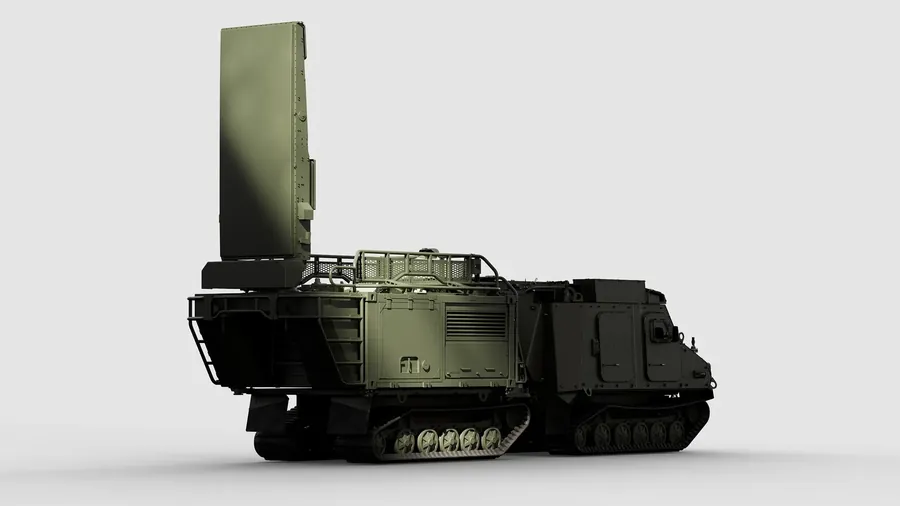
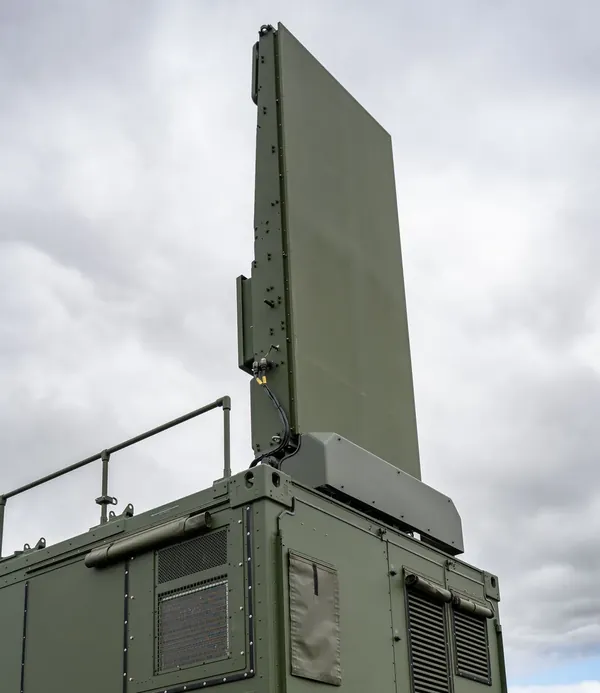
Saab also explains a design choice with practical consequences for support costs. Most of the antenna is lightweight aluminium waveguides, while the expensive AESA modules sit low, at its base. According to the company this eases repairs, lets the radar keep working at reduced performance if some modules fail, and allows the same modules to be used in the company’s Giraffe AMB D surveillance radar. The radar’s software can also be upgraded to add new functions without hardware changes.
Survival: the radar that must leave before it is found
A radar emitting near the line of contact is among the most valuable targets for the adversary, and Saab itself says the Arthur D will be a high-value target. To survive, it must change position faster than the enemy needs to react, and, according to the company, the time limit is usually 5 to 10 minutes, depending on the situation. That is why the system deploys and withdraws from a position in under 60 seconds and fits entirely on one vehicle, which can also be an armoured personnel carrier with the same protection and mobility as the units it supports.
The second measure is distance between people and the emitter. ARTHUR is delivered as standard with 500 metres of fibre-optic cable for remote operation, so the crew can be far from the transmitter and personnel movement around the radar is limited. Saab also mentions low thermal and electromagnetic signature, multispectral camouflage, active decoys, a drone-detection radar and remote weapon stations for the system’s self-protection. On a battlefield full of drones, the radar’s survival becomes a basic specification.
The Greek ARTHUR and the need for a new generation
Greece ordered ARTHUR in February 2002, in a €50 million contract with Ericsson, which then made the system, with deliveries in 2004. INTRACOM Defense took on co-production, integration and final testing of the Greek systems at its facilities in Koropi, and in December 2013 signed an exclusive framework agreement with Saab for their support, with spare parts and field technical support from Greek engineers. How many ARTHURs the Hellenic Army has in service has not been officially announced.
The acquisition of 36 PULS launchers, with a range of up to 300 km, also changes the locating needs of Greek artillery, because counter-battery fire depends first on how quickly and accurately the enemy is located. Turkey has a large number of self-propelled guns and Roketsan 300 mm rocket launchers, the type of threat that Saab says the Arthur D locates out to 100 km. On the Evros and the islands, rapid detection of hostile systems is critical.
Sweden has already taken the step: in 2025 its procurement agency FMV ordered the latest version of Arthur, in a contract of about SEK 1.1 billion with deliveries in 2027, vehicle integration by Saab and 15 years of support. Saab notes the contract allows partner states to join. Greece already has ARTHUR support infrastructure with Greek industry, but no decision on upgrading or replacing its locating radars has been announced.
Frequently asked questions about the Arthur D
What is the Arthur D? It is the new generation of Saab’s ARTHUR weapon-locating radar. It finds where hostile guns, mortars and rocket launchers are firing from, so counter-battery fire can follow, and warns of incoming fire.
What is its range? According to Saab, a maximum of 100 km, locating 300 mm multiple rocket launchers out to that distance, in a 120-degree sector, with accuracy (CEP) better than 0.15% of range.
Does Greece have ARTHUR radars? Yes. Greece ordered ARTHUR in 2002, in a €50 million contract, with deliveries in 2004. INTRACOM Defense took part in co-production and has supported the systems under a framework agreement with Saab since 2013.
Has Greece ordered the Arthur D? No Greek order for the Arthur D has been announced. Sweden has ordered the latest version of Arthur, with deliveries in 2027.