Technology
Expedition 74: NASA welcomes the six astronauts and cosmonauts of the International Space Station crew home at Space Center Houston
NASA will officially welcome the Expedition 74 crew home at a public event at Space Center Houston on Tuesday, November 17, at 6 p.m. Houston time (2 a.m. Wednesday in Greece).

NASA will officially welcome home the crew of Expedition 74, the 74th long-duration mission on the International Space Station (ISS). The welcome will take place at a public event at Space Center Houston, the visitor centre of NASA’s Johnson Space Center, on Tuesday, November 17 at 6 p.m. Houston time, which is 2 a.m. on Wednesday, November 18 in Greece. NASA announced the event on Tuesday, November 10.
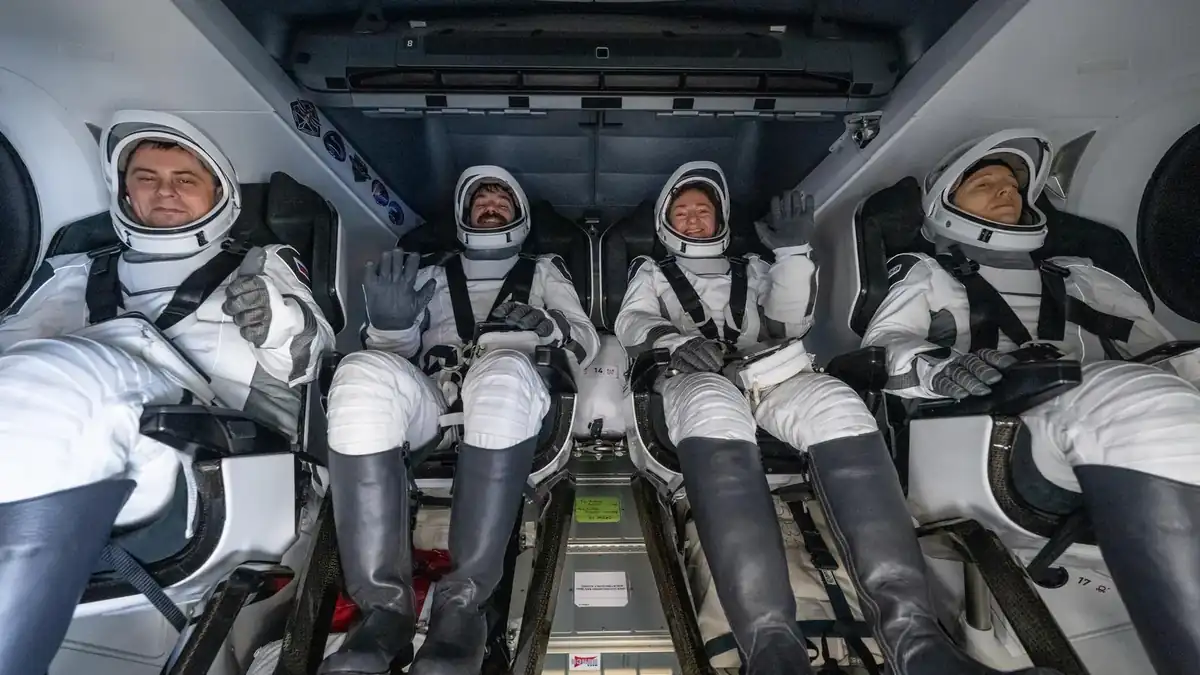
On stage will be NASA astronauts Jessica Meir, Jack Hathaway and Chris Williams, European Space Agency (ESA) astronaut Sophie Adenot, and Roscosmos cosmonauts Sergey Kud-Sverchkov and Sergei Mikaev. They will present the mission’s highlights, followed by an awards ceremony for those who contributed to it. Cosmonaut Andrey Fedyaev, who also flew on Crew-12, will not attend.
Two ways home
The crew returned to Earth in two different ways. Williams, Kud-Sverchkov and Mikaev were launched on November 27, 2025 aboard the Russian Soyuz MS-28 spacecraft from the Baikonur Cosmodrome in Kazakhstan. They returned on July 26 with a parachute landing south-east of the city of Zhezkazgan. They spent 241 days in space, completed 3,856 orbits of Earth and travelled over 102 million miles (about 164 million km). It was the first mission for Williams and Mikaev and the second for Kud-Sverchkov.
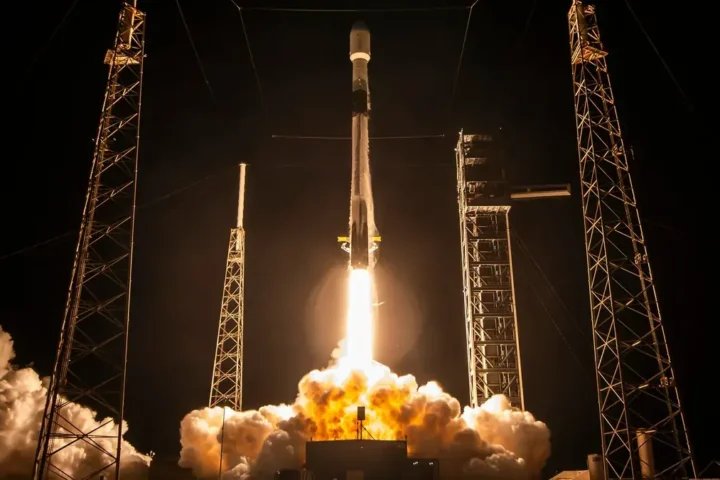
Meir, Hathaway and Adenot went up to the station on a SpaceX Dragon spacecraft as part of NASA’s Crew-12 mission. Launch took place on February 13 from Launch Complex 40 at Cape Canaveral Space Force Station in Florida. After more than seven months in space, the three splashed down safely on October 8 in the Pacific Ocean off Los Angeles. The mission lasted 237 days, with more than 3,792 orbits and a journey of over 100 million miles (about 161 million km). It was the second time in space for Meir and the first for Hathaway and Adenot.
Science on board
The crew devoted over 1,400 hours to scientific research and technology demonstrations. It tested metal and tissue 3D-printing technologies for in-space manufacturing and supported studies on human health on long flights: blood-flow measurements, assessments of pilot performance under changing gravity conditions, and the activation of a new compact exercise system. It also evaluated life-support and environmental-control systems critical for future Artemis missions.
In pharmaceutical research, the astronauts crystallised proteins for cancer drugs, worked on therapies that target tumours more precisely and cultured stem cells for therapeutic uses. They tended the first plants studied outside carefully controlled growth systems, upgraded an instrument that helps understand matter better and develop new quantum technologies, handled the spacecraft that visited the station and carried out necessary maintenance. With live educational events they also reached students and audiences worldwide.
For more than 26 years people have lived and worked continuously on the ISS. NASA considers the laboratory helps understand and overcome the difficulties of crewed spaceflight, open commercial opportunities in low Earth orbit and support long-duration missions to the Moon, under Artemis, and to Mars. The station also keeps being upgraded: on November 5 Anil Menon and Joshua Kutryk installed the eighth and final IROSA solar array.