Asia-Pacific
Taiwan: ten days and nine nights of “real combat” in the Lu Sheng 2 exercise – with M1A2T tanks and drones in the defence of the north
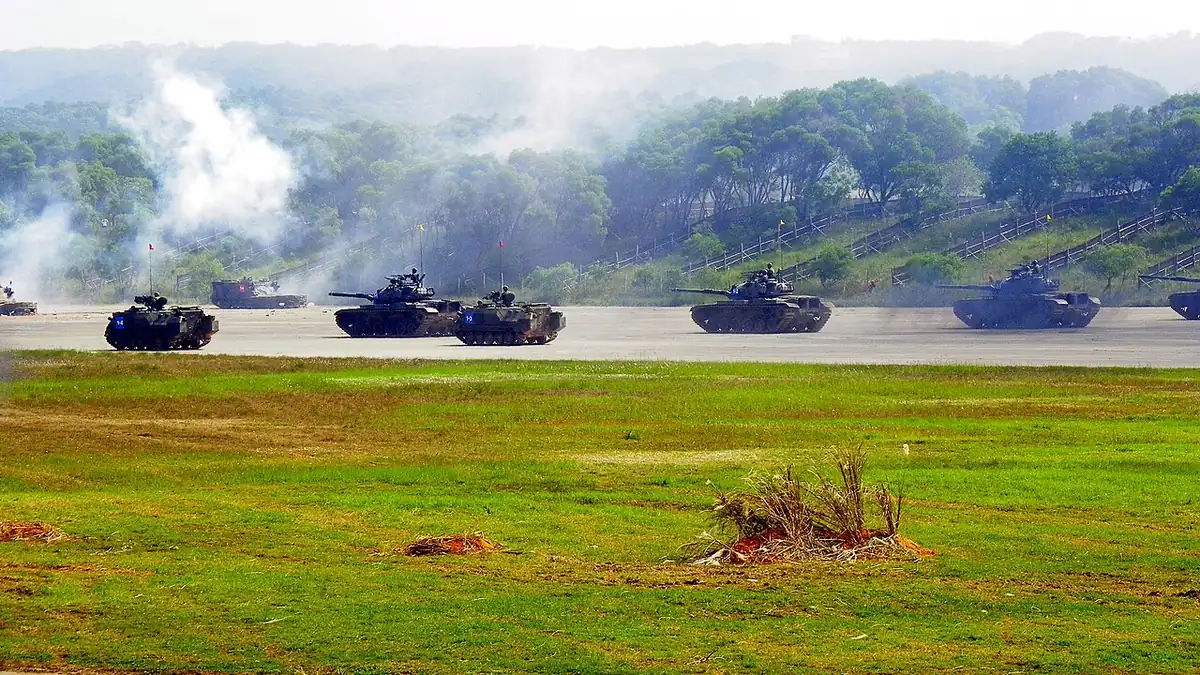
Taiwan’s army is in the middle of its annual brigade-level Lu Sheng 2 exercise, which this year runs ten days and nine nights without a break and has been moved to the north to match real defence missions, according to the Ministry of National Defense.

Taiwan’s army is in the middle of its large annual exercise Lu Sheng 2 (陸勝2號), the brigade-level “final evaluation”, which runs from October 14 to 23 with real troops and equipment. According to Taiwan’s Ministry of National Defense, the exercise lasts ten days and nine nights without a break, instead of the seven days and six nights that applied until now. The 269th Combined Brigade defends northern Taiwan, while the 564th Combined Brigade moves north to attack. The ministry notes that the exercise area was moved north to match real defence missions.
The focus is on brigade and battalion command, fire-support coordination, “graduated resistance” and a prolonged fight, land and air operations, the use of drones and special forces. New equipment is being tested tactically, such as the M1A2T Abrams tanks and the army’s third-generation communications system, together with the TTN and OneWeb satellite links. A engagement-simulation system judges the encounters, and the Army Training and Doctrine Command directs the exercise. Liaison officers from county reserve commands take part to make use of civilian resources.
What the units have been practising
According to Taiwan News, citing the ministry’s military news agency, in recent days artillery units practised the whole fire-support process, from target acquisition to computing firing data. Tank crews simulated field repair of a CM-11 immobilised with a damaged track, reconnaissance platoons used drones for surveillance, and engineers set up obstacles, barbed wire and HESCO protective walls. The army said the training will assess command and control, reaction to unexpected situations and coordination between units.
In its daily report, the ministry said that between 6 a.m. on Saturday and 6 a.m. on Sunday it detected around Taiwan two Chinese military aircraft, which crossed the median line in the north and centre, five Chinese Navy ships and nine government ships. Taiwan monitored them with aircraft, ships and ground-based missile systems. Taipei is also strengthening its unmanned assets, with Thunder Tiger delivering 1,520 drones.