Air Force
Ukraine hits Borisoglebsk airfield with a “long Neptune”; Zelensky says four Su-34s were destroyed
Ukraine’s Navy struck the Russian military airfield at Borisoglebsk in the Voronezh region with the Neptune coastal missile system on the night of October 15. Kyiv gave three different accounts of Russian losses, while Moscow did not acknowledge a hit.

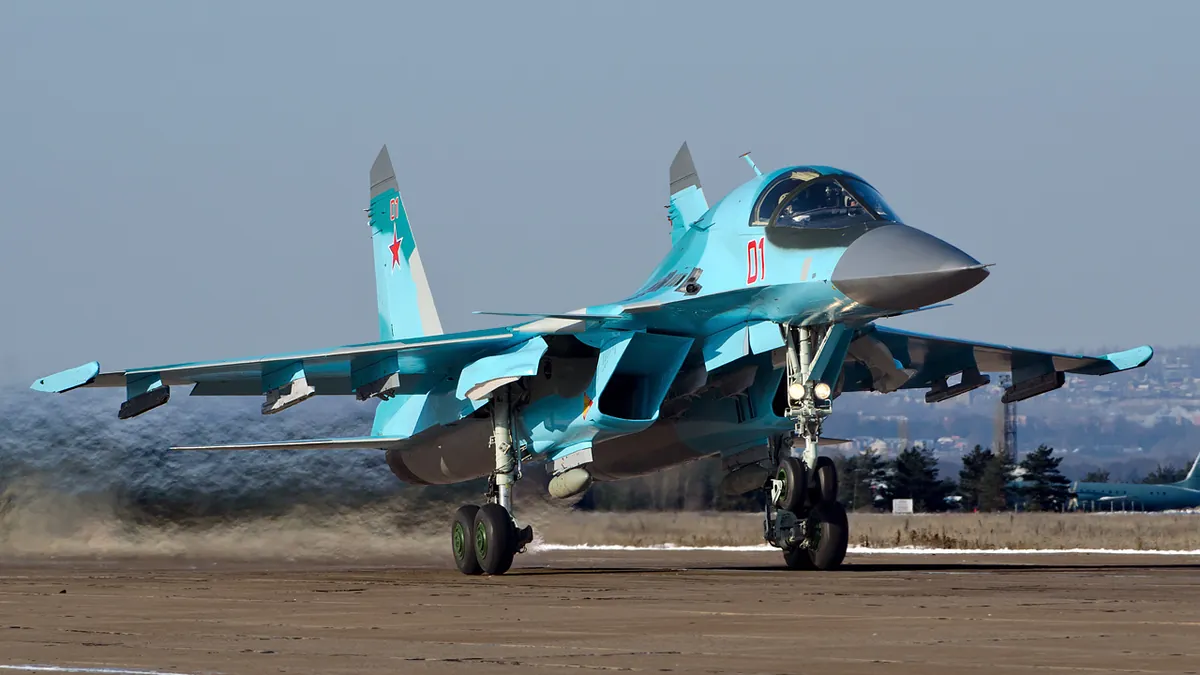
The Ukrainian Navy struck the Russian military airfield at Borisoglebsk, in the Voronezh region, on the night of October 15 with the Neptune coastal missile system. Over the course of the day Ukrainian officials gave three different accounts of the losses. The Navy said in the morning that it had “hit 6 enemy Su-34Ms”, the General Staff reported that six Su-34s had suffered “damage of various degrees”, and President Volodymyr Zelensky wrote that four had been destroyed and two hit.
“This night in the Voronezh region, Ukraine’s Defence Forces struck an airfield. Four Su-34 aircraft were destroyed and two Su-34s were hit. The Russians were using them for terror against our people. These were exactly the aircraft that were ready for new strikes on Ukraine and were armed with aerial bombs,” Zelensky wrote. “Our own long Neptune was used against the target. Thank you to the Navy warriors for their precision!”
Explosions and fire at the airfield
The General Staff said explosions and a fire were recorded at the site and that “work against the key military targets of the Russian aggressor continues”. According to the Navy, the Su-34M can carry multiple guided and high-explosive bombs as well as missiles, and is a key platform for guided glide-bomb strikes on front-line positions and cities.
Satellite images analysed by the OSINT group AviVector show, according to UNITED24, that at least four Su-34s were most probably destroyed.
Zelensky added that a drone storage and launch site in the Oryol region and a target in the Black Sea had also been hit. “Russia is prolonging the war, so our long-range operations will continue,” he wrote.
The strike came hours after Ukraine suffered one of its largest drone attacks, following the Russian assault with 39 ballistic missiles on energy infrastructure, covered in our report on Russia’s 39 ballistic missiles and 128 drones.
The Russian side
Russian authorities did not acknowledge a hit on the airfield. Voronezh governor Alexander Gusev said air defences intercepted 33 drones and “several jet aerial targets”, and that debris damaged outbuildings and a car. Residents of Borisoglebsk reported explosions and a large fire, as recorded by The Moscow Times, which notes that the damage cannot be independently confirmed.
It is not the first attack on Russian Su-34s on the ground. In early October the SBU announced a strike on Su-35 and Su-34 aircraft in Adygea, as covered in our report on the Adygea strike.