Air Force
KC-390 for the Hellenic Air Force: the programme file – cost, deliveries, aerial refuelling and what remains open
What is confirmed about Greece’s KC-390 purchase from official documents and announcements, what remains open, such as the F-16 refuelling, and what to watch until the third aircraft arrives in 2031.

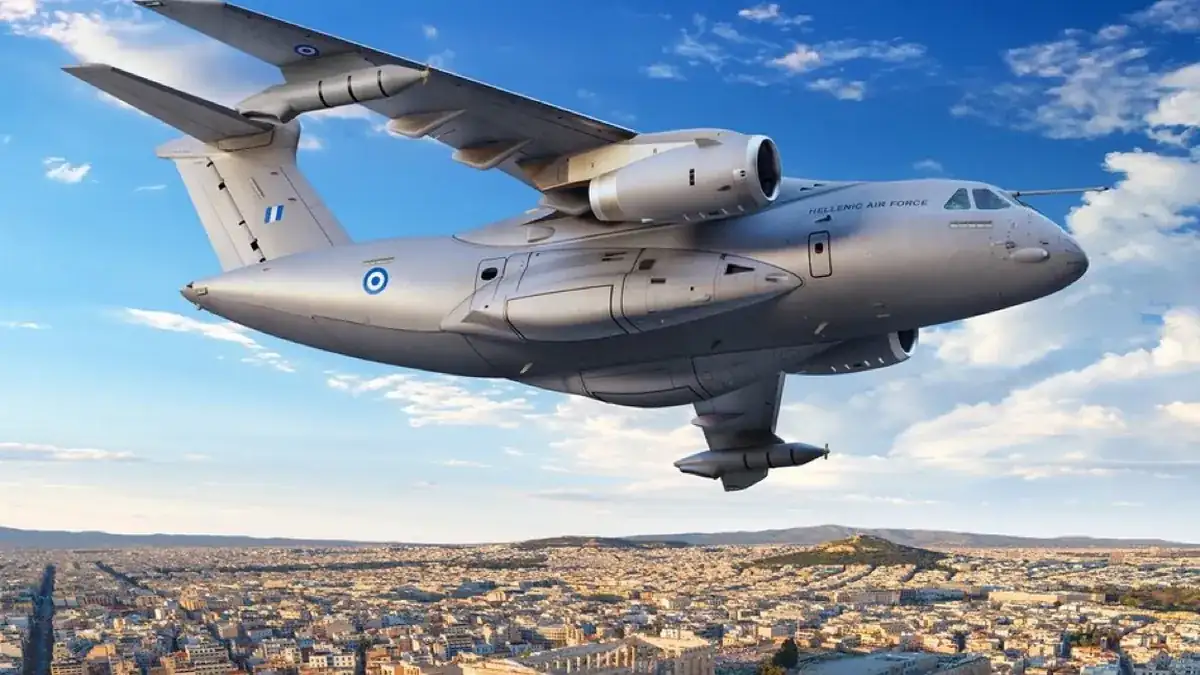
With the KC-390 the Hellenic Air Force gets its first jet transport and, as Defence Minister Nikos Dendias stressed, “for the first time in our history” a tanker aircraft able to refuel fighters in flight. That will happen, of course, once it is fitted with refuelling kits. That is why the programme concerns both airlift and the reach of fighters over the Aegean and the Eastern Mediterranean. The intergovernmental agreement with Portugal was signed in Athens on November 2, 2026, for three aircraft and an option for three more, with the first arriving in 2027.
In this article we gather what is confirmed by official documents and announcements, what remains open and what needs watching until 2031, when the third aircraft is delivered. We will update the article with each new development in the programme.
What was signed, and with which documents
Greece is not buying the aircraft directly from Embraer. Portugal, which already operates the KC-390, secured with an August 2025 decision an option for up to ten additional aircraft, so that European and NATO countries can acquire them through the Portuguese state, with government-to-government (G2G) contracts. The Greek aircraft come from that mechanism. Under Resolution 207/2026 of the Portuguese Council of Ministers, published on October 22 in the Diário da República, Portugal buys the three aircraft from Embraer and passes them to Greece, while the same decision states explicitly that the cost is covered solely by revenue from the contract with the Hellenic Republic. Embraer’s announcement of November 2 confirms the contract for three aircraft with an option for three more, up to six, and makes Greece the seventh European country to choose the type, after Portugal, Hungary, the Netherlands, Austria, the Czech Republic and Sweden.
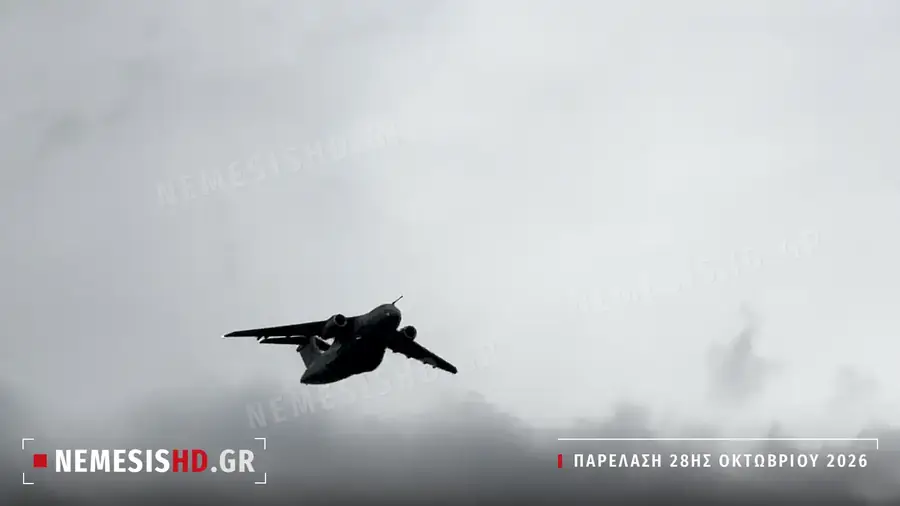
The road to the signature, as recorded by the Portuguese decision and the announcements of the two ministries, had six milestones. Greece signed a letter of intent for cooperation in military airlift on June 16, 2025. On May 7, 2026 Mr Dendias visited Portugal and toured 506 Squadron, which flies the Portuguese KC-390s from Air Base 11 at Beja. On May 22 Hellenic Aerospace Industry (EAB) and Embraer signed a memorandum on support and maintenance of the aircraft in Greece, and on July 23 the purchase was approved by the Government Council for National Security (KYSEA). Then came the Portuguese Council of Ministers decision of October 14 and the signing on November 2 at the Ministry of National Defence, together with a separate cooperation agreement between the two air forces. A Portuguese KC-390 had flown over Thessaloniki in the October 28 parade, a few days before the signing.
Cost and delivery dates
The Portuguese decision is the only published document that breaks down the cost by item. The three aircraft, together with the logistics support package for entering service, cost €532.9 million and will be bought under a contract with Embraer S.A. and Embraer Portugal. A second item of €57.1 million is managed by the Portuguese Air Force and covers the electronic warfare suite, training, logistics support, the technical support teams that will be based in Greece and programme management. The total comes to €589.98 million before VAT (the individual amounts are rounded), consistent with the roughly €600 million reported for the KYSEA approval. Payments are spread from 2026 to 2031, with the largest sums for the aircraft in 2029 and 2030. The three option aircraft are not included in this amount and will need a new decision and new funding.
The timetable announced with the signing foresees the first aircraft in 2027, the second in 2029 and the third in 2031. That means that for about two years the Air Force will have a single KC-390, and we estimate that this aircraft will be shared between training, transport and the first refuelling trials, before it can be considered an operational tanker. Initial training of pilots and technicians takes place at Beja, where Portugal is building a training centre for the type, and Portugal has undertaken to pass its experience of operating the aircraft to the Greek side.
The open question of the F-16
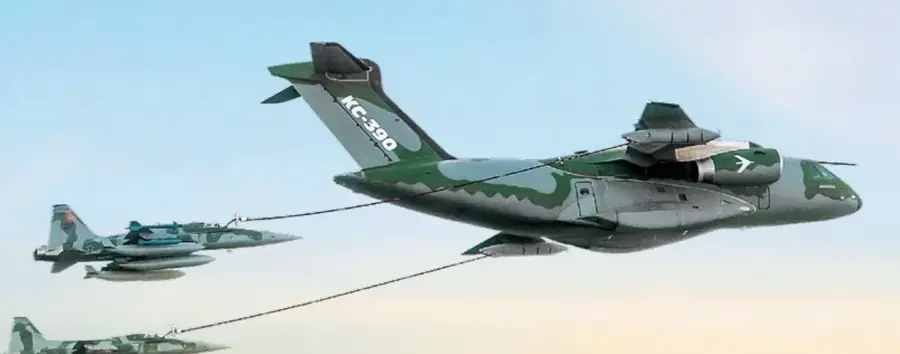
The F-16 question remains open. The system with a hose serves aircraft with a probe, that is, the Rafale and the Mirage 2000-5. The F-16s, the backbone of the Air Force, and the future F-35s are refuelled with the rigid boom of the American standard, through a receptacle on their spine, and cannot take fuel from a KC-390 with its current equipment. The minister said on November 2 that the new aircraft would refuel “in a first phase the Rafale and the Mirage and, one year from now, the F-16 too”, without explaining publicly with what technical solution. That horizon roughly coincides with delivery of the first aircraft in 2027. Embraer and Northrop Grumman announced on February 19, 2026 a cooperation to develop the KC-390 into a multi-mission tanker with an “advanced autonomous” boom, but it is a development that is not complete and in which no Greek participation has been announced.
Portugal has the same issue: Portuguese F-16s are not refuelled by the Portuguese KC-390s, and its tankers will refuel, under a technical arrangement approved in October, Spanish fighters that have a probe. The answer to the F-16 question will decide whether the KC-390 serves the Air Force’s entire fighter fleet or only the Rafale and the Mirage 2000-5.
What changes for airlift, the islands and survivability
The Air Force’s C-130s are turboprops, and the oldest of them belong to the early C-130B version. The KC-390 flies with two IAE V2500 turbofan engines and, according to Embraer, reaches 470 knots, about 870 kilometres per hour, against about 590 km/h that the US Air Force gives for the C-130H. It carries up to 26 tonnes of cargo, against about 19 tonnes for the C-130H according to the US Air Force, and the cargo hold, 18.5 metres long including the ramp, takes 80 soldiers or 64 paratroopers, an armoured vehicle or a helicopter the size of a Black Hawk. Speed counts the more trips have to be made the same day, in reinforcing islands, where every hour gained on one trip adds to the next.
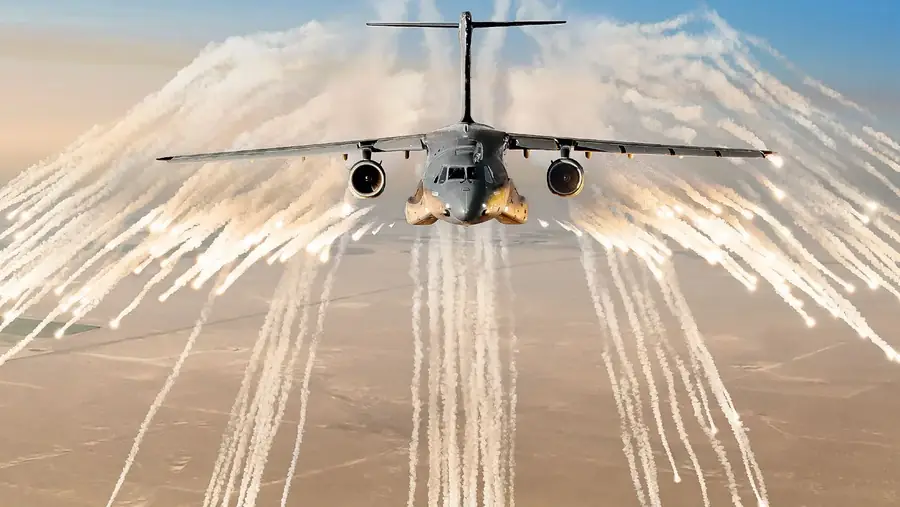
Embraer says the aircraft can operate from dirt, improvised or damaged runways, a capability that matters for the islands when infrastructure has been damaged, although how damaged a runway can be is not clear. Self-protection also counts for missions in crisis zones. The Greek aircraft will have the configuration of the Portuguese ones, certified for NATO requirements, with the electronic warfare suite from Elbit Systems: radar and laser warners, missile approach warning, countermeasure dispensers, directed infrared countermeasures (DIRCM, a system that misleads a missile’s infrared seeker with a beam before it reaches the aircraft) and an active electronic countermeasures pod. Support and maintenance of the aircraft in Greece are foreseen in the EAB–Embraer memorandum, while the Air Force joins a European community of users of the type, with the possibility of joint training and support.
What remains open until 2031
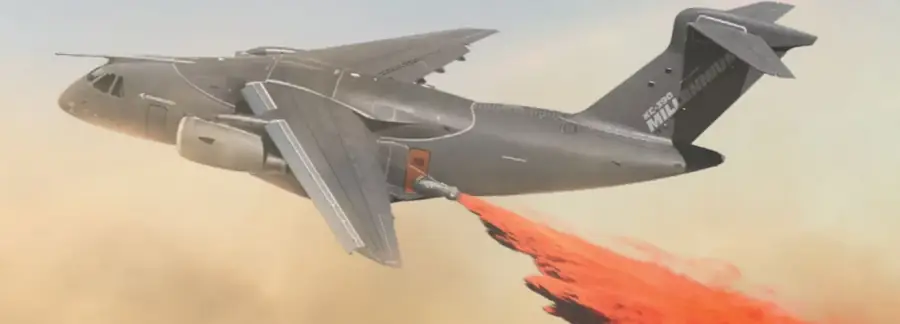
The contract has been signed, but five questions will determine exactly what the Air Force acquires. The first is the refuelling kits: the Portuguese decision gives no number of pods, and without them the KC-390 remains a transport. The second is the technical solution for the F-16s and the timetable the minister gave. The third is the three option aircraft: with six aircraft, we estimate it would be easier to have a tanker in the air and a transport on a mission at the same time. The fourth is aerial firefighting: Embraer offers a removable system that drops up to 3,000 US gallons, about 11,350 litres, of retardant, but the system is not mentioned in the Portuguese decision and, even if bought, it will complement and not replace the Canadairs, since the KC-390 cannot scoop water from the sea. The fifth is the retirement of the C-130s, for which no timetable has been announced. With three aircraft by 2031, we estimate the C-130s will carry a large share of transport for several more years.
For each stage of the programme in detail, see our reports on the Portuguese decision of October 22, the signing in Athens on November 2 and the Lockheed Martin post that followed.
Frequently asked questions about the Hellenic Air Force KC-390
- How many KC-390s is Greece buying? Greece signed on November 2, 2026 for three KC-390 Millennium aircraft, with an option for three more, that is, up to six. The extra three need a new decision and funding.
- How much do the KC-390s cost Greece? According to Portuguese Resolution 207/2026, the three aircraft with their support cost €589.98 million before VAT in total, about €532.9 million for the aircraft and the in-service package and €57.1 million for electronic warfare, training, support and management. Greece pays the amount.
- When are the KC-390s delivered to the Hellenic Air Force? The first aircraft in 2027, the second in 2029 and the third in 2031.
- Can the KC-390 refuel Greek F-16s? Not with its current equipment. The KC-390 refuels with a hose and drogue, which serves the Rafale and the Mirage 2000-5. The F-16s need a boom. The Minister of National Defence said on November 2, 2026 that the F-16s would be refuelled “one year from now”, without the technical solution being announced.
- Why is Greece buying the KC-390s through Portugal? Portugal has secured from Embraer an option for up to ten additional aircraft, so that European and NATO countries can acquire them through the Portuguese state with intergovernmental contracts, in the same configuration as the Portuguese ones and with training in Portugal.