Middle East & North Africa
USS Michael Murphy returns to Pearl Harbor after 11 months, with 12 contested Hormuz transits
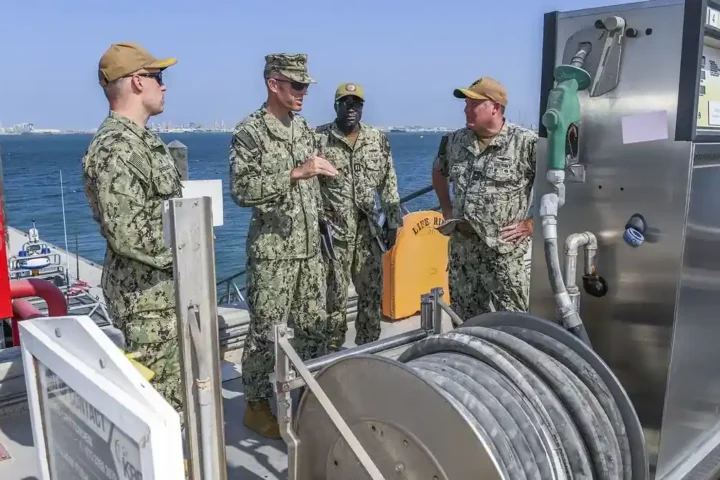
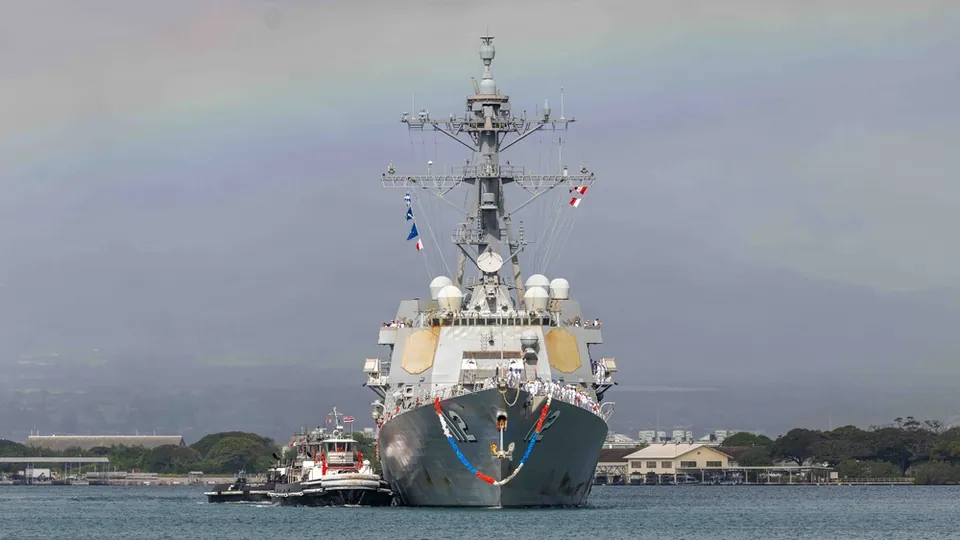
The U.S. Navy destroyer came home to Hawaii after Operation Epic Fury, a Presidential Unit Citation and 12 contested transits of the Strait of Hormuz, according to U.S. 3rd Fleet.

The guided-missile destroyer USS Michael Murphy (DDG 112) returned to Joint Base Pearl Harbor-Hickam in Hawaii on 12 November after an 11-month deployment that the U.S. Navy says included sustained combat actions during Operation Epic Fury.
According to a release from U.S. 3rd Fleet distributed through DVIDS, the Arleigh Burke-class destroyer left Pearl Harbor on 1 December 2025 as part of Carrier Strike Group 3 and Destroyer Squadron 21. It sailed with the aircraft carrier USS Abraham Lincoln (CVN 72), the destroyers USS Spruance (DDG 111) and USS Frank E. Petersen Jr. (DDG 121) and Carrier Air Wing 9, with Helicopter Maritime Strike Squadron 71 Detachment 2 embarked. The ship entered the U.S. Central Command area of responsibility in late January 2026.
Tomahawk strikes and air defence
The U.S. Navy said the ship and its crew were awarded the Presidential Unit Citation and the Combat Action Ribbon for what it called extraordinary heroism and combat achievement, including dozens of Tomahawk land-attack cruise missile strikes and defence against hostile drone and missile attacks. Cmdr. David Nicolas, the commanding officer, said: “Whether defeating incoming air and surface threats or leading operations through contested choke points, this crew never hesitated.”
The blockade and the Strait of Hormuz
The release says Michael Murphy helped enforce what it describes as the first naval blockade in 60 years, operating in the North Arabian Sea, the Gulf of Oman and the Strait of Hormuz. As Surface Action Group Commander for Task Force 50, it commanded and coordinated the defence of 14 coalition and U.S. vessels, including destroyers, Littoral Combat Ships, six U.S. Coast Guard Fast Response Cutters and logistics oilers. The U.S. Navy states that the ship made 12 contested transits of the Strait of Hormuz under threat of surface, air and mine attack, and escorted four merchant tankers to safety.
The destroyer remained in theatre under Task Force 50 leadership alongside the staffs, ships and aircraft of Carrier Strike Groups 10 and 5, according to the same release.
Figures from the deployment
The U.S. Navy reports that the ship steamed more than 97,000 nautical miles, carried out 43 replenishments at sea and eight combat in-port refuelings, and transferred over 8 million gallons of F-76 marine diesel fuel and 2 million gallons of JP-5 jet fuel. It also received 1,100 pallets of food, stores, repair parts and mail under combat conditions. The embarked helicopter detachment flew 330 sorties and more than 900 mishap-free flight hours, 273.4 of them in combat.
While operating in the U.S. 7th Fleet area, the destroyer also conducted surface and anti-submarine operations in the South China and Philippine Seas, which the release describes as assuring allies and providing deterrence.
The homecoming follows that of USS McFaul returns to Norfolk after 332 days: combat service in Operation Epic Fury alongside three carrier strike groups. For the wider background, see Iran war timeline 2026: Epic Fury, Hormuz and the US blockade.