Africa
DR Congo: UN says ADF attacks are killing more people than Ebola as the outbreak passes 11,000 cases
UN responders say attacks by armed groups in Ituri and North Kivu are obstructing the Ebola response, with 400 to 500 new infections a week and nearly 29 million Congolese facing acute hunger.

UN responders said on Friday 13 November that the Ebola outbreak in the Democratic Republic of the Congo is still spreading while armed groups attack civilians and health workers in the east of the country. According to UN News, the UN Senior Ebola Response Coordinator, Julien Harneis, said more people have recently been killed by fighters of the Allied Democratic Forces (ADF) than by the disease, which is caused by the Bundibugyo virus.
Harneis said attacks on “tens of villages” across the south of Ituri and North Kivu provinces go “unnoticed”. He added that following up contacts in areas where the ADF operates is “a very hazardous idea”.
Cases and attacks on health workers
Dr Chikwe Ihekweazu, head of the World Health Organization’s Health Emergencies Programme, said that despite progress in containing transmission in eastern DRC, about 400 to 500 infections are still being identified every week. The WHO official linked the trend to cases appearing in rural and hard-to-reach areas. The WHO official also reported a “significant reduction” in transmission in earlier hotspots, naming Bunia, Mongbwalu, Rampara and Nizi in Ituri.
UN News reported that earlier this week the WHO condemned attacks on frontline health workers and community awareness officers, including in Cantine-Aloya in North Kivu, which killed 66 civilians, among them three health workers. Three health facilities were also looted. Two weeks ago a nurse was killed and another health worker badly injured while responding to an Ebola alert in Tshopo province.
The same report listed an arson attempt on a treatment centre and stones thrown at a vehicle used for safe burials. WHO Director-General Tedros Adhanom Ghebreyesus said earlier this week: “We cannot focus only on Ebola.”
Hunger figures from the World Food Programme
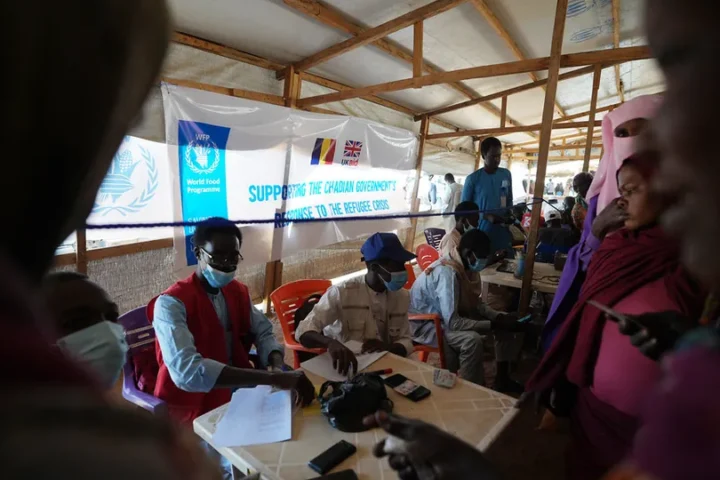
In Geneva, Jean-Martin Bauer, the World Food Programme’s Director of Food Security and Nutrition Analysis, said nearly 29 million people in the DRC face acute food insecurity, most of them in the conflict-affected and Ebola-affected eastern and northeastern provinces. UN-backed food security assessments indicate that between January and June 2027, 30.3 million people will be in crisis levels of acute hunger or worse, 4.2 million of them at “emergency” level, with the greatest needs in North Kivu, South Kivu and Ituri, which the assessments tie to persistent conflict and large-scale displacement.
Bauer said conflict is driving the hunger crisis alongside the outbreak. “What we need right now is access, and we need resources,” he said, according to UN News.
Background
UN News says the outbreak was declared in May and is now the largest in the country’s history, with more than 11,000 confirmed cases and more than 5,000 deaths to date. Geopolitiki has followed the crisis: see Ebola in DR Congo passes 10,000 cases as the WHO calls for sustained efforts, DR Congo: at least 30 civilians killed in Beni Territory, North Kivu, OCHA says, as the attack halts Ebola response teams and DR Congo: 28 million people not getting enough to eat, with conflict in the east a main driver, IPC alert says.
The casualty figures above are those given by UN and WHO officials as reported by UN News; the ADF has not been quoted in the report.