Greece
Greek military junta explained: the 1967 coup to the 1974 fall
How the colonels seized power on 21 April 1967, how the King's December move against the junta played out, and how the Cyprus coup of July 1974 ended the regime, told from US diplomatic cables and UN resolutions.

The Greek military junta, also called the Regime of the Colonels, took power in Athens in the early hours of 21 April 1967 and governed Greece until the summer of 1974. It ended only after the officers’ coup against the President of Cyprus brought a Turkish invasion of the island and the return of Constantine Karamanlis to Athens. Contemporary US diplomatic cables, published by the State Department, let us follow the seven years almost day by day.
Key points
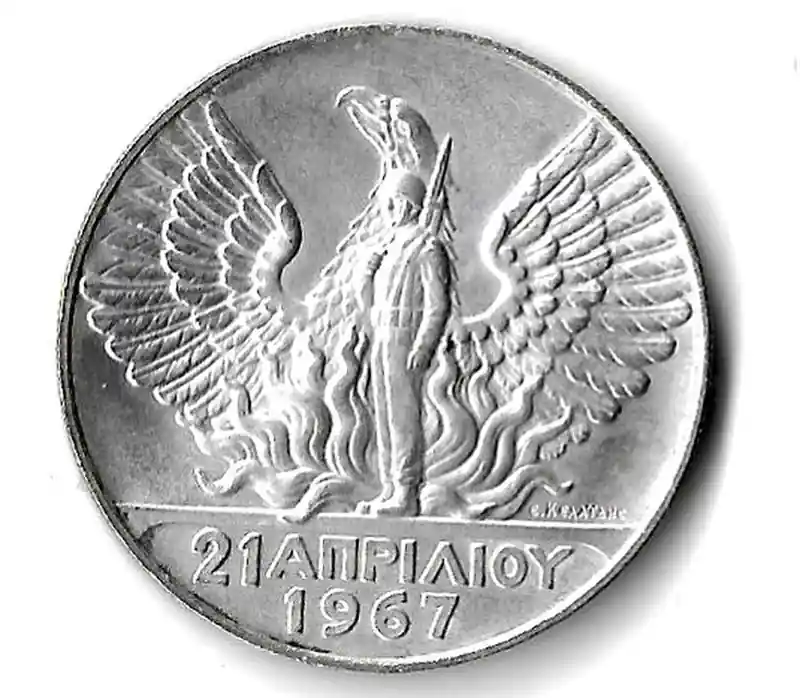
- 21 April 1967: a group of army officers seizes power; the US Embassy first reports a coup by a small army group that did not include the High Command, the King or civilian leaders.
- 13 December 1967: King Constantine leaves Athens in a move against the junta; within hours Papadopoulos is meeting the US Ambassador as Prime Minister.
- 25 November 1973: the army ousts Papadopoulos and Brigadier General Dimitrios Ioannides emerges as the dominant figure.
- July 1974: the junta’s coup in Cyprus is followed by the Turkish invasion; the regime collapses and Karamanlis is back in Athens by 26 July.
How did the colonels take power in 1967?
At 11:23 GMT on 21 April 1967 the US Embassy in Athens sent Washington a flash telegram with a first, “tentative impression”: the coup had been triggered that morning by a small army group, without the High Command, the King or civilian political leaders. Ambassador Talbot added that most members of the government of Prime Minister Kanellopoulos were in protective custody and that Andreas Papandreou was reported to be in a military prison. Athens, Thessaloniki and Crete were quiet. (FRUS 1964-1968, vol. XVI, document 273).
The same evening King Constantine told the Ambassador that neither he nor the generals controlled the army that night. According to the embassy’s account, the government he had sworn in was forced on him after a five-hour session with the coup leaders, and he had obtained only one concession: that it be headed by a civilian. (document 275). Prime Minister Kollias told Talbot that the army had acted because of a “grave Communist threat”. Talbot answered, on instructions, that Washington was “deeply distressed”, including by the use of American-supplied equipment against the constitutional government. (document 276).
Washington’s own line was cautious. Talbot recommended a “fairly starchy posture” without threatening to cut off aid, and the State Department advised the King to stay in Greece and use the officers’ need for him to extract concessions. In a later telegram Talbot described the day as one of “the rape of Greek democracy”. (document 277); (document 278).
What did the King do in December 1967?
On 13 December 1967 the King left Athens. The embassy reported that Papadopoulos told the Ambassador that General Angelis had received a message from the King dismissing him as head of the armed forces general staff, and that the King was “attempting to overthrow revolution”. (document 345). Talbot told Washington that the King’s failure would probably “fasten extreme military Junta on Greece for years to come”. (document 346).
By the early hours of 14 December Papadopoulos was meeting the Ambassador as Prime Minister, arguing that the King had “abandoned” his duties and that the government had followed the constitution in appointing a regent. The embassy added that it could not judge the competing claims and warned of the danger of two rival governments. (document 348).
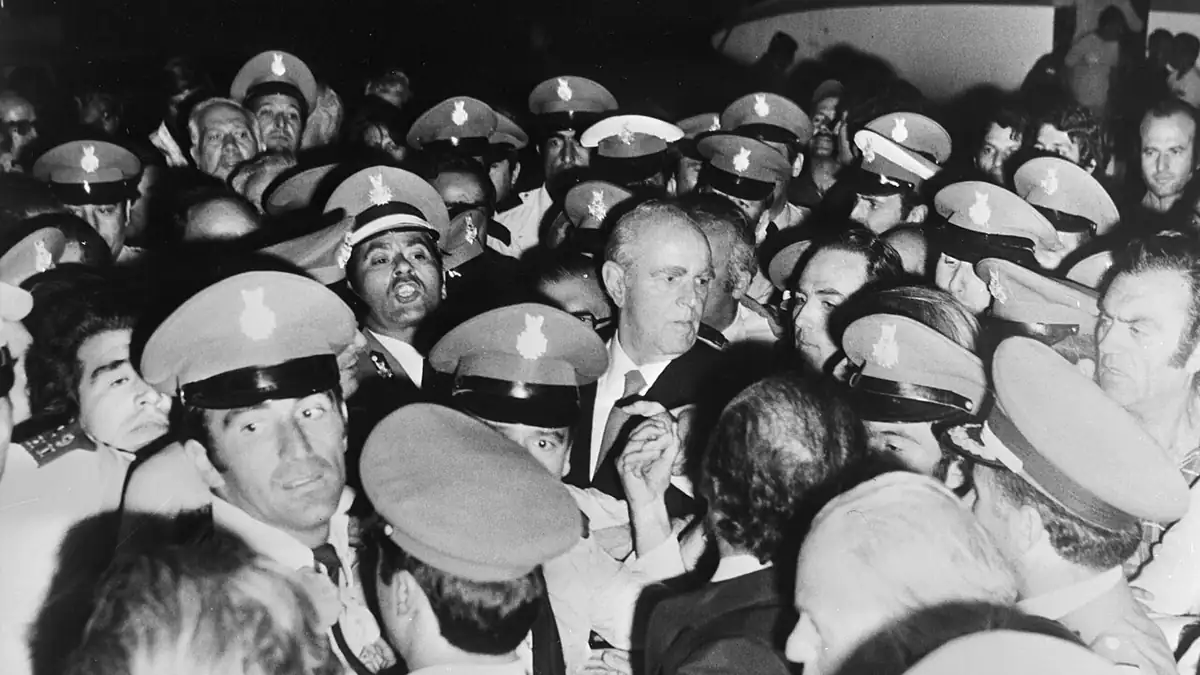
AP Archive holds film from the junta years, under the title below.
How did the junta fall apart?
On 25 November 1973 the army ousted Papadopoulos in a bloodless coup. In a cable the next day an embassy cable signed Tasca described Brigadier General Ioannides as the man who had masterminded it and “without question” the dominant figure, with Phaidon Gizikis as the new President and Androutsopoulos as Prime Minister. The cable recalled that Ioannides had headed the Military Police, “reputed to have been largely responsible for maltreatment of political prisoners”, and warned that his rise would polarize the country. (FRUS 1969-1976, vol. XXX, document 8).

The student uprising days earlier is told in our explainer, Athens Polytechnic uprising explained: 14-17 November 1973.
Cyprus 1974: the coup and the Turkish invasion
The regime’s last act was the coup in Cyprus on 15 July 1974 against the President of Cyprus, Archbishop Makarios. A cable from Athens the following day reports Ioannides telling a US emissary that “on 15 July 1974 Cyprus was saved from falling into the hands of the Communists”, which is his claim, not a finding. (document 88).
On 20 July 1974 the UN Security Council adopted Resolution 353, which demanded an immediate end to foreign military intervention in the Republic of Cyprus, asked for the withdrawal of foreign military personnel and called on Greece, Turkey and the United Kingdom to negotiate. On 16 August 1974 Resolution 360 recorded the Council’s “formal disapproval of the unilateral military actions undertaken against the Republic of Cyprus”. (UN Security Council, resolutions 353 and 360). Turkey’s invasion and the occupation of the north that followed, with their toll in missing persons, displaced Greek Cypriots and court rulings against Ankara, are set out in our Cyprus 1974 timeline: coup, Turkish invasion and UN resolutions, Missing persons in Cyprus explained: CMP figures and ECHR rulings and Loizidou v. Turkey explained: the ECHR rulings on northern Cyprus.
How did democracy return?
The officers could not answer the crisis they had created. Karamanlis returned to Athens from Paris, and on 26 July 1974 a US Embassy cable signed Tasca reported that Karamanlis “in fact is back”, advising Washington not to raise the question of the monarchy because most of the army and many politicians opposed the King. (document 18).
Why Greece quit NATO in 1974
On 15 August 1974 Tasca analysed the Greek government’s decree to leave NATO. He wrote that Greeks were “highly frustrated” at being unable to help fellow Greeks in Cyprus and felt let down by NATO allies that, in their view, could have compelled Turkey to observe its cease-fire. He read the decision as one to remain in the Alliance “French style”. (document 20). The long arc to the 1980 return is told in Greece and NATO: why Athens left in 1974 and came back in 1980. The legal frame for the guarantor powers is in Treaty of Guarantee explained: what Article IV allows and what it bans.
Sources
US Department of State, Office of the Historian, Foreign Relations of the United States, 1964-1968, volume XVI and 1969-1976, volume XXX; UN Security Council resolutions 353 (1974) and 360 (1974). Quotations are from the embassy cables as published; the cables record the embassy’s account and the statements of the people it met.