Asia-Pacific
Erdoğan in Seoul: Turkey and South Korea agree to deepen cooperation on nuclear energy and defence
After talks with President Lee Jae Myung in Seoul, Recep Tayyip Erdoğan said Turkey and South Korea will expand cooperation on nuclear energy, including the Sinop plant, and on defence co-production.

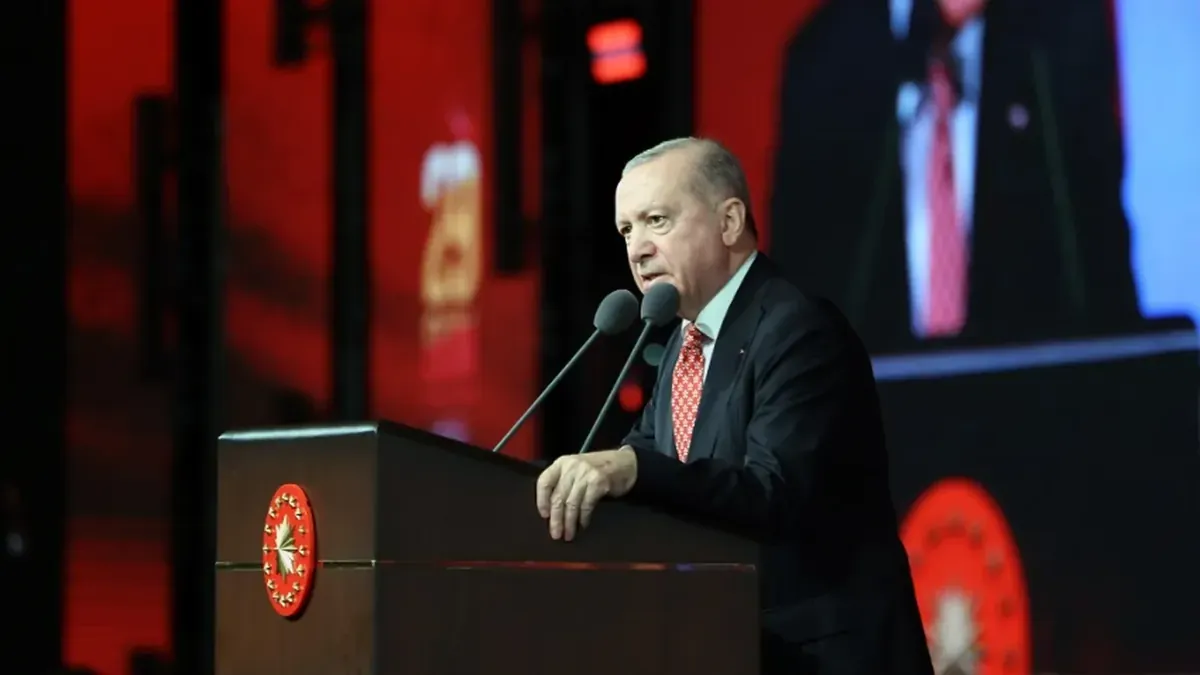
Turkish President Recep Tayyip Erdoğan and his South Korean counterpart Lee Jae Myung agreed on Tuesday, November 3, to deepen their cooperation in nuclear energy and the defence industry. The agreement came after a summit at the presidential Cheong Wa Dae (Blue House) in Seoul, during Erdoğan’s three-day state visit, his first to South Korea since 2018.
“We agreed to broaden the scope of our cooperation, based on the deep friendship and trust forged in blood,” Lee said at a joint press conference, referring to Turkey’s participation in the Korean War (1950-53). Lee said the two countries will strengthen practical cooperation in strategic areas such as nuclear energy, defence and infrastructure.
The Sinop nuclear plant
On nuclear power, Lee said cooperation on the planned Sinop plant on the northern Black Sea coast is “proceeding smoothly”, with site assessment work under way and a joint working group in operation. It would be Turkey’s second nuclear power plant, and South Korea’s state electricity company KEPCO is seeking to take part. A new memorandum of cooperation on financing nuclear projects was signed on Tuesday and will support the participation of South Korean companies in new Turkish nuclear programmes.
The Sinop project provides for four reactors of 1,400 megawatts each, at an estimated cost of about $30 billion, according to Korea JoongAng Daily. The framework was set in November 2025, when Lee visited Ankara and the two countries signed a memorandum on nuclear energy covering reactor technology, site assessment, licensing, financing and business models.
Defence: from the Altay to co-production
On defence, Lee cited Turkey’s Altay main battle tank, which was developed with technology from South Korea’s K2 and is fitted with South Korean engines and powertrains. A joint defence industry and logistics support committee met in July to explore new areas of cooperation, and in September the two sides signed a letter of intent on naval cooperation, extending their ties beyond land weapon systems.
“We agreed to deepen cooperation in the defence industry, expanding co-production and technological cooperation and jointly exploring opportunities for companies of both countries to enter third-country markets,” Lee said. Erdoğan said the defence industry is at the forefront of the strategic partnership and that the two leaders strengthened their determination to widen joint projects. For the wider context of Turkish arms deals, see also our report on the Canada-Turkey defence industry memorandum.
Trade, the Korean Peninsula and Ukraine
Erdoğan said the two countries aim to raise bilateral trade from about $11 billion to $15 billion in a balanced and sustainable way. Lee said Turkey reiterated its “consistent support” for his government’s policy towards North Korea, and both sides agreed to work for peace on the Korean Peninsula. They also discussed Russia’s war in Ukraine and the conflict in the Middle East. The meeting came three days after Erdoğan met Ukrainian President Volodymyr Zelensky in Istanbul, which we covered at the time.
The two countries will also establish a Korea-Turkey Energy Transition Forum on clean energy, hydrogen and renewables, and an intergovernmental channel of cooperation on natural resources and mining, aimed at diversifying critical-mineral supply chains. Next year marks 70 years since the establishment of diplomatic relations between the two countries.