Politics & Diplomacy
Iran says Hormuz will stay closed until its seven conditions are met
Iran’s parliamentary speaker said on October 4 that seven conditions must be met before Hormuz reopens. Araghchi warned against renewed military action as exchanges with Washington continued.

Iran will not reopen the Strait of Hormuz until its seven conditions are met, parliamentary speaker and chief negotiator Mohammad Bagher Ghalibaf said on October 4, as Tehran and Washington exchanged proposals through mediators.
Ghalibaf said “the Strait of Hormuz will not be opened until our seven conditions” were met, referring to the Islamabad memorandum. He accused the United States of delaying its response and attempting to impose unilateral demands. Iran’s proposal, discussed on the sidelines of the UN General Assembly in late September, included a regional ceasefire, the release of frozen Iranian funds, relief from oil-sector sanctions and an end to the US naval blockade. President Donald Trump rejected those terms while leaving open both further negotiations and military action.
Araghchi warns of a stronger response to renewed military action
Foreign Minister Abbas Araghchi told foreign ambassadors in Tehran on October 4 that further military action would bring a stronger Iranian response. “There is no military solution and no solution based on more sanctions,” he said, calling for fair negotiations and a balanced agreement.
Foreign Ministry spokesman Esmaeil Baghaei said the US counterproposal largely reflected its earlier position, particularly on nuclear issues. Tehran’s proposal focused on the Strait of Hormuz, including the removal of restrictions on Iranian commercial shipping and sanctions relief. He said Iran had communicated its broad position and would convey its response on the remaining points. The exchange followed earlier mediation over Hormuz and the blockade.
Iranian army spokesman Mohammad Akraminia said work had begun to extend the range of the army’s missiles. He said missiles used against bases in Kuwait and vessels at sea had proved effective, but argued that longer ranges were needed because opposing forces were now as far as 1,000 kilometres from Iran’s coast.
A new report of a tanker strike in Hormuz
The UK Maritime Trade Operations agency issued a report on October 4 that a tanker had been struck by an unidentified projectile in the Strait of Hormuz, damaging its engine room. All crew members were reported safe, and no environmental impact was reported. The incident’s actual date had not been confirmed in the notice, so the report’s publication date does not establish when the strike occurred.
Trump repeats the choice of the easy or hard way
Speaking to reporters on October 3, Trump again presented Iran with the choice of “the easy way or the hard way”, while saying the country had been severely weakened. The remarks came as the United States maintained pressure on Tehran and continued naval deployments connected to the conflict.
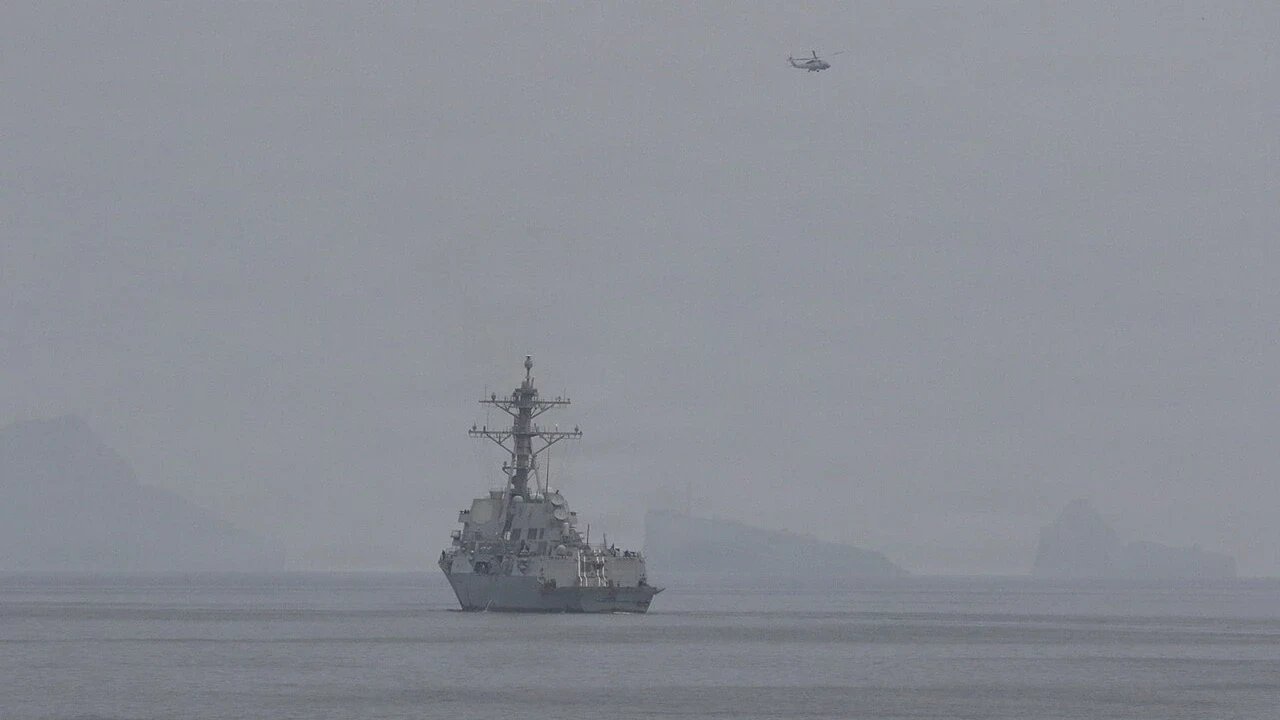
US Secretary of War Pete Hegseth described the naval blockade as firm and maintained that American forces, rather than Iran, controlled access to Hormuz.
The conflict began with US and Israeli attacks on February 28. A June 18 framework provided for a temporary ceasefire and negotiations covering shipping and nuclear issues. Renewed Iranian attacks on vessels and subsequent US operations followed. Washington has increasingly combined economic pressure with the blockade, while the latest exchange of proposals had not produced a final settlement.