Middle East & North Africa
Israel: both Arab parties recommend Eisenkot for prime minister – how many seats he now has against Netanyahu
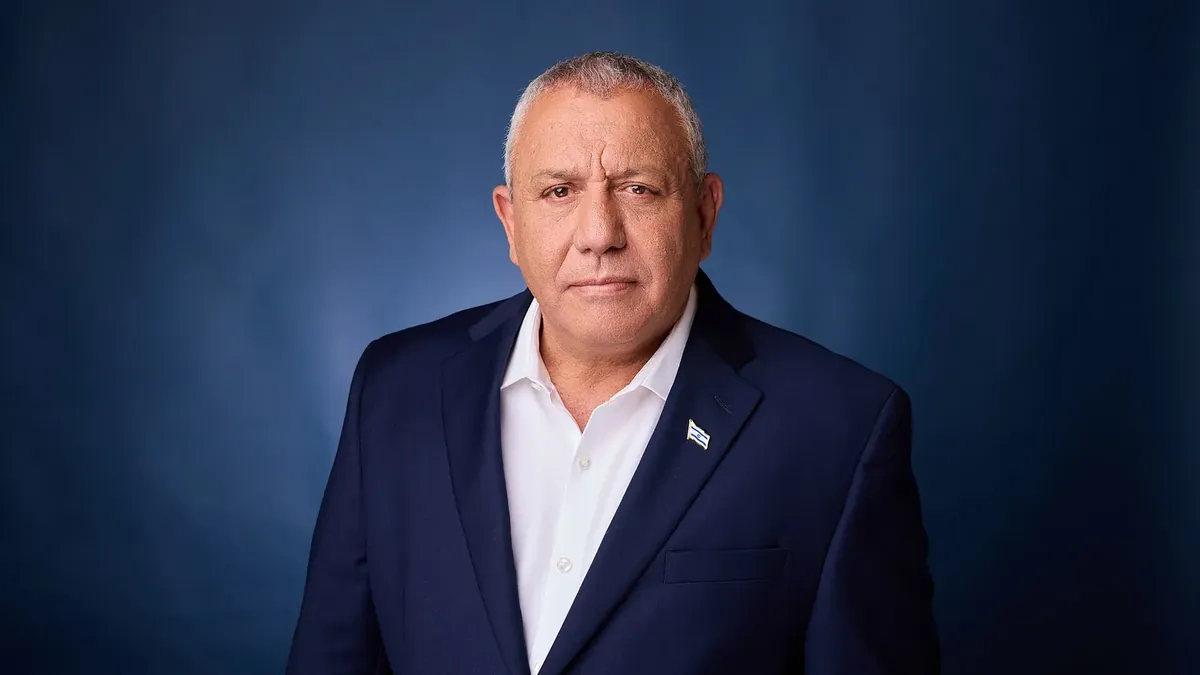
The Joint List joined Ra’am in recommending Gadi Eisenkot to President Herzog, taking his backing to 67 of the 120 Knesset seats, but a government is far from certain.

Both Arab parties of the new Knesset now back Gadi Eisenkot. The Joint List, the largest Arab faction in the Israeli parliament, decided on Thursday, November 5 to recommend to President Isaac Herzog that the mandate to form a government be given to the head of the centrist Yashar party and of the opposition bloc. The decision was announced a few hours after Ra’am (the United Arab List) had also recommended the former chief of the General Staff.
The arithmetic changes significantly. The Joint List’s 11 seats and Ra’am’s 8 are added to the opposition bloc’s 48 MPs, so Eisenkot gathers the backing of 67 MPs, while a majority in the 120-seat Knesset needs 61. Benjamin Netanyahu’s bloc had come first in the October 27 election with 53 seats, but the outgoing prime minister now has the support of just 46 MPs, after the ultra-Orthodox United Torah Judaism (UTJ), with 7 MPs, refused to recommend any candidate.
In its statement, the Joint List, an alliance of the Hadash, Balad and Ta’al parties, explains that the decision was taken unanimously after consultations among its three components, and admits it “was not easy”. The aim, it says, is to keep Netanyahu and his government from returning to power. At the same time it takes a swipe at Eisenkot himself: according to the faction, the opposition has not yet shown it is willing to confront Netanyahu’s policy and to deal with incitement against Arab citizens and challenges to the legitimacy of their vote.
The confrontation carried over to the consultations with Herzog at the President’s Residence in Jerusalem. “I am proud of Arab society, which despite exclusion and attacks endured, progressed and exercised its democratic right,” said MP Ahmad Tibi. Joint List leader Yousef Jabareen accused the prime minister and National Security Minister Itamar Ben Gvir of constant incitement, and told the president these were statements that, if heard in a European country with the word “Jew” in place of “Arab”, would be called antisemitic, and rightly so.
The meeting with Ra’am was tenser. Herzog asked its leader, Mansour Abbas, directly whether he considers Hamas a terrorist organisation. Abbas avoided answering with a “yes” or a “no”. When the question came up again later in the meeting, he explained he needs room to act as a bridge and to protect himself and his family, which he described as a matter of saving lives. He did say his party opposes categorically any act of terrorism and violence, supports the full disarmament of Hamas, one of the four principles Eisenkot has set for anyone wishing to join his coalition, and supports Donald Trump’s plan for Gaza.
On the other side, Ben Gvir’s Otzma Yehudit recommended Netanyahu and repeated the claim that the election was “stolen”, citing the Shin Bet investigation into money foreign states allegedly sent to Arab areas. The Central Elections Committee has already certified the results and found the integrity of the vote was not compromised, as we reported on the Committee’s decision.
67 MPs do not automatically make a government
Avigdor Liberman, whose party also recommended Eisenkot on Wednesday, has made clear he will leave with his 7 Yisrael Beytenu MPs any arrangement involving Arab parties, which would push the coalition below the 61 threshold. Eisenkot himself and Naftali Bennett have drawn the same red line against Arab parties joining the government. A minority government is being discussed as an alternative, which could pass bills as long as at least 13 of the 26 MPs of Ra’am, the Joint List and UTJ abstain in votes. Such an understanding could however quickly blow up over open fronts: a Palestinian state, the war in Gaza, ultra-Orthodox conscription and settlements in the West Bank.
The timetable is tight. The new Knesset is sworn in on November 10, and whoever gets the mandate will have 28 days, with a possible 14-day extension, to form a government. Yashar and Likud meet the president last, on Thursday evening, and then Herzog will decide, with Eisenkot seen as favourite for the first attempt. The first cracks in the opposition bloc had already appeared at its first joint meeting in Herzliya. If Eisenkot fails, the baton passes to Netanyahu. If he fails too and no unity government emerges, which Eisenkot has all but ruled out, Israel will head to new elections in 2027.