Middle East & North Africa
Israel: Eisenkot’s bloc meets for the first time; what it wants to control before the mandate is handed out
Israel’s opposition leaders met in Herzliya for the first joint session of the “change” bloc after the election, which gave no camp a majority. Their first target is control of the Knesset before the new parliament is sworn in on November 10.

The leaders of Israel’s opposition parties met on the morning of Tuesday, November 3, in Herzliya, in the first joint session of the so-called “change” bloc after last week’s elections. The Eisenkot bloc, headed by former Chief of Staff Gadi Eisenkot, will discuss “coordinating the next steps”, his party Yashar announced. Taking part are Eisenkot, Naftali Bennett, Avigdor Liberman, Yair Golan and outgoing leader of the opposition Yair Lapid.
The ballot gave no camp a majority in the 120-seat Knesset. Benjamin Netanyahu’s coalition fell to 53 seats, Eisenkot’s opposition took 48, while the Arab parties reached a record 19 (11 for the Joint List, 8 for Ra’am), with Arab turnout rising to around 80 per cent. Bennett, Liberman and Golan have already said they will recommend Eisenkot to President Isaac Herzog for the mandate to form a government. For the first results of the count, see our report on the election count.
First target: the Knesset
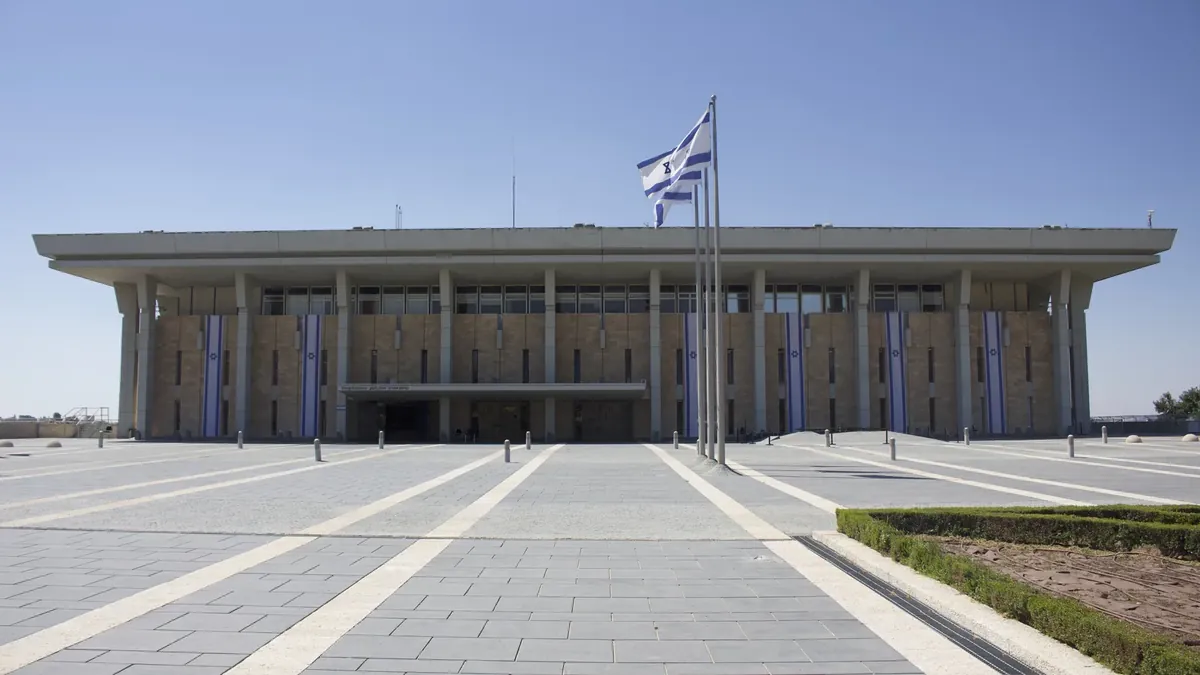
Senior bloc figures say the immediate aim is to “take control of the Knesset” before the new parliament is sworn in on November 10. That means replacing Knesset Speaker Amir Ohana, setting up the Arrangements Committee that manages the body’s first work, and repealing controversial laws of the outgoing majority. Replacing the speaker requires the signatures of 61 MPs. The post carries particular weight, since once elected the speaker can be replaced only by a majority of 90 MPs and stays in place even if the Knesset is dissolved.
Here the first cracks appear. Liberman and Bennett want Lapid as speaker, while Eisenkot wants someone from his own party. He wants to form a minority government and is approaching the ultra-Orthodox parties, Golan pushes for a government backed by Ra’am, while Bennett and Liberman reject any arrangement that would depend on the Arab parties. Liberman did not hide his disappointment: “We failed. 48 seats are far fewer than we expected,” he said, accusing Eisenkot of a “self-centred” campaign. Joint List leader Youssef Jabareen told the Guardian his party will not join a government but is ready to support it from outside by voting with it in the Knesset.
Netanyahu: “Our hand is extended”
Netanyahu, in a post on X, appeared open to a “broad national government” under him. “From day one, our hand is extended to form a broad national government. A clear majority of the Jewish public chose the Likud as the largest party and me as prime minister to lead the next government,” he wrote, ruling out a government that would rely on Ra’am and the Joint List. Public broadcaster Kan, on the other hand, reports that Eisenkot told a closed-door meeting he would not join a Netanyahu government even if Donald Trump asks him to. “If Trump calls me, I will respect the president and go, but I will insist that this is an internal Israeli matter,” he reportedly said.
A group of 710 former hostages, bereaved families, relatives of hostages and survivors of the October 7 massacre pressed the same issue, calling in an open letter on Monday on Eisenkot and the other opposition leaders to reject any national-unity government with Netanyahu and form a new government. Herzog is expected to receive the official results on Wednesday, November 4, and then begin consultations with the parties. Whoever receives the mandate will have 28 days, extendable by 14. Meanwhile Central Elections Committee chair Noam Sohlberg has already made clear that the result stands even if Likud’s claims of electoral fraud are confirmed.