Middle East & North Africa
Israel election: with 85.6% counted, Likud leads on 26 seats, Netanyahu’s bloc on 53 and Eisenkot’s on 48
With 93% of polling stations reporting and 85.6% of votes counted, Likud leads with 26 seats, Netanyahu’s bloc has 53, Eisenkot’s 48 and the Arab parties 19. Neither camp has the 61 seats needed.

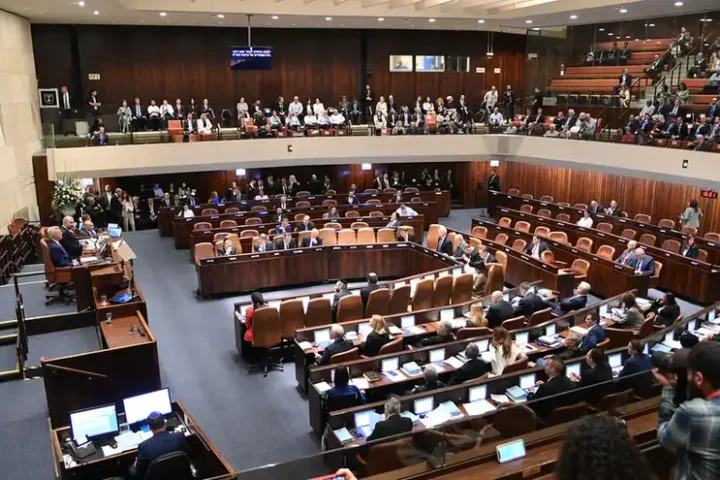
The count in Israel’s election has reached its final stage without producing a majority. The Central Elections Committee has finished counting the ballots from all regular polling stations, excluding the double-envelope ballots. With 93% of stations reporting and 85.6% of the votes counted, the picture on the afternoon of Wednesday, October 28 gave Benjamin Netanyahu’s bloc 53 seats. That is eight short of the 61 needed for a majority in the 120-seat Knesset.
The bloc of former army chief Gadi Eisenkot has 48 seats, while the mainly Arab parties, which are counted separately from the two camps, reach 19 together. Likud remains the largest party with 26 seats, followed by Eisenkot’s Yashar! with 21. Naftali Bennett’s Beyachad and the Joint List have 12 each, and the Democrats 8. Yisrael Beytenu of Avigdor Lieberman, United Torah Judaism, Shas, Itamar Ben Gvir’s Otzma Yehudit and Ra’am are on 7 each, while the Religious Zionism–Zehut alliance has 6. In the morning, with 51.5% counted, Likud had 27 seats and Netanyahu’s bloc 55.
Ra’am’s rise from 4 to 6 seats earlier in the morning was due in part to the results from Rahat, a mainly Bedouin city in southern Israel, where it won 83.6% in the 31 stations counted. Joint List chairman Yousef Jabareen said his party was ready to use its increased strength to “send home” the government of Netanyahu, Ben Gvir and Smotrich.
The picture is not final. The double-envelope ballots remain, among them the votes of soldiers and of those who voted outside their own polling station. Counting of these begins on Wednesday evening and can change the distribution of seats, as the count data show. Until a new government is formed the country will remain under a caretaker government, which keeps the same formal powers, including approving a military operation, which requires a decision by the government or the security cabinet.
The exit polls of the three main channels, at 22:00 on Tuesday, had given Eisenkot’s bloc a small lead, with 52–53 seats against 50, and Likud 24–25 seats. They also projected 17–18 seats for the Arab parties. Turnout up to 20:00 had reached 74.3%, the highest for that hour since 1988. Election day had begun with 7.3 million voters called to the polls, as we reported in Israel votes: final polls show neither Netanyahu’s bloc nor Eisenkot’s with a majority.
Both main rivals made statements during the night. Netanyahu called on the “Zionist majority” to “come to its senses and unite”, saying only this would secure Israel’s future, and thanked his “faithful partners”. Eisenkot said “we have made history”, that “the people chose change” and that the “coalition of failure” had lost the people’s trust, and he called on Netanyahu to resign.
With neither bloc yet at 61 seats, the next government will be decided once the count is complete and President Isaac Herzog begins his consultations with the parliamentary groups. The president will then assign a member of the Knesset to form a government. Our earlier count report, with Netanyahu’s bloc on 56 seats, is here.