Middle East & North Africa
Israel election count: Netanyahu bloc on 56 seats, Eisenkot bloc on 48 and Arab parties on 16, with neither near 61
With two thirds of ballot boxes counted, the Central Elections Committee’s partial results leave both Israeli blocs short of a 61-seat majority, with soldiers’ and other absentee ballots still to be added.

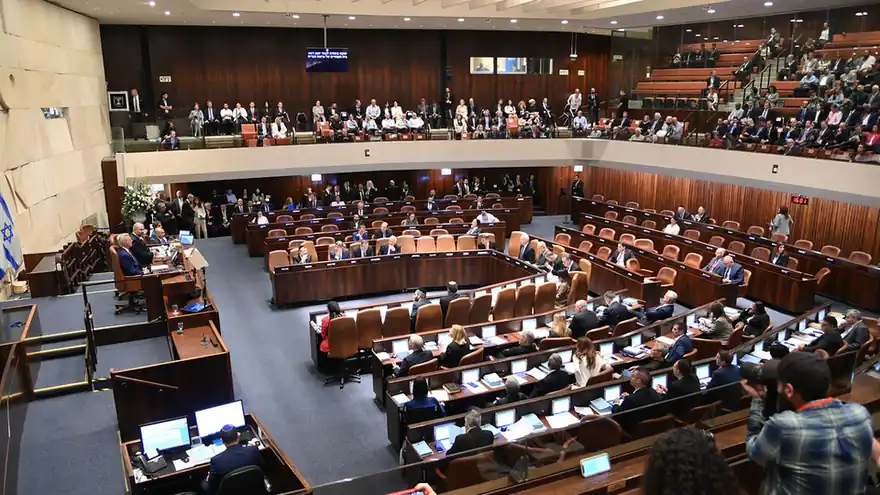
Israel’s election count on 28 October left neither Prime Minister Benjamin Netanyahu’s bloc nor the opposition led by Gadi Eisenkot within reach of the 61 seats needed for a majority in the 120-seat Knesset. With 66.2 percent of ballot boxes counted as of 9:20 a.m. local time, the Central Elections Committee’s partial results gave 56 seats to the Netanyahu bloc, 48 to the Eisenkot bloc and 16 to the Arab parties, according to The Times of Israel’s live coverage.
The count so far
The same live blog recorded an earlier snapshot at 7:58 a.m., with 57.3 percent counted: 55 seats for the Netanyahu bloc, 49 for the opposition bloc and 16 for the Arab parties. Al Jazeera, reporting a count of about 55 percent on Wednesday morning, gave 56 seats to Netanyahu’s bloc and 49 to Eisenkot’s alliance. The figures are partial and moved by a seat between updates, so they should not be read as a final allocation.
Three small lists were below the 3.25 percent threshold at 9:20 a.m., according to The Times of Israel: the Reservists on 2.7 percent, People of Israel on 1.6 percent and Charedi Public on 0.2 percent. Parties under the threshold win no seats, and where they end up affects how many seats the larger lists receive.
Turnout
The Central Elections Committee said turnout reached 77.7 percent, the highest since 1999 and 7.1 percentage points above the 2022 election, as relayed by Al Jazeera. The Israel Defense Forces said final turnout among soldiers was 79.9 percent, up 6.2 percent from 2022, according to The Times of Israel. The committee’s acting director, Dean Livne, said the high turnout could mean more absentee ballots than expected, which could delay the end of the count.
Those absentee ballots are cast in double envelopes and include soldiers, prisoners, medical staff and diplomatic personnel abroad. They are counted after the ballots cast at ordinary polling stations, which is why the seat totals can still shift.
Exit polls and first reactions
Exit polls published when the polls closed did not settle the question. Al Jazeera reported that Channel 12 projected 52 seats for Netanyahu’s bloc and 49 for the opposition, while Channel 13 projected a tie between Likud and the opposition on 51 seats each. Both channels projected a sharp rise for the Arab parties compared with the current Knesset.
Netanyahu said the country needed a strong, national, right-wing government and spoke of removing what he called an existential threat from Iran, according to The Times of Israel. Eisenkot said he would work to form a Zionist government with national service for all and called on Netanyahu to step down, the same live blog reported. Neither leader has a majority on the partial figures.
What happens next
Al Jazeera reported that the final tally was expected by Friday, 30 October, and that official results are to be published on 4 November. President Isaac Herzog then consults the party leaders and gives the task of forming a government to the candidate with the best chance. The nominee has 28 days, with a possible 14-day extension, to build a coalition, as Geopolitiki set out in its election-day report. If no government is formed, Netanyahu’s cabinet stays on as a caretaker government and new elections follow.
Sources read: The Times of Israel live blog, 28 October 2026, which relays the Central Elections Committee’s partial results, and Al Jazeera’s election takeaways, 28 October 2026. The Central Elections Committee’s own results page could not be opened from here, so all figures are as reported by these outlets and will change as the count continues.