Greece
M270 MLRS: the Hellenic Army’s heavy “hammer”, the resupply vehicle and the question of PrSM
The M270 rocket launcher passed in the October 28 parade just before the PULS. How it fires, the role of the resupply vehicle, ATACMS and the open question of the PrSM and a modernisation to M270A2.

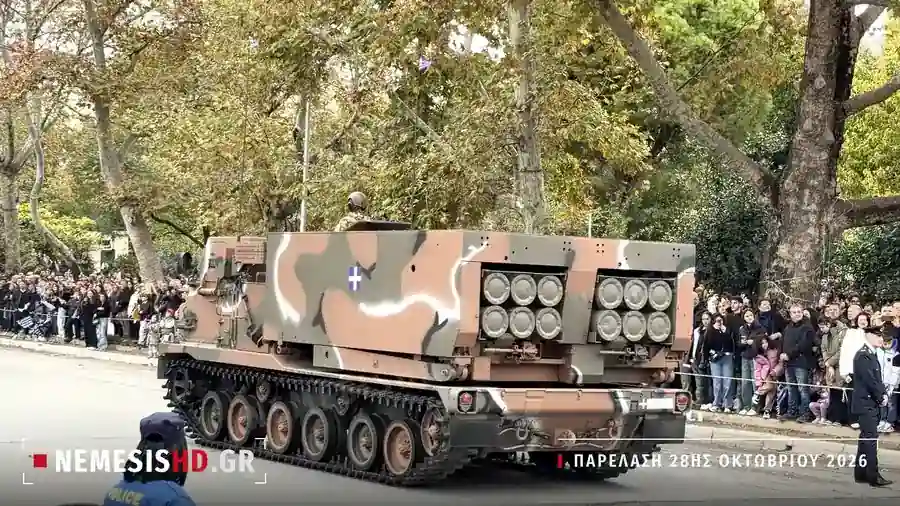
For decades the M270 has been the heavy “hammer” of the Hellenic Artillery: a tracked launcher that can fire twelve rockets in less than a minute or launch ATACMS ballistic missiles to a distance of about 165 kilometres, and then leave before the adversary responds. In the military parade of October 28, 2026 in Thessaloniki it passed just before the PULS, and the order was no accident: the new Israeli launcher is not coming to replace the M270 but to complement it. With it passed the eight-wheel resupply vehicle that carries the spare rocket pods, the least spectacular but equally critical part of the system, because without it the M270 is left empty after the first salvo.
What the M270 is and how it fires
The M270 MLRS (Multiple Launch Rocket System) of Lockheed Martin is, according to the company’s official data, an automated rocket and missile system on a lengthened Bradley chassis, with off-road mobility comparable to that of a tank. It weighs up to about 30 tonnes, is 7 metres long and has a crew of three, who can drive the launcher to the firing position, stop, carry out the fire mission and leave immediately, the tactic the Americans call “shoot and scoot”. The launcher carries two launch pod containers with six 227 mm rockets each, and the fire-control system re-aims automatically after each shot, so that the whole load of twelve guided GMLRS rockets can be fired in less than a minute. The launcher always knows its position precisely, without needing survey preparation. Instead of six rockets, each pod position can carry one ATACMS missile, and this is why the M270 is for Greece a ground-based deep-strike system.
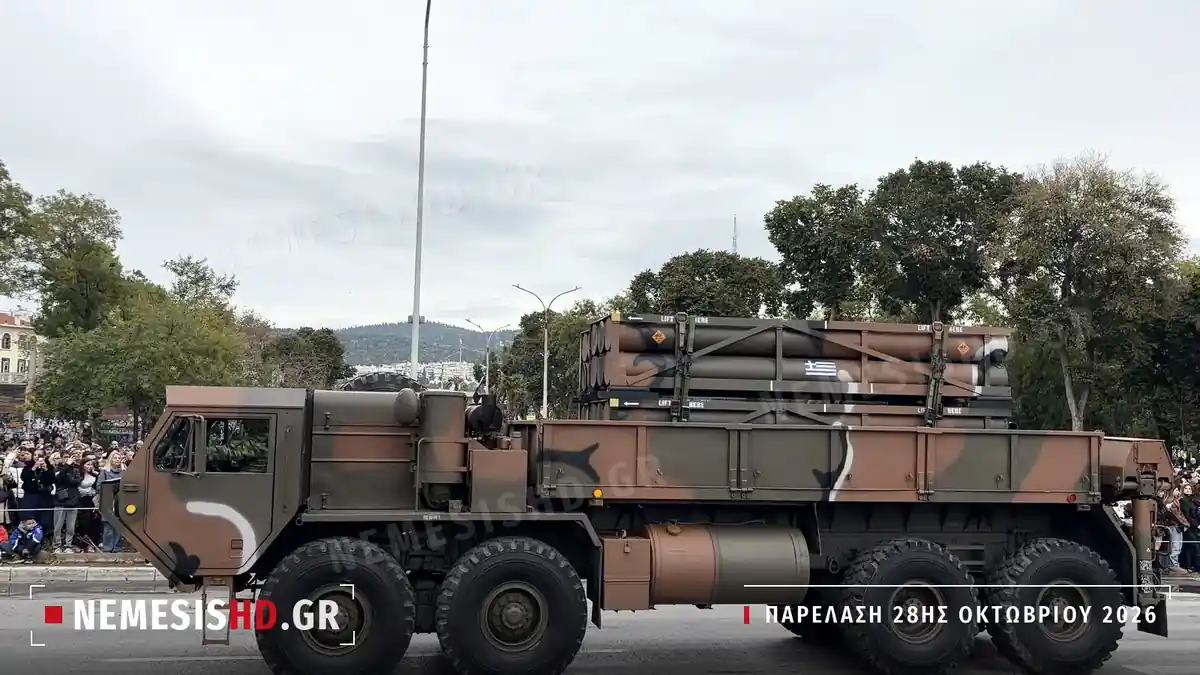
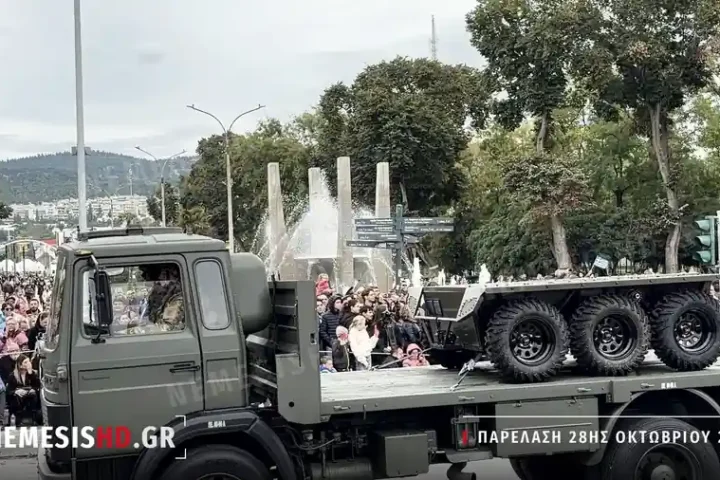
The resupply vehicle seen in Thessaloniki is a heavy eight-wheel truck that carries the spare launch pods sealed from the factory. The M270 has a built-in loading system: the arm comes down, grabs the empty pod, sets it on the ground and lifts the full one, with the crew staying near the vehicle. The process takes a few minutes, and this means the real firepower of an M270 battalion is measured not in vehicles but in how many spare rockets can reach the field after the first and second salvo. In the Hellenic Army the launchers belong to units such as the 193 Multiple Rocket Launcher Battalion, and support is provided by the specialised 323 Repair Company.
ATACMS, PrSM and the question of modernisation
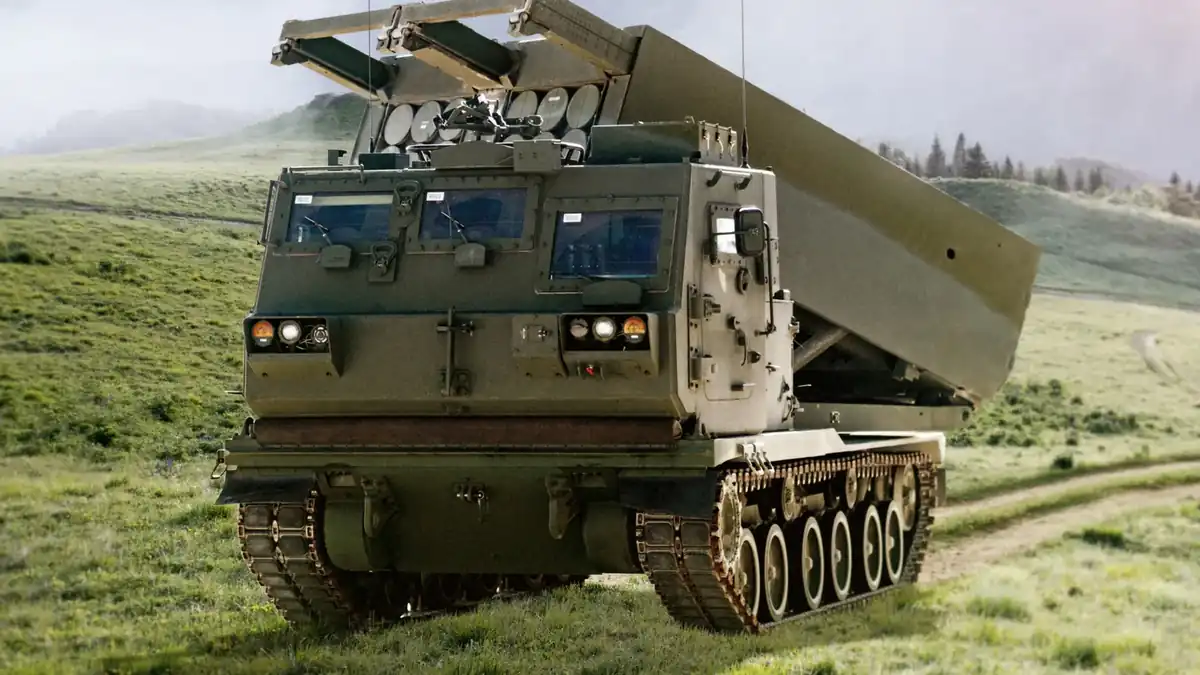
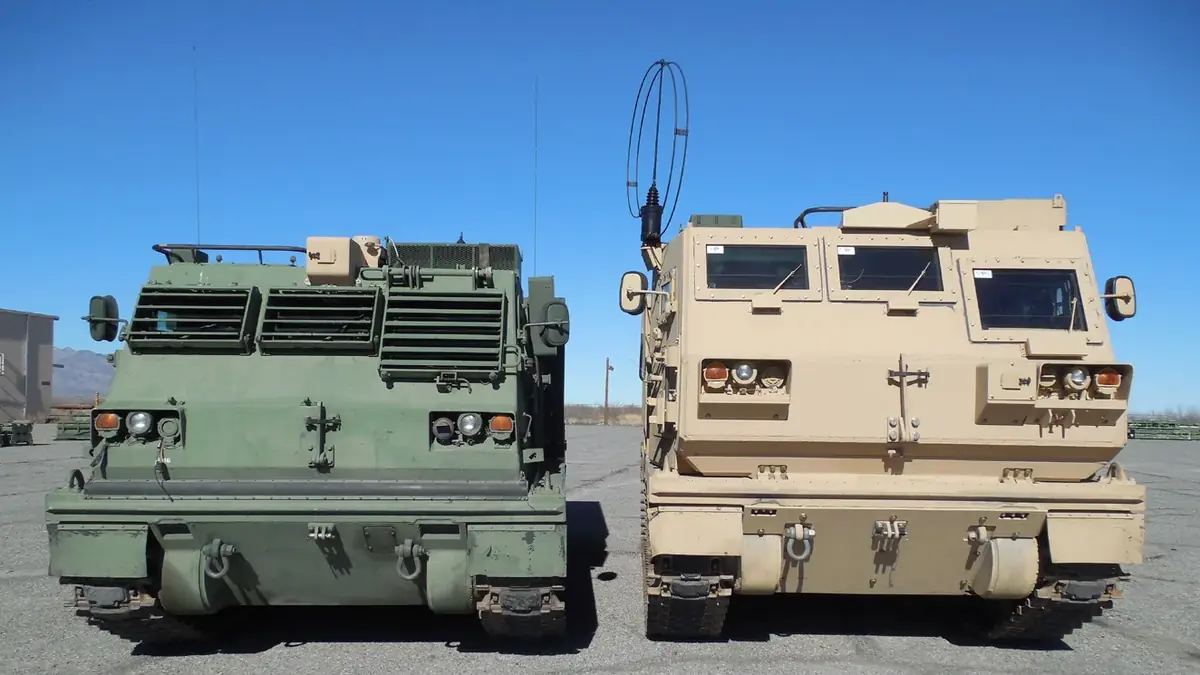
The ATACMS, with a range of about 165 kilometres, was for years the main Greek land weapon able to hit targets on the Asia Minor coast from the islands, but it is a design of the 1980s and the US is now replacing it with the PrSM (Precision Strike Missile), which fits two in each launcher pod position and reaches much farther, while the new ER GMLRS rockets exceed 100 kilometres. To fire them, however, the Greek M270 needs modernisation. Lockheed Martin upgrades the M270s of the US and its allies to the M270A2 standard, with a new engine and transmission, a new loading system, an improved armoured cab and the new Common Fire Control System, which allows the whole family of munitions to be fired, from GMLRS to ATACMS and PrSM. Finland, for example, received US approval in August 2023 to upgrade its own M270s to A2, at an estimated cost of $395 million.
M270 and PULS: two launchers, one fire network
Athens’s decision to buy 36 Elbit PULS launchers, which reach 150 kilometres with EXTRA rockets and 300 with the Predator Hawk, solved the range problem without dependence on American approvals, and so the future of the M270 is now tied directly to whether the US approves the PrSM for Greece. If approval comes, the modernisation of selected M270s will give the Artillery two independent munitions “chains”, one American and one Israeli, something valuable in a war where stocks run out quickly. If it does not, the money is likely to go to more PULS, and the M270 will remain the launcher of the shorter-range rockets. In any case, the lesson from Ukraine is that multiple rocket launchers are judged on three things: accuracy, mobility and available munitions, and the resupply vehicle that passed in Thessaloniki is a reminder that the third is often the hardest. The Israeli systems of the parade show where Greece is heading, but the M270 will stay in the line for many years to come.