Greek-Turkish Relations
Israel condemns the Turkish–Libyan memorandum: it “violates the sovereign rights of our close allies” – and accuses Turkey of destabilising the Eastern Mediterranean
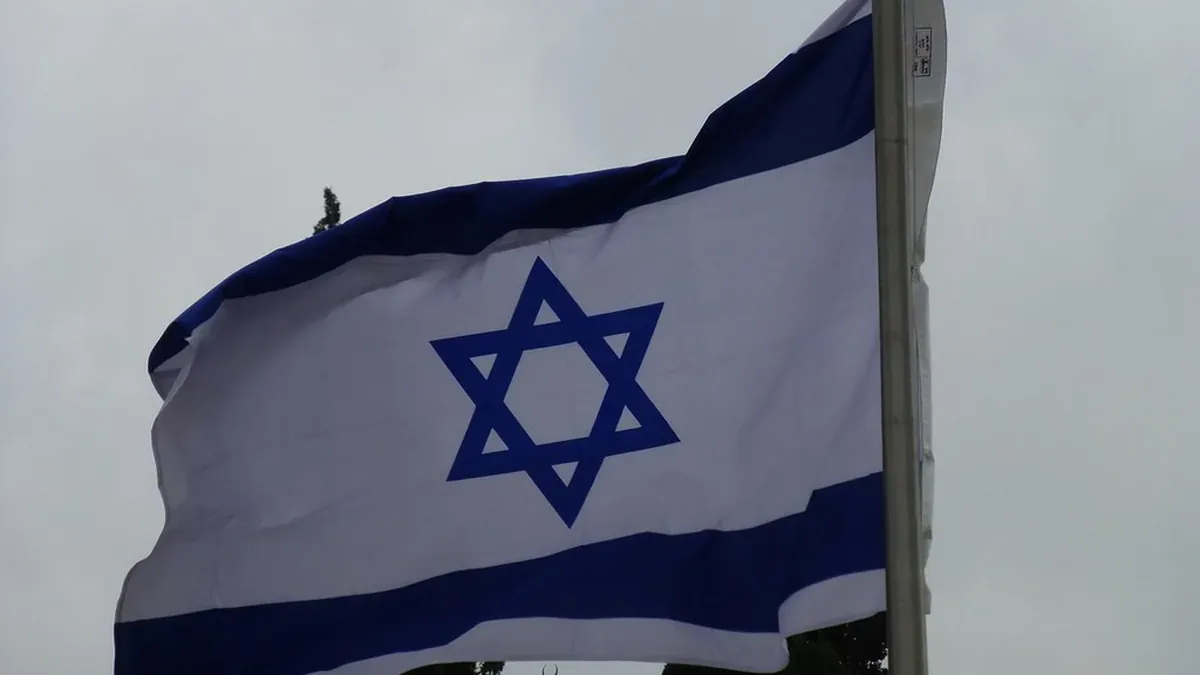
Israel’s Foreign Ministry strongly condemned the Libyan House’s ratification of the Turkish–Libyan memorandum, saying it violates the sovereign rights of Israel’s close allies in the region and that Turkey is once again destabilising the Eastern Mediterranean.

Israel “strongly condemns” the decision of Libya’s House of Representatives to ratify the illegal Turkish–Libyan memorandum and directly accuses Turkey of destabilising the Eastern Mediterranean. The condemnation came around midday on Wednesday, October 21, in a post by Israel’s Foreign Ministry on X.
“Israel strongly condemns the decision of the Libyan House of Representatives to ratify the Maritime Jurisdiction Memorandum between Türkiye and Libya. This agreement violates the sovereign rights of our close allies in the region. Unfortunately, once again we see Türkiye working to destabilise the Eastern Mediterranean region,” the statement says.
By “close allies” Israeli diplomacy refers to Greece and Cyprus, with which Israel cooperates in a trilateral format on energy, defence and security. Israel has delimited its Exclusive Economic Zone with Cyprus since 2010 and supports the position that islands have a full maritime zone under the Law of the Sea, a principle the Turkish–Libyan memorandum ignores.
The statement comes a day after Prime Minister Benjamin Netanyahu accused Recep Tayyip Erdogan of dreaming of a return of the Ottoman Empire and said Turkey is seeking a clash with Israel. Relations between Jerusalem and Ankara are at their lowest point in years, with Turkey having cut trade with Israel over the war in Gaza.
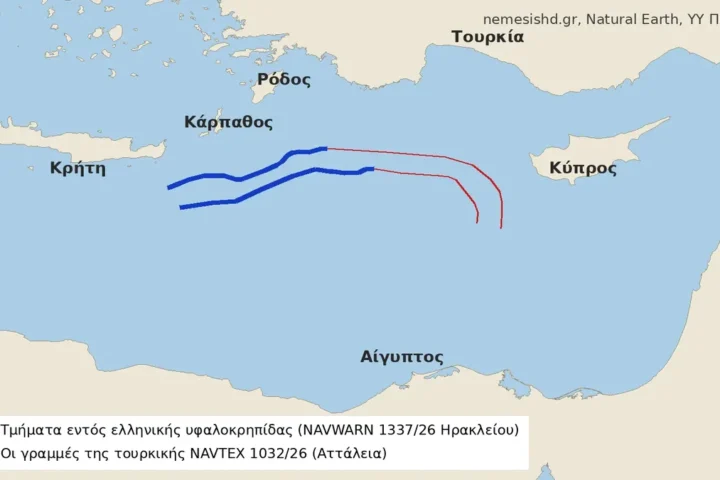
The memorandum, signed in 2019 by Erdogan and the Tripoli government, was approved unanimously on October 20 by the House of Representatives in Benghazi. It draws maritime boundaries between Turkey and Libya that ignore Crete and the Dodecanese. Athens called it “spurious, null and void”, and the European Union judged it null and void. In contrast, Turkey’s Foreign Ministry welcomed the Libyan decision and maintains that the memorandum complies with international law.
The Israeli condemnation adds to the reactions of the European Union, as European Council President António Costa, Commission President Ursula von der Leyen and European Parliament President Roberta Metsola have publicly expressed solidarity with Greece and Cyprus within two days. For Athens and Nicosia, Jerusalem’s stance carries particular weight, as it comes from a country of the region with a direct interest in energy and maritime stability in the Eastern Mediterranean.