Africa
UN Security Council renews MINUSCA mission in Central African Republic until November 2027 and cuts troop ceiling to 12,000
Resolution 2836 (2026) passed unanimously on 12 November, extending MINUSCA to 15 November 2027 with a lower troop ceiling and a conditions-based handover to national authorities.

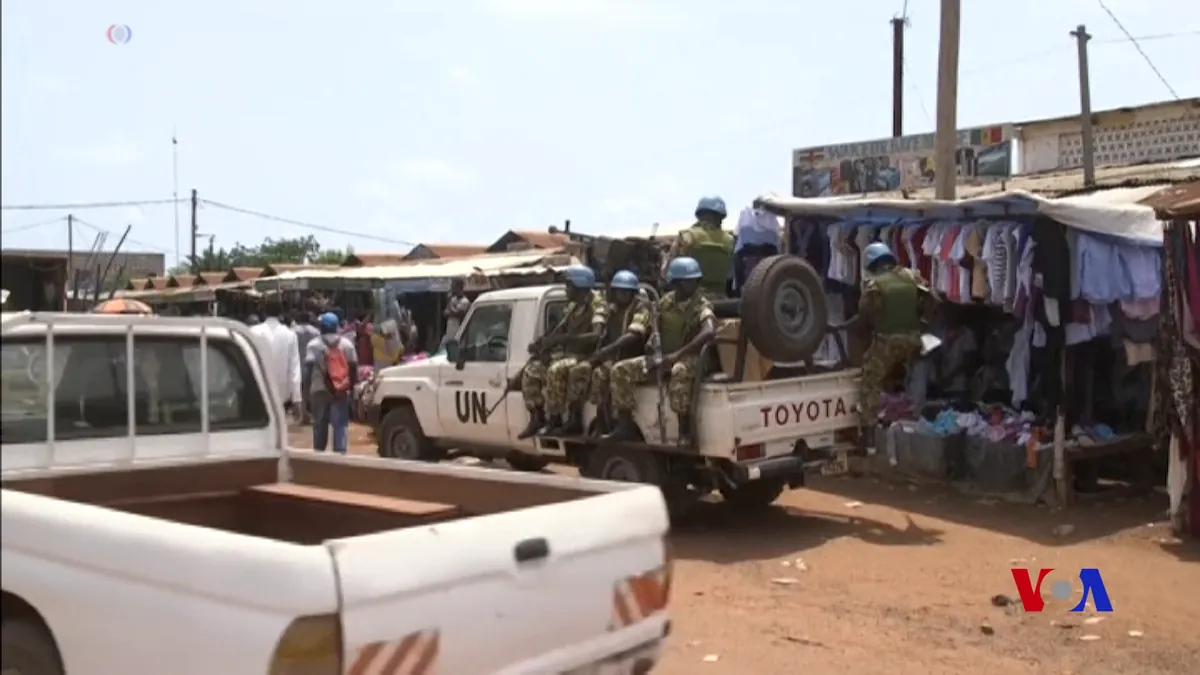
The UN Security Council has extended the mandate of its stabilization mission in the Central African Republic, MINUSCA, until 15 November 2027, while lowering the number of troops the mission is authorized to field and laying out a plan to hand its tasks to national authorities step by step. Resolution 2836 (2026) was adopted unanimously by all 15 members on 12 November, according to the UN’s press service.
What the resolution changes
The text sets the mission’s authorized strength at up to 12,000 military personnel, down from the 14,046 authorized in 2025. It also provides for 2,265 police personnel and 40 corrections officers. The Council decided to reconfigure the mission’s presence so that resources are concentrated in high-risk areas, particularly along the country’s borders, while keeping rapid-response capabilities to protect civilians and support the extension of state authority.
The Council also asked MINUSCA and the government in Bangui to pursue a “gradual, sequenced and conditions-based” transfer of responsibilities. The resolution separates tasks that can be handed over progressively, tasks that need extra capacity-building first, and tasks that should stay with the mission. Its priority tasks remain the protection of civilians, the deployment of national security forces, support for the peace process and help for humanitarian aid. The Secretary-General has been asked to report on implementation and on the transition in February, June and October 2027.
What delegations said
France, which introduced the text, welcomed progress in the country, including elections and the extension of state authority, but warned that security gains remain fragile, especially along the border with Sudan. The aim, its delegate said, is to create the conditions for the Central African Republic to “shoulder its responsibility” when the time comes.
The Central African Republic’s representative welcomed the renewal as a sign of confidence rather than “the victory of one position over another”. He pointed to the restoration of state authority, elections and the disarmament of 11 armed groups, but also to persistent insecurity near the borders amid spillover from the war in Sudan. “We do not want to see a transfer of tasks on paper,” he said, calling for security-sector reform, the reintegration of former combatants and stronger justice institutions.
Greece, a Council member, backed the renewal. Its representative said the mission’s capabilities are “essential as the Central African Republic enters the important phase of consolidating the gains achieved over recent years”, and called for closer cooperation between MINUSCA and national authorities so that the transition of responsibilities is orderly and sustainable.
China’s representative said the renewal would help the country consolidate peace and extend state authority, and asked the mission to take a gradual, operations-led and results-oriented approach. Liberia, also speaking for the Democratic Republic of the Congo and Somalia, noted that more than 1,900 combatants have been disarmed since July 2025 and urged predictable funding for reintegration and community-violence-reduction work, while flagging insecurity in the Vakaga prefecture. The United States delegate said “successful peacekeeping missions work themselves out of a job” and held MINUSCA up as an example for other missions to follow.
The resolution was adopted at the Council’s 10269th meeting. The same day the Council also adopted Resolution 2837 on Yemen, covered here: UN Security Council adopts Resolution 2837 renewing Yemen sanctions for a year and targeting Houthi weapons supply.