Middle East & North Africa
Rubio: no need for new military action against Iran, the economic pain is enough
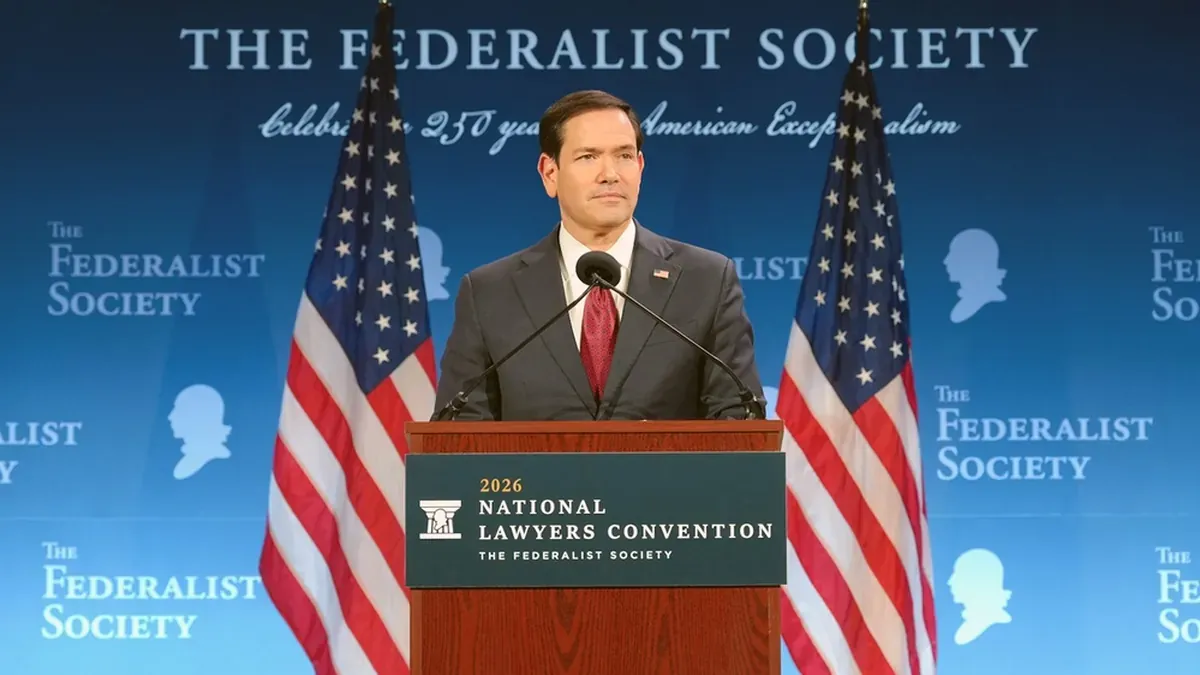
Secretary of State Marco Rubio told the Federalist Society’s National Lawyers Convention on November 13 that economic pressure has weakened Iran so much that military action is unnecessary, and defined victory as Tehran never getting a nuclear weapon.

US Secretary of State Marco Rubio said there is no need for further American military action against Iran, because the economic pressure Washington is applying has largely weakened the regime. “Right now, frankly, the economic pain we are causing this regime is so great that there is no need for military action, because we have weakened them so much,” he said on Friday, November 13, at the Federalist Society’s National Lawyers Convention in Washington. The speech and the questions that followed were published by the State Department.
Rubio was answering a question about what he would consider an American victory in the conflict with Iran. “Victory is that they never get a nuclear weapon, one way or another,” he said, explaining that this could also mean that Tehran will not have the money or the equipment to build one. He argued that Iran has built missiles for nuclear weapons and enriches uranium far beyond what it needs. “If what they wanted was nuclear energy, they could have it, like South Korea, like Japan,” he noted.
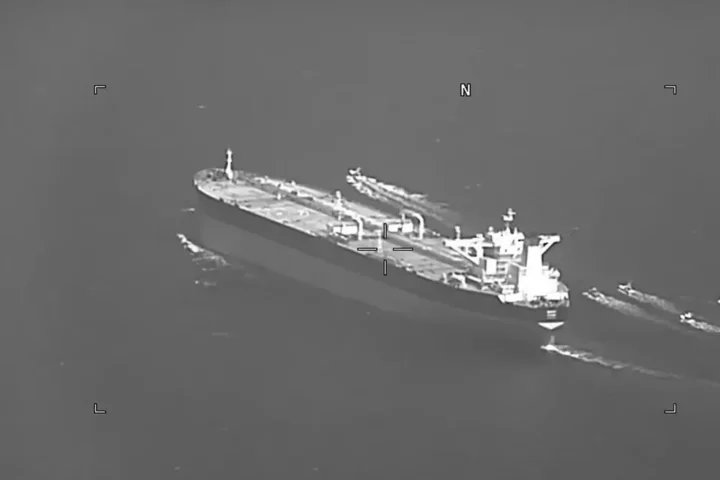
The US secretary acknowledged that the war is not popular. “No war is popular,” he said, adding that the conflict “causes pain, economic and otherwise,” which the administration, as he said, recognises. He argued that Donald Trump could simply have left the problem to the next president but decided not to leave it unanswered. Referring to the attacks on ships in the Strait of Hormuz, he said that even now 13 to 14 million barrels a day come out of there, and urged the audience to imagine what would happen if Iran had a nuclear weapon. “They would hold the whole region hostage. They would hold this nation hostage,” he said.
Much of his answer was devoted to the character of the Iranian regime. Rubio said Iran is ruled by a class of “radical Shia clerics” who care not about the country’s economy but about “exporting the revolution.” “Wherever you look, there is a common denominator: Iran’s Shia clerics and their expansionist mindset,” he said, listing the Houthi attacks on Saudi Arabia, Shia militias in Iraq, Tehran’s role in the Syrian war and Hezbollah in Lebanon. He spoke of a “danger of historic proportions” that cannot be ignored.
Washington’s “middle way”
Rubio had said something similar on the sidelines of the G7 foreign ministers’ meeting in Paris (our report), when he said the economic campaign is “working so well” that the president does not need to conduct major combat operations. The Washington Post, citing an American official, writes that Trump has received several daily intelligence briefings since the midterm elections and that “it has become fairly clear that Trump does not want to return to war for now.” The administration, according to the same source, has settled on a middle road: neither a new war, nor talks, nor lasting peace.
For his part, Iran’s deputy permanent representative to the UN, Gholamhossein Darzi, told the Security Council on Friday that Tehran’s response to any new fighting would be directed “against the source of aggression, wherever it is.” He added that US threats and attacks during negotiations over the past two years have created “deep mistrust” about the prospect of new talks without credible guarantees.