Middle East & North Africa
GCC at the Security Council: more than 7,000 Iranian missiles and drones fired at Gulf states since February 28
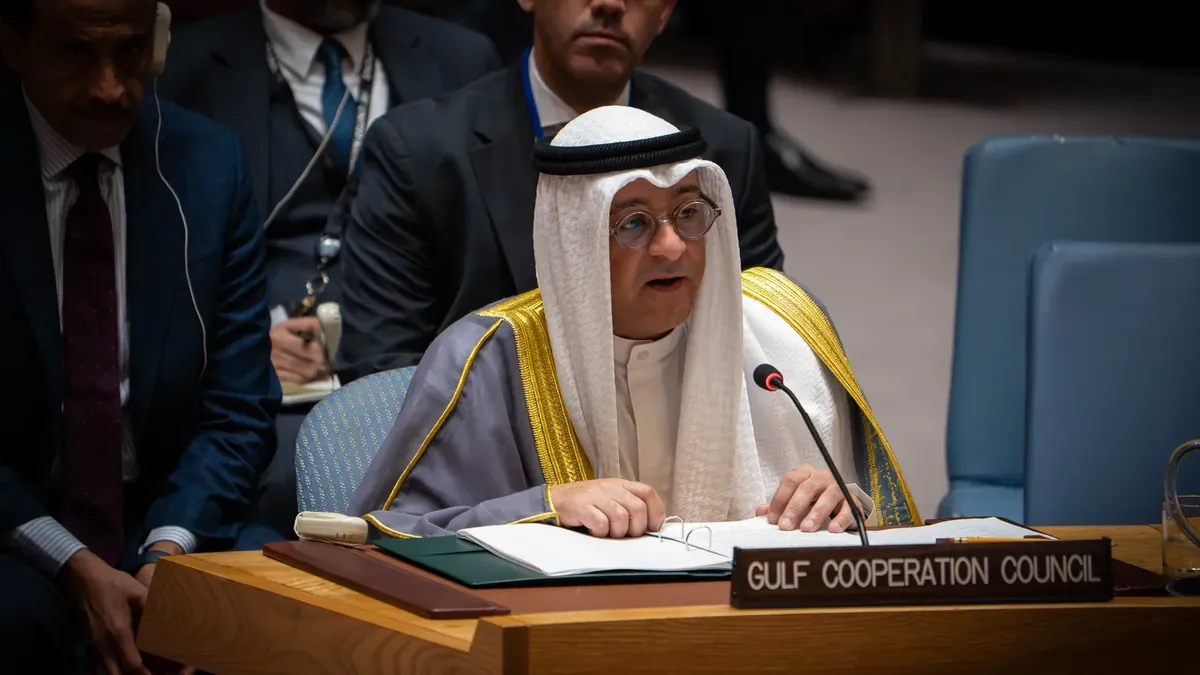
Gulf Cooperation Council Secretary-General Jasem Mohamed Albudaiwi told the UN Security Council on November 13 that Iran has launched over 7,000 missiles and drones at GCC states since February 28, and called for decisive action.

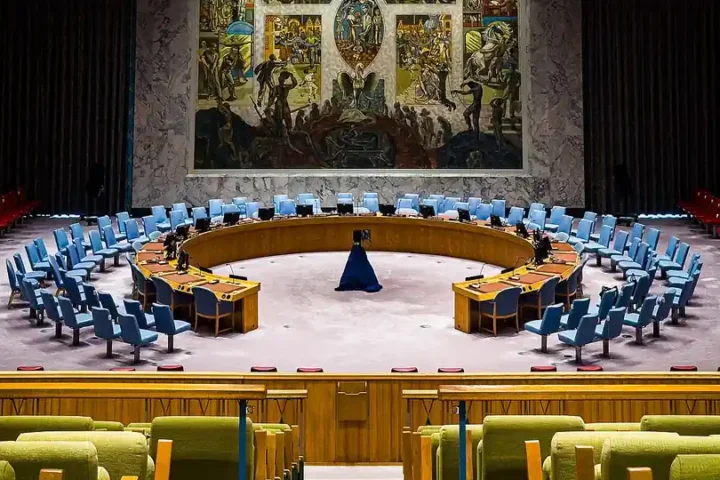
Iran has launched more than 7,000 missiles and drones at the states of the Gulf Cooperation Council (GCC) since February 28, 2026, the organisation’s Secretary-General, Jasem Mohamed Albudaiwi, told the UN Security Council. Briefing the Council in New York on Friday, November 13, he called for “decisive action” to stop the attacks and prevent their recurrence. The meeting on threats to navigation was convened at the request of Bahrain, under Latvia’s presidency of the Council for November.
According to Albudaiwi, the Iranian attacks hit airports, ports, energy, electricity and desalination facilities, as well as residential areas and civilian infrastructure. They caused deaths, injuries and serious damage, and “serious consequences” for the marine environment of the Gulf. The Secretary-General held Iran fully responsible and cited Security Council resolution 2817 (2026), which condemned the attacks on the Gulf states and Jordan. He also referred to Human Rights Council resolution 61/1, which calls for accountability and compensation from Tehran for the damage and losses. At the end of the briefing he called on the international community to make Iran pay compensation.
Hormuz and Bab el-Mandeb
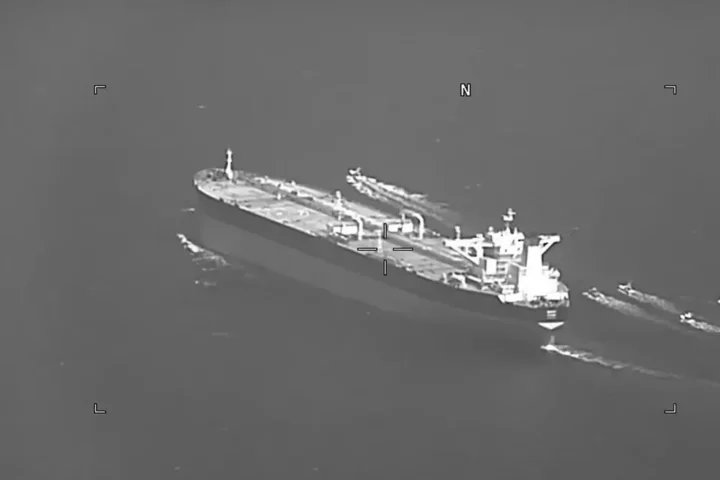
Much of the intervention concerned the Strait of Hormuz and the Bab el-Mandeb Strait, which Albudaiwi called “vital arteries” of global trade and energy. He condemned the attacks on merchant ships and tankers in Hormuz, which have cost seafarers their lives, in the same spirit as the G7, which called on Iran to stop attacks on ships in Hormuz. “The GCC categorically rejects any attempt to close the Straits, obstruct navigation or impose illegal restrictions or transit fees,” he said.
The Secretary-General recalled that the 1982 UN Convention on the Law of the Sea (UNCLOS) guarantees the right of transit passage through straits, which may not be hampered or suspended. He also referred to resolution 552 of 1984, adopted on the basis of a draft by the GCC states during the “Tanker War.” The disruption in Hormuz, he added, now has a humanitarian dimension, as the flow of fertilisers and ammonia on which global food security depends has stopped.
On Yemen, he condemned the Houthi attacks on Saudi Arabia and welcomed the unanimous adoption of resolution 2837, which condemned the Houthi escalation and their attacks on Saudi Arabia and on shipping, as well as the Council’s presidential statement of October 15. He also asked for full implementation of resolution 2722 (2024) on the Red Sea attacks.
Diplomacy left open
Despite the harsh language, the GCC leaves diplomacy open. Albudaiwi said Gulf states want relations with Iran based on respect for sovereignty and good neighbourliness, but any understanding with Tehran must cover the nuclear programme, ballistic missiles, drones and support for proxies. GCC states, he stressed, must take part in any negotiations touching their security. A few days earlier the organisation’s defence ministers had approved a forward headquarters of the Unified Military Command in Kuwait (our report).
At the same meeting, the UN summary records two opposing narratives. The Gulf states accused Iran and its Houthi allies of the attacks on their territory and waters, while Tehran argued that instability stems from the military actions of the US and Israel, which, the Iranian side claimed, some Gulf states facilitate.