Analysis
Analysis: Russian tanks in Ukraine, “useless” or Soviet logic adapted to the drone war?
Russian tanks have been written off on social media more often than any other weapon of the war. Four years on, the battlefield tells a more complex story about mass, simplicity, repair and the drone.

Russian tanks have been “buried” on social media more often than any other weapon of the war in Ukraine. The image of a turret flung dozens of metres into the air after a hit has become, since the spring of 2022, the symbol of an entire school of design, and the word that usually follows is “useless”. Four years on, however, the battlefield says something more complex. Both armies still fight mainly with Soviet-designed armour, Ukraine has returned hundreds of Russian tanks to service, and Russia keeps pulling vehicles of the 1960s out of storage, upgrading them and sending them to the front.
The weaknesses are real and they cost crews’ lives. The mistake is to judge these tanks by the standards of a Western tank, when they were designed for a war of attrition, mass and fast repair, which is exactly the war that came.
The flying turret: the weakness is real
The best-known weakness is not a myth. The T-72, T-80 and T-90 carry a carousel-type autoloader below the turret, inside the hull, with the projectiles and propellant charges stored separately. The mechanism allowed a three-man crew and a lower, lighter tank, but it makes the crew sit literally on top of the ammunition. As Sam Cranny-Evans and Sidharth Kaushal noted as early as April 2022 in their technical analysis for Britain’s RUSI, this is where “the charges and the explosive rounds catch fire”, and their ignition can kill the entire crew. The extra rounds many crews carry outside the carousel, inside the fighting compartment, make things worse. Unlike the Abrams or the Leopard 2, where the turret ammunition sits in an armoured recess with blow-off panels, the Soviet tank has no way to direct the blast away from the people.
The same analysis records the other known weaknesses. The frontal armour is strong, but the sides of the hull and turret are vulnerable, while the side reactive armour (ERA) is usually fitted flat rather than angled, so it performs less well. Gun stabilisation lags behind most Western tanks, sights and fire-control computers are generally of an older generation, and firing on the move is less accurate. On top of that, a three-man crew struggles more with time-consuming field tasks such as changing a track or resupplying.
The numbers show the scale of the attrition. The open-source tally Oryx, which counts only losses documented by photo or video, now exceeds 4,450 Russian tanks, of which 538 were captured by Ukrainians. A large part of those losses, especially in 2022, however, owes less to the vehicle and more to how it was used: columns without infantry, without reconnaissance and without supply, tanks abandoned without fuel on the roads around Kyiv. A Leopard 2 in the same conditions would not have fared better, as Western vehicle losses in the Ukrainian counteroffensive of 2023, in dense minefields, showed.
Soviet logic: mass, simplicity and repair
To judge a Soviet armoured vehicle fairly, one must start from the question it was answering. The Soviet army was not designing a tank that would survive at all costs with four skilled professionals inside. It was designing thousands of tanks for a continent-scale war, to be built in many factories, crewed by conscripts with short training and repaired in the field with simple means. All the characteristics follow from that requirement: a three-man crew thanks to the autoloader, a low silhouette of about 2.2 metres at the turret roof, a weight of around 45 to 48 tonnes when a modern Leopard 2 exceeds 60, and mechanical systems that are repaired with workshop tools, not diagnostic software. The low weight means they cross bridges and soft ground where heavier Western vehicles get stuck, and are easily moved by rail across the whole network of the former USSR.
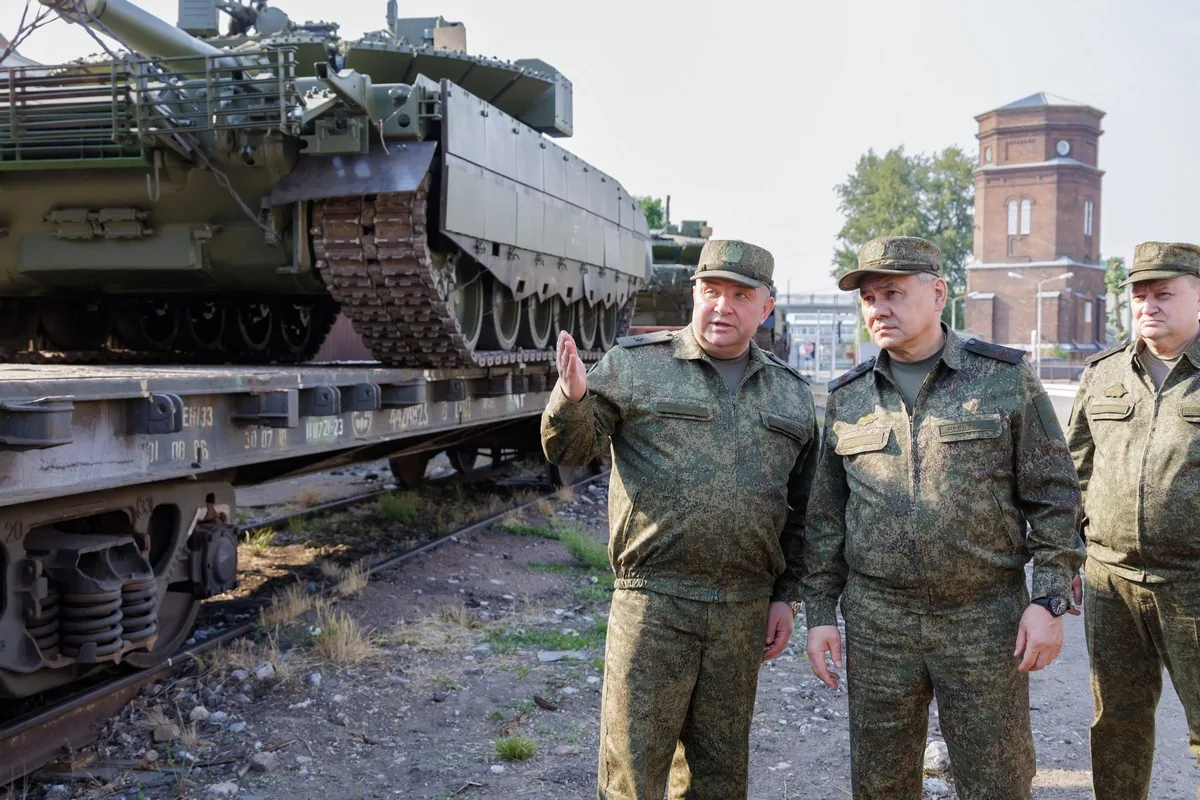
That logic has also worked in Ukraine’s favour, which is often forgotten. When allies looked for tanks to send quickly in 2022, the first to arrive were Soviet ones: Poland gave more than 200 T-72M/M1 and PT-91, while on November 4, 2022 the United States and the Netherlands announced, together with the Czech Republic, that they would jointly fund the refurbishment of 90 T-72B by Czech industry, with new optics, communications and additional armour. No new crew training and no new spare-parts chain was needed. The same went for infantry fighting vehicles: the 40 former Greek BMP-1s, which went to Ukraine through Germany in exchange for Marder 1A3s for the Hellenic Army, entered combat with the 3rd Assault Brigade. And when Ukrainians captured Russian vehicles, they repaired them and turned them back against their former owners with no retraining. In Kursk, in August 2024, the 80th Air Assault Brigade announced it had captured seven Russian tanks, among them a T-90M and four T-80BVMs, and would repair them for its own use.
Simplicity has its other side, however. The same design that allows mass production leaves very little room for add-ons without penalty, and the cramped fighting compartment exhausts the crew on long missions. Ukrainian tankers who spoke to foreign media in 2023 described T-64s that need at least 20 minutes of warm-up on a cold engine and a day of maintenance for every day of hard fighting. The repair is simple, but a great deal of it is needed.
What the field showed: ERA, fire support and the T-62s that were “laughed at”
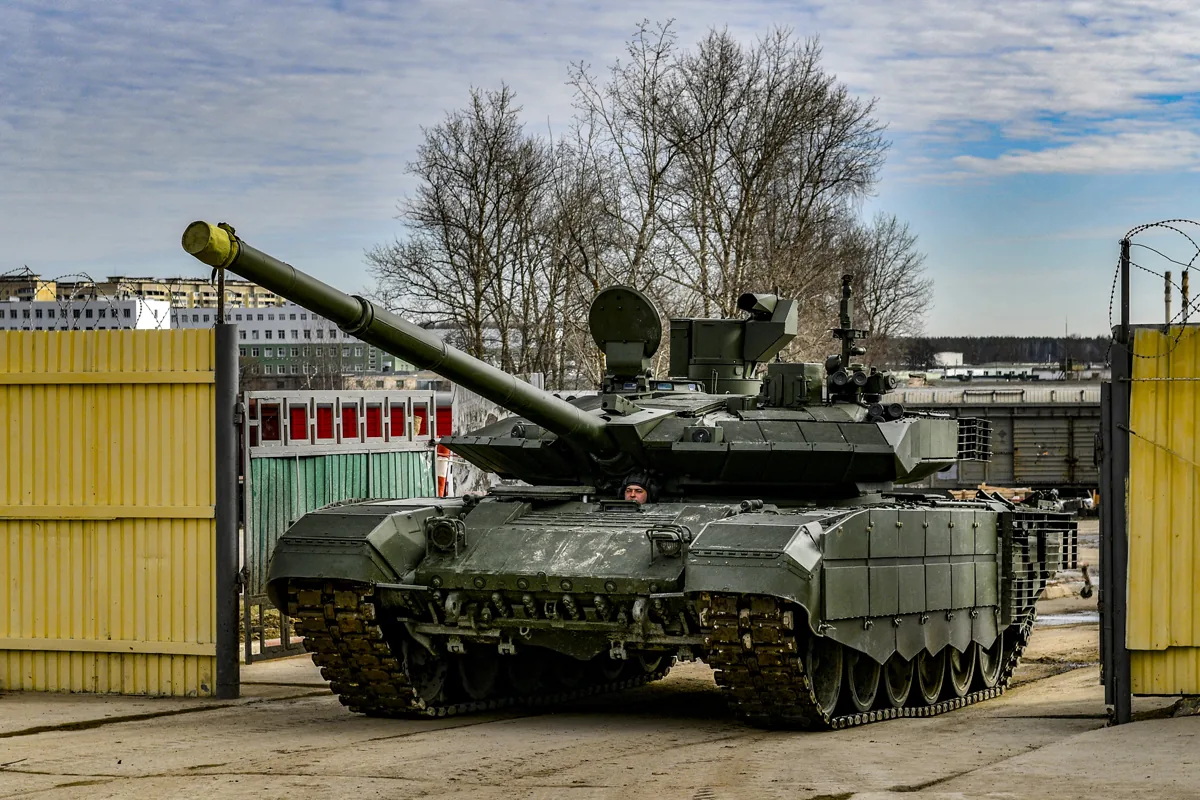
The best-documented picture of how Russian armour was used after the first year comes from the report “Meatgrinder” by Jack Watling and Nick Reynolds of RUSI, published on May 19, 2023 and based on interviews with Ukrainian commanders and tank crews. The first conclusion concerns protection: according to Ukrainian tankers, Russian reactive armour proved “extremely effective”, preventing most anti-tank weapons from penetrating. Some operators reported hitting Russian tanks multiple times with gun-launched guided missiles without putting them out of action. The vulnerable point for a one-hit kill is the junction of the turret and the front plate, while the Ukrainians found that a hit on the tracks is usually enough, because the Russian crew abandons the immobilised vehicle before artillery finds it.
The second conclusion concerns employment. Russian tanks almost stopped attempting breakthroughs after disasters such as that of a Marine brigade at Vuhledar. Instead, the report describes three roles: indirect fire as a supplement to artillery, precise fire support from a distance of about 2 kilometres using the improved optics, and night raids at the time Ukrainian units rotate, often with T-80BVs because of their better thermal sights. At the same time the Russians covered their tanks with materials that reduce the thermal signature, changed the exhaust flow on the engine deck and operated at dawn and dusk, when the vehicle’s temperature approaches that of the surroundings. The result, according to the report, was a significant reduction in the probability of destruction by several types of anti-tank weapon beyond 1,400 metres.
Here too lies the answer on the old tanks that became objects of ridicule. British Defence Intelligence said on March 6, 2023 that about 800 T-62s had been taken out of storage since the summer of 2022 and that some had received new sights that improve night fighting. Oryx has now also recorded “Obr. 2022” versions, that is T-62M and T-62MV models with upgrades made during the war. RUSI notes that while the appearance of T-62s and T-55s was “mocked online”, in practice they are used in the fire-support role that BMPs would perform, offering more range, protection and destructive power than an infantry fighting vehicle. In urban fighting, the Russians even preferred the old tanks as self-propelled assault guns, precisely because the city does not allow the expensive optics of a T-90M to be exploited. This is purely Soviet thinking: every vehicle has a place in the battle, as long as it is given the right role.
Upgrading for the drone battlefield
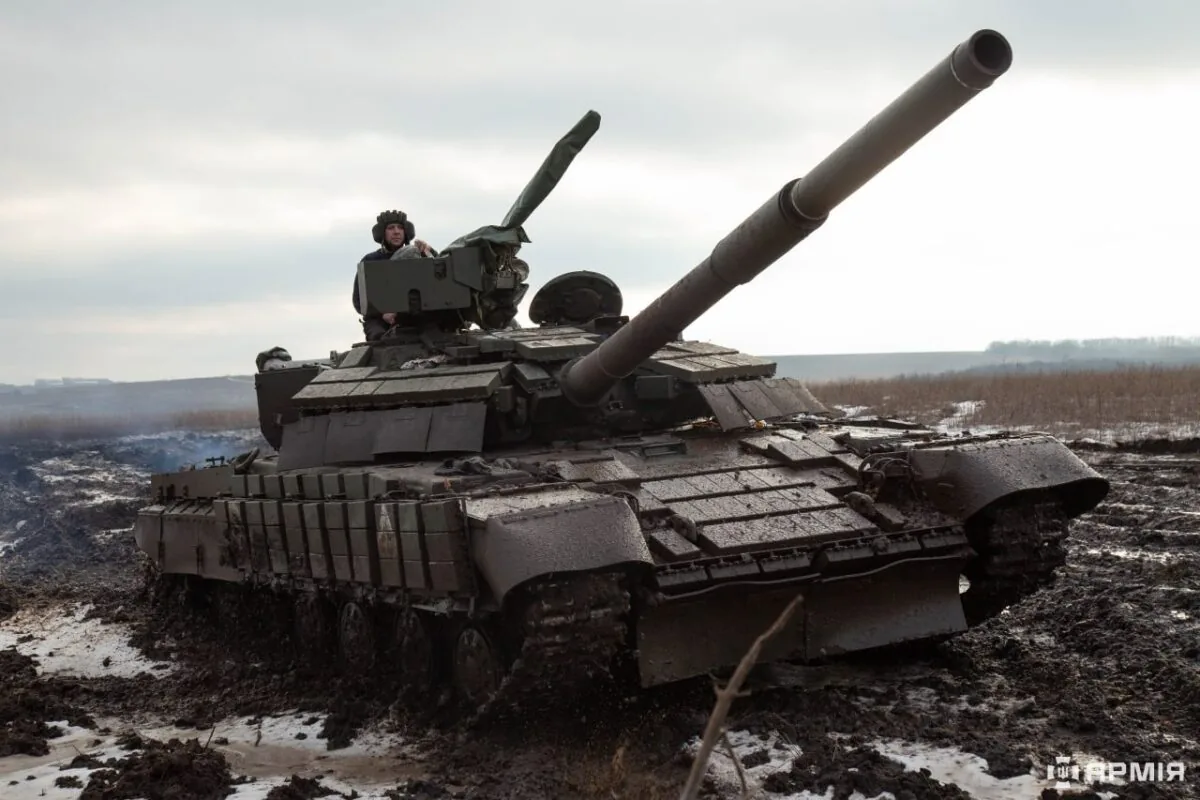
From 2023 on, the biggest threat to the tanks of both sides was not other tanks or even anti-tank missiles, but FPV drones and loitering munitions, which strike from above, at the turret roof and the engine deck, that is, where no tank has serious armour. The Russian answer was industrial and fast. Uralvagonzavod said in late 2024 that the tank of early 2022 and that of late 2024 are “two different vehicles”, and in May 2025 Rostec announced that about 200 design changes had been made in three years to the T-90M and T-72B3M. All new tanks are now delivered with electronic warfare systems to jam drones, anti-FPV nets and rubber-reinforced protection on the rear turret recess and the engine compartment. The batches of September 2026 arrived with full turret coverage by wire-rope mesh, grilles and chains.
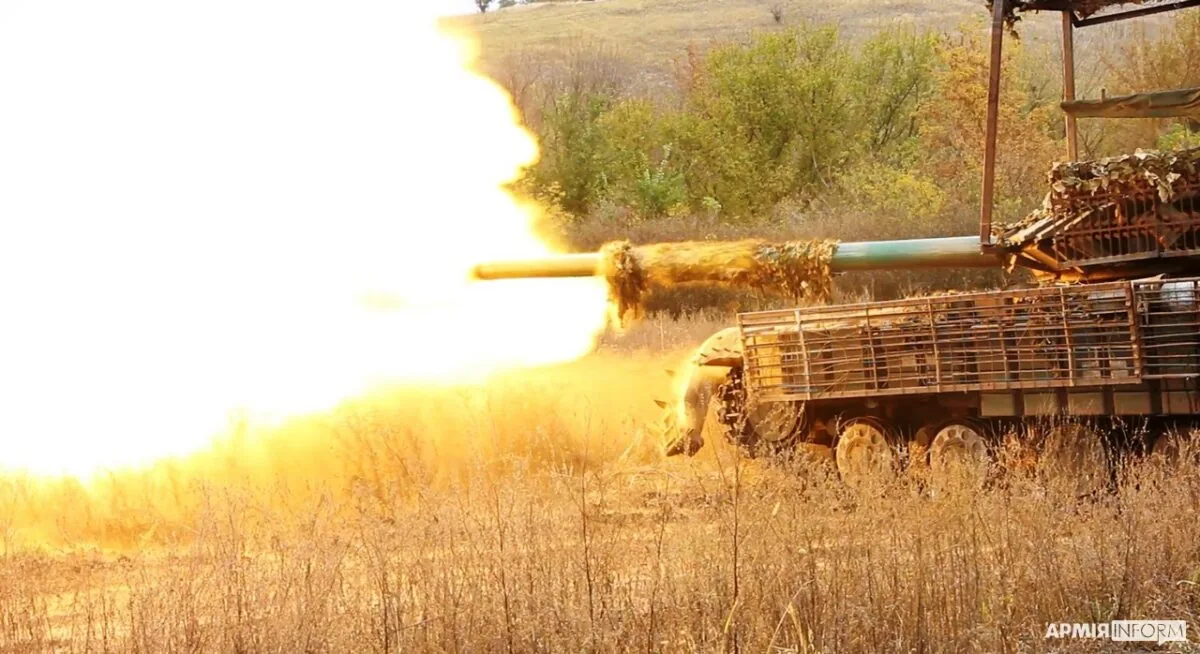
At the front the same logic took an extreme form. The so-called “turtle tanks”, T-72s and T-80s covered entirely in a metal shell, appeared in Russian assaults in 2024. They lose the ability to traverse the turret, but survive long enough to reach the contact line first and open a path for the infantry. In January 2026 Ukraine’s 92nd Assault Brigade captured a T-80BVM wrapped in mesh and wire rope. The Ukrainians did exactly the same on their own tanks, Soviet and Western, because the drone does not discriminate. The issue has been analysed in our earlier piece on the so-called “end of the tank”, where the answer to the drone is active protection systems and close cooperation with infantry, not the abolition of the tank.
The upgrade has clear limits, though. No net and no wire rope changes the position of the ammunition under the crew. The add-ons add weight to a vehicle designed to be light, load the suspension and the drivetrain, and limit visibility and turret traverse. Mass also has a cost. According to the IISS, Russia rebuilt and built more than 1,500 tanks in 2024, but lost about 1,400 in the same year, while what remains in storage is in ever worse condition. The Soviet stockpile kept Russia in the field for four years. It is not inexhaustible.
The main Soviet-origin tanks in the war in Ukraine
- T-62M / T-62MV: crew of 4, 115 mm gun, diesel engine, Kontakt-1 ERA (MV). Today’s use: fire support and urban fighting (Russia).
- T-64BV: crew of 3, 125 mm gun, 5TDF diesel, Kontakt-1 ERA. Today’s use: Ukraine’s main tank.
- T-72B3M: crew of 3, 125 mm 2A46M-5 gun, V-92S2F diesel, Relikt ERA. Today’s use: the backbone (Russia).
- T-80BVM: crew of 3, 125 mm gun, GTD-1250 gas turbine, Relikt ERA. Today’s use: night raids, rapid strikes.
- T-90M: crew of 3, 125 mm 2A46M-5 gun, V-92S2F diesel, Relikt ERA. Today’s use: the most modern Russian tank at the front.
BMP and BTR: where Soviet logic hurts most
If the tanks proved more durable than their reputation, the infantry fighting vehicles and armoured personnel carriers show more clearly the price of Soviet design. The BMP-1 of 1966 was the world’s first infantry fighting vehicle, designed for a nuclear battlefield where speed, amphibious capability and radiation protection counted for more than ballistic protection. The BMP-2 and BMP-3 kept the philosophy, with very powerful armament for their size (the BMP-3 carries a 100 mm and a 30 mm gun together). Russian vehicles such as the BMP-3 and BTR-82 are protected mainly frontally and lack modern side armour and mine protection. That is why Russian soldiers often ride on the roof rather than inside the vehicle, a practice they carry over from Afghanistan and Chechnya.
The contradiction is that the same ease of transport, production and repair made the BMP the most widespread vehicle on both sides. Light infantry fighting vehicles are lost more easily, but replaced faster, and in a war where every vehicle approaching the front is under drones, numbers have mattered as much as quality. Ukraine received Bradleys, Marders and CV90s from the West precisely for the protection BMPs do not provide, and the Western vehicles saved many crews. Their numbers, however, were never enough to replace the Soviet ones.
What it means for Greece and Cyprus
For Cyprus the issue is immediate. The National Guard bases its armoured strength on about 82 T-80U and T-80UK tanks, as well as BMP-3s, all of Russian make, with support for them effectively cut off by sanctions. Ukraine’s experience shows that a T-80U with Kontakt-5 is not an obsolete tank, but also that without spare parts for the gas turbine, without drone protection and without thermal concealment it would be vulnerable against an opponent that uses Turkish UAVs and loitering munitions in large numbers. That is why the dilemma between Leopard 1A5, Merkava and an upgrade, which we analysed earlier, is not only a question of the gun, but of support and survivability.
For the Hellenic Army, the lesson concerns the approach more than the type of tank. Russian and Ukrainian crews did not wait for a new tank in order to survive. They added reactive armour, mesh, electronic warfare and thermal concealment to what they had, changed tactics and built a repair network next to the front. The Hellenic Army’s older Leopards are in the same position as a T-72: capable vehicles with outdated top protection. The proposal for ERA, APS and cages on the Leopard 2A4 that we put forward in 2023 is more relevant today than ever, as is the need for a domestic rapid-repair capability.
The conclusion is not that Russian tanks are good or bad. It is that they were designed for mass and attrition, that the weakness of their ammunition cost thousands of crews, and that, nevertheless, the Soviet logic of simplicity, a common platform and rapid rebuilding kept two armies in the field for four years. Whoever calls them “useless” sees only the flying turret. They do not see the hundreds of tanks that were repaired, upgraded and returned to battle.
Frequently asked questions about Russian tanks in Ukraine
Why do the turrets of Russian tanks fly off?
Because the T-72, T-80 and T-90 store the projectiles and propellant charges in the autoloader below the turret, inside the crew space. If the armour is penetrated and the charges ignite, the pressure can blow the turret off. In Western tanks the turret ammunition sits in an armoured recess with blow-off panels.
Is Russian reactive armour effective?
According to RUSI’s “Meatgrinder” report (May 2023), Ukrainian tankers described it as extremely effective, since it prevented most anti-tank weapons from penetrating the armour. Some Russian tanks took multiple hits from guided missiles without being put out of action.
Why is Russia using T-62s and T-55s?
Because it replaces losses with tanks from the Soviet stockpiles. British Defence Intelligence reported in March 2023 about 800 T-62s taken out of storage, some with new sights. They are used mainly for fire support and in urban fighting, not in tank-versus-tank battles.
What changes were made to Russian tanks because of drones?
Rostec announced in May 2025 about 200 changes over three years to the T-90M and T-72B3M, with electronic warfare systems against drones, anti-FPV nets and rubber protection on the rear turret recess and engine compartment. The 2026 batches have full turret coverage with mesh and chains.
Which countries in our region have Russian tanks?
Cyprus, with about 82 T-80U and T-80UK tanks of the National Guard, as well as BMP-3 infantry fighting vehicles. Support for them has become very difficult since the 2022 sanctions on the Russian defence industry.