Analysis
Turkey–Azerbaijan: the headscarf in schools and Israel bring the first big quarrel of “one nation, two states”
New dress rules in Azerbaijani public schools that in practice ban the headscarf, and Baku’s close ties with Israel, have triggered one of the most open public disputes between Turkey and Azerbaijan, which describe themselves as “one nation, two states”.

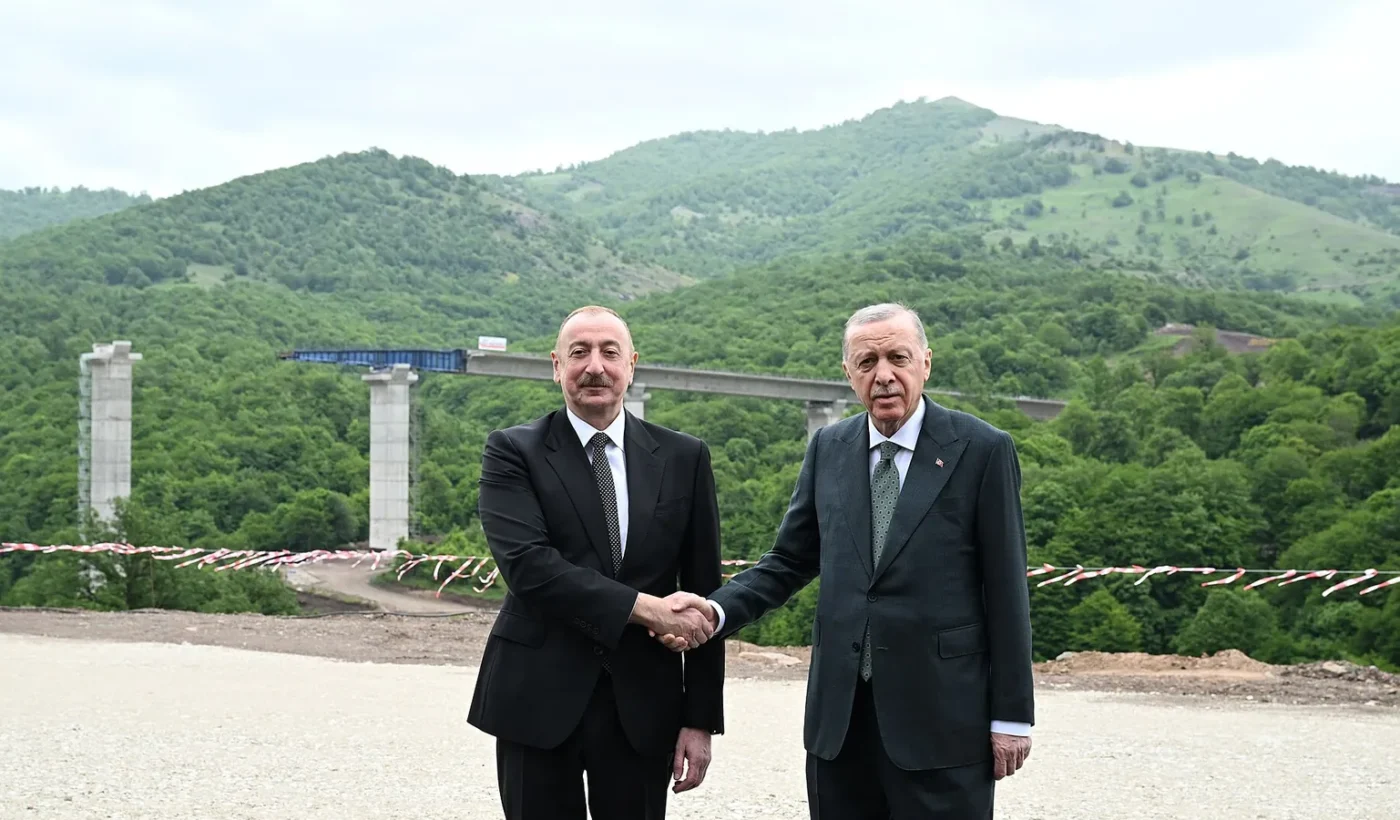
Turkey and Azerbaijan, which describe themselves as “one nation, two states”, have found themselves in recent days in one of their most open public disputes. The trigger is Azerbaijan’s new dress rules for public schools, which in practice ban the headscarf, and the dispute was quickly joined by Baku’s close relations with Israel. On Thursday, October 15, Turkish Foreign Minister Hakan Fidan met Ilham Aliyev in Baku and said that “whatever happens, the strategic character of the Turkey–Azerbaijan relationship is above any issue”.
The rules were approved for students on September 21 and for teachers on October 6. They ban “additional items of clothing that violate the school uniform requirements and contradict the principle of secular education”. They do not mention the headscarf explicitly, but schools began leaving girls who wore it outside the classrooms. According to Eurasianet, by October 12 the Interior Ministry had announced at least 37 arrests for protests, while the same day users reported that Instagram and TikTok were not working even through VPNs, with no official announcement.
Saral, the AKP and Baku’s reply
The clash was ignited by Erdoğan’s chief adviser Oktay Saral, who wrote on X on October 12: “To leave a schoolgirl who covers her head out of faith at the school door, how does this fit in any conscience, any sense of justice?”. AKP MPs went further, implying that the ban serves Israeli interests. Erdoğan had already condemned school headscarf bans at the UN General Assembly on September 22, without naming a country.
Aliyev’s ruling New Azerbaijan Party replied on October 13 with a lengthy statement, accusing Saral and AKP MPs of “populist and irresponsible statements” that create “artificial tensions”. It recalled that Azerbaijan is a secular state, like Turkey, and noted that “the use of sensitive issues such as head covering as tools of political manipulation serves neither the unity of the Turkic people nor the solidarity of the Muslim world”. In a phrase read as a dig at Erdoğan, it said no state in the Islamic world is entitled to impose its will on others with “hegemonic tendencies”. On Israel, the party said relations are based on international law and mutual interests and that Aliyev supports the two-state solution with East Jerusalem as the capital of Palestine.
In the background is the military cooperation between Baku and Israel, with Israeli drones having played a role in the recapture of Karabakh, as well as Israel’s network in Azerbaijan against Iran. In Turkey, the decision of the Azerbaijani delegation not to leave the UN hall in September, when Netanyahu spoke, has also been criticised. And on October 14, in the middle of the row, Israeli President Isaac Herzog met Aliyev in Baku, on the sidelines of the 7th CICA Summit. “Under your leadership, Azerbaijan is a deeply respected, reliable and influential voice in our region,” he wrote on X, speaking of a discussion on deepening the “strategic” relationship.
Ankara is now trying to lower the temperature. AKP deputy chairman Kürşat Zorlu said the problems are discussed “in the family council”, Devlet Bahçeli called for respect for Azerbaijan’s sovereignty, and former prime minister Binali Yıldırım told an Azerbaijani outlet that Saral’s statements do not express Erdoğan’s views. Fidan, who went to Baku on Erdoğan’s instructions, described some of the problems as “manufactured” and warned against turning differences into propaganda on social media. The Islamist Fatih Erbakan, by contrast, asked Aliyev to withdraw the rules. Aliyev, who recently also clashed with Moscow, shows he takes no instructions even from his closest ally.