Analysis
Greece’s offshore oil and gas search explained: Chevron, Crete and Corfu
Chevron holds four blocks south of Crete and the Peloponnese, a second joint venture plans a well off Corfu, and three bids are in for new seismic surveys. What is known so far, and what is not.

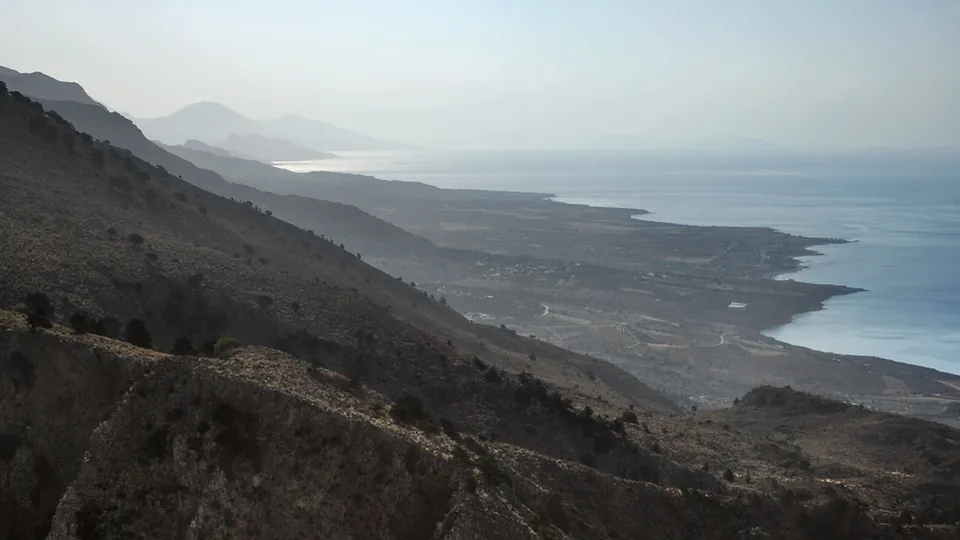
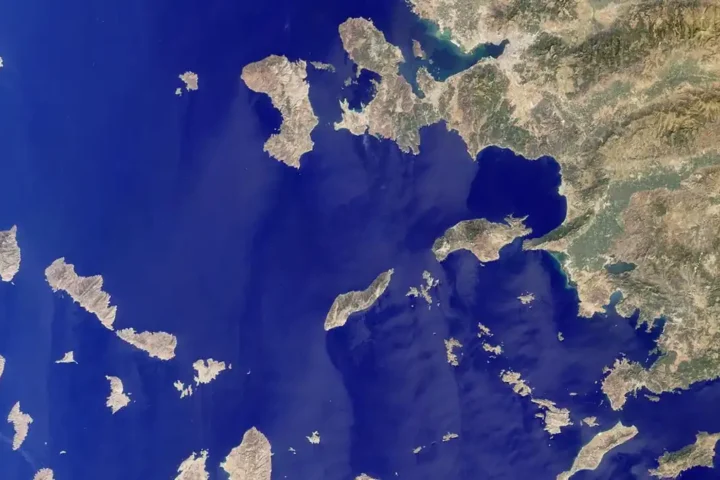
Greece is preparing to look for oil and gas under its own seas for the first time in decades. The Chevron-HELLENiQ ENERGY joint venture holds four offshore blocks south of the Peloponnese and south of Crete, a joint venture led by Energean and ExxonMobil is planning a well northwest of Corfu, and on 10 November 2026 the state hydrocarbons company HEREMA reported three bids for new seismic surveys in western and southern Greece.
Key points
- Chevron and HELLENiQ ENERGY signed lease agreements for Block A2, South of Peloponnese, South of Crete 1 and South of Crete 2 in February 2026, according to HEREMA.
- HEREMA says the new areas add 46,189 square km of exploration acreage.
- In the northwest Ionian Sea, the Block 2 partners have moved into a second exploration phase that includes one exploration well, which HEREMA calls the first offshore exploration drilling in 40 years.
- On 9 November 2026 the deadline closed for a tender for non-exclusive seismic data; three international companies bid.
- Exploration is not production: none of the HEREMA releases read reports a discovery in the new blocks.
Who is exploring where
The state side of the programme is run by the Hellenic Hydrocarbons and Energy Resources Management Company (HEREMA). In its own words it was mandated in April 2022 to accelerate Greece’s upstream sector, with a focus on natural gas, and it says six of Greece’s eight active concessions are in the exploration phase.
South of Crete and the Peloponnese, the bidder was a Chevron-HELLENiQ ENERGY joint venture. HEREMA reported that the joint venture submitted bids for all four areas when the deadline expired on 10 September 2025. The lease agreements were then signed at the Maximos Mansion in the presence of Prime Minister Kyriakos Mitsotakis and presented at the Acropolis Museum on 16 February 2026. HEREMA says the tender was completed within 10 months.
In the northwest Ionian Sea, Block 2 was first conceded to a joint venture of Total, Edison and Hellenic Petroleum under a lease agreement co-signed on 31 October 2017 and ratified by Law 4525/2018. After several changes in the line-up, ExxonMobil joined as co-lessee on 10 March 2026 alongside operator Energean and HELLENiQ ENERGY. On 13 March the partners notified HEREMA that they would move to the second exploration phase, which carries the obligation to drill one exploration well.
What the Block 2 well involves
HEREMA’s chief executive, Aristofanis Stefatos, said the planned drilling is at water depths of 900 metres and more than 55 km from shore. The planned well is named Asopos-1. On 12 October 2026 HEREMA, Energean and the consultants who prepared the environmental impact assessment briefed members of the Technical Chamber of Greece in Corfu on its technical design, safety and environmental protection measures.
HEREMA also commissioned a public opinion survey from DATA R.C. in Western Greece, the Peloponnese and the Ionian Islands. According to the survey results as reported by HEREMA, 71.4% of respondents had a very positive or positive view of hydrocarbon exploration and potential production in Greece.
How a licence works
HEREMA describes three routes to a concession: a bidding round for a defined area, an expression of interest for an area outside a round, and an open-door procedure for areas that are permanently available or were relinquished. Each is published in the Government Gazette and the Official Journal of the European Union, with offers due within 90 days. It puts the usual timeline at one to one and a half years from publication of the tender.
Under Law 2289/1995, the exploration phase lasts up to eight years in maritime areas, and HEREMA can extend it in defined circumstances. Operators commit to a minimum work programme. In Block 2, that is the single exploration well.
The seismic tender that has just closed
Separately from the lease blocks, HEREMA invited bids under a Government Gazette notice of 30 June 2026 for prospection licences to acquire and process non-exclusive seismic data offshore western and southern Greece. The notice was published in the EU Official Journal on 11 August and the deadline expired on 9 November. HEREMA announced that three bids came from international companies with extensive seismic experience and that it would set up an evaluation committee to open and assess them, then advise the Ministry of Environment and Energy.
Energy minister Stavros Papastavrou called the result “a vote of confidence in the prospects of our country”. He added that the surveys would give “a clearer picture about hydrocarbon potential under the Greek seas”. Stefatos said new data would create “a more extensive database for both conceded and non-conceded domestic offshore areas”.
The sovereign-rights dimension
The programme is also a statement of jurisdiction. At the February 2026 presentation Papastavrou said that, by exploring south of Crete, the government was “raising our geopolitical status and decisively exercising our sovereign rights”. After the seismic tender closed he said Greece is striving to turn its energy potential into benefits “with respect to the environment and the provisions of International Law”.
The law behind that language is the UN Convention on the Law of the Sea. Article 56 gives a coastal State in its exclusive economic zone “sovereign rights for the purpose of exploring and exploiting, conserving and managing the natural resources” of the seabed and subsoil. Article 77 says the coastal State exercises sovereign rights over the continental shelf, and that these rights “do not depend on occupation, effective or notional, or on any express proclamation”. Article 121(2) provides that the zones of an island are determined like those of other land territory, which is the basis on which Crete generates full maritime zones.
Article 83 requires delimitation between States with opposite or adjacent coasts to be effected “by agreement on the basis of international law”, with recourse to Part XV procedures if none is reached. For the legal framework and how Athens answers Ankara’s maritime claims, see our explainers UNCLOS explained: sea zones, islands and the Aegean dispute, The Turkey-Libya maritime memorandum explained and Greece-Egypt EEZ agreement explained: what the 2020 deal says.
What is not yet known
None of the sources read for this article reports a discovery, reserves or a production date for the new blocks. HEREMA’s own wording is that the surveys and wells are meant to establish the potential. Until seismic results are processed and wells are drilled, volumes are unknown, and any figure quoted for Greek gas reserves in these areas is an estimate rather than a finding.
Sources
HEREMA press releases: seismic tender bids, 10 November 2026; Chevron-HELLENiQ ENERGY lease agreements, 17 February 2026; Block 2 second exploration phase, 19 March 2026; Corfu information session, 13 October 2026. Law of the Sea: UN Treaty Series, vol. 1833, text of UNCLOS.