Analysis
The Turkey-Libya maritime memorandum explained
The 2019 Turkey-Libya memorandum draws a sea boundary that ignores Greek islands. This explainer sets out what it is, what UNCLOS says and where Greece, Cyprus and the EU stand after the 20 October vote.

The Turkey-Libya maritime memorandum is a November 2019 understanding that draws a line between the sea zones Ankara and Tripoli claim in the Mediterranean. Greece, Cyprus, Egypt and the European Union reject it because it ignores the waters generated by Greek islands, above all Crete, and because, in the EU’s words, it “cannot produce any legal consequences for third States”. On 20 October 2026 the eastern-based Libyan House of Representatives approved it, which put the document back at the centre of the Eastern Mediterranean dispute.
Key points
- The memorandum was concluded by Turkey and Libya’s then Tripoli-based government on 27 November 2019, according to the EU’s diplomatic service.
- It is a bilateral text. It binds only its two signatories and cannot settle the rights of Greece, Cyprus or Egypt.
- Greece’s case rests on the UN Convention on the Law of the Sea: islands generate full maritime zones (Article 121), and delimitation is for states with opposite or adjacent coasts (Articles 74 and 83).
- Turkey and Libya are not among the 172 states listed by the UN as having ratified, acceded to or succeeded to the Convention.
- The EU has repeated since December 2019 that the memorandum infringes the sovereign rights of third states.
What is the Turkey-Libya memorandum?
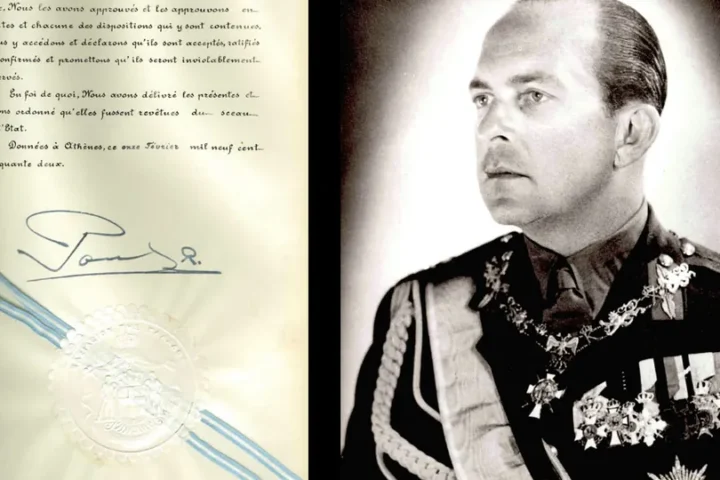
It is a memorandum of understanding on the delimitation of maritime jurisdiction areas in the Mediterranean, agreed in 2019 between Turkey and the Libyan government in Tripoli. The EU’s diplomatic service noted on 4 December 2019 that the text, dated 27 November 2019, “has not been made public” and said further clarifications were needed on its content. It asked for the text to be communicated to the Union without delay.
Three years later, on 3 October 2022, the same service took note of reports that Turkey and the Libyan Government of National Unity had signed a hydrocarbons agreement based on the memorandum. It recalled that the EU position, set by the European Council in December 2019, “remains unchanged”. Our earlier explainer on UNCLOS explained: sea zones, islands and the Aegean dispute sets out the legal vocabulary used below.
What happened on 20 October 2026?
Libya’s eastern-based House of Representatives approved the memorandum on Tuesday 20 October, according to Reuters (in a report carried by The Jerusalem Post) and Middle East Online. According to the latter, the original agreement was made by the internationally recognised government in Tripoli, while the rival eastern administration under Khalifa Haftar had withheld its approval for years. The chamber also revoked two decisions of 2020, one rejecting the memorandums signed with Turkey and another cutting political relations with Ankara. Reuters quoted lawmaker Aisha al-Tabalqi as saying the text was approved after committees presented its provisions.
Middle East Online noted that the vote was eased by the replacement earlier in the month of the long-serving speaker, Aguila Saleh, and quoted the Libyan analyst Anas El Gomati as calling the move a “complete reversal”. The report said Saddam Haftar welcomed the approval as a tool that could help protect Libya’s rights and economic interests in the Mediterranean.
What does the law of the sea say?
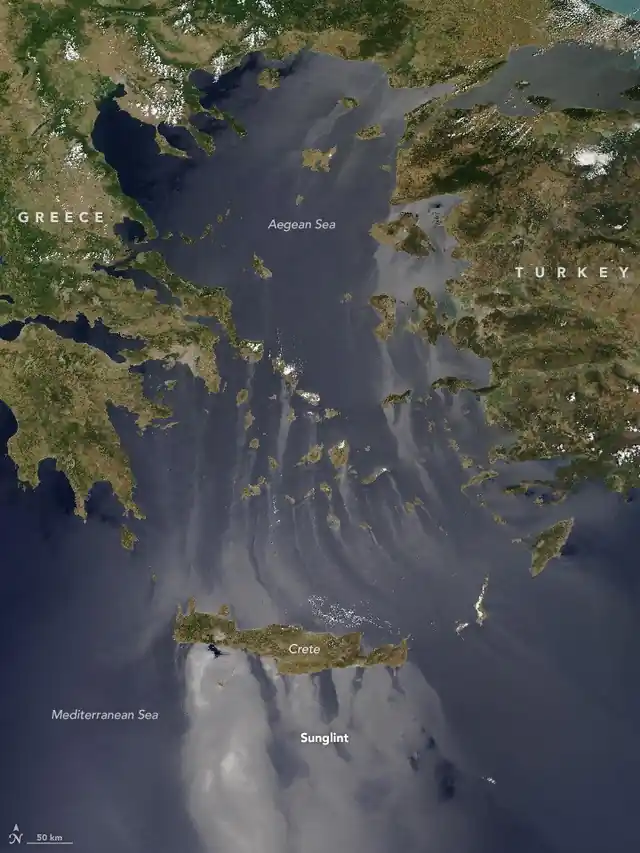
The Convention on the Law of the Sea (UNCLOS) is the text both sides cite or contest. Article 121(2) says that, except for rocks that cannot sustain human habitation or economic life of their own, the territorial sea, exclusive economic zone and continental shelf of an island “are determined in accordance with the provisions of this Convention applicable to other land territory”. Article 3 lets every state set its territorial sea up to 12 nautical miles.
Articles 74 and 83 deal with delimitation. Each says that the exclusive economic zone, and the continental shelf, between “States with opposite or adjacent coasts shall be effected by agreement on the basis of international law” in order to achieve an equitable solution. If no agreement is reached the states concerned must use the dispute procedures in Part XV, and pending agreement they must make every effort to enter into provisional arrangements and not to “jeopardize or hamper” a final agreement. The full text is published by the United Nations.
Why do Greece and Cyprus say it is void?
Athens answered the vote on the day. In a Foreign Ministry statement, as reported by Reuters and Middle East Online, Greece said the memorandum violates the international law of the sea and infringes the sovereign rights of states in the region. It argued that Turkey and Libya do not have opposite or adjacent coasts that could justify a maritime delimitation, said it was without legal effect, and said it had informed its partners and allies and would take all appropriate measures to safeguard its sovereign rights. Greece also called on Libya to refrain from actions that undermine stability in the Eastern Mediterranean.
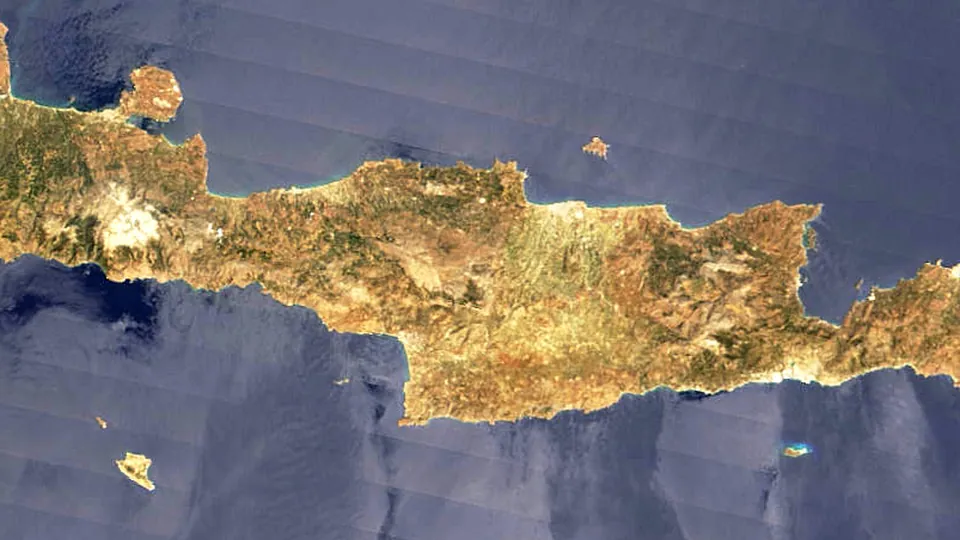
The reasoning follows from the treaty text above. Delimitation provisions presuppose coasts that face or adjoin each other, and Article 121(2) gives Greek islands, Crete included, the same zones as mainland territory. A line drawn between two other states cannot remove those entitlements. Greece, Cyprus and Egypt, Middle East Online wrote, have long opposed the deal and see it as infringing their own maritime claims. Cyprus called it “illegal, null and void”, as we reported in Cyprus condemns the approval of the Turkish–Libyan memorandum: “illegal, null and void” and a violation of the rights of third states.
Greece and Cyprus are parties to the Convention. The UN’s chronological list of ratifications shows Cyprus on 12 December 1988, Egypt on 26 August 1983 and Greece on 21 July 1995. Neither Turkey nor Libya appears on it.
What is the EU position?
The 2022 statement quotes the European Council’s December 2019 line in full: the memorandum “infringes upon the sovereign rights of third States, does not comply with the Law of the Sea and cannot produce any legal consequences for third States”. The 2019 statement of the EU spokesperson stressed that the law of the sea and the sovereign rights of all coastal states, “including those generated by their islands”, must be respected. After the October vote, Council President Costa and Commission President von der Leyen restated that position and expressed solidarity with Greece and Cyprus, as covered in EU calls the Turkish–Libyan memorandum “null and void”: Costa and von der Leyen express solidarity with Greece and Cyprus.
What is Ankara’s case?
Turkey’s foreign ministry welcomed the Libyan vote, saying, in that report’s summary, that the agreement respects the mutual rights and interests of both countries under international law and the principles of equity, and that Turkey will keep working with partners for security and stability in the Mediterranean. That is Ankara’s position, not a finding by any court. It rests on a convention that Turkey has not joined, and it does not answer the point that the memorandum was concluded without Greece, Cyprus or Egypt, whose zones it overlaps.
What else is in play?
The same report recalled that Athens and Cairo signed an overlapping exclusive economic zone agreement in 2020, which Turkey opposes, and that last year Greece approved hydrocarbon exploration for a consortium led by Chevron south of Crete, which Ankara condemned as “unlawful”. Those are separate steps, but they show why the memorandum matters: it is the legal basis Turkey and eastern Libya now share for claims in waters where Greek and Cypriot licences and Egyptian agreements already exist.
The memorandum, in short, changes nothing in treaty law for Greece, Cyprus or Egypt. What the vote changes is that a second Libyan authority now backs it, which Athens has answered by saying it will use all appropriate means to defend its rights.
Sources: EEAS statement of 3 October 2022 (quoting the European Council of December 2019); EEAS statement of 4 December 2019 on the situation in the Eastern Mediterranean; UN Convention on the Law of the Sea; UN list of ratifications; reports by Reuters (via The Jerusalem Post) and Middle East Online of 20 and 21 October 2026.