Analysis
Analysis: Military satellites in Greece and Turkey, Göktürk and İMECE against the Greek microsatellite swarm
Analysis: Turkey bet on a few large satellites with a military owner and a domestic industry; Greece on a dual-use swarm of microsatellites paid for by the Recovery Fund. Greece already has radar satellites in orbit but no purely military satellite. A comparison of what each country has, and why national control is the next step for Athens.

Military satellites are a field in which Greece and Turkey took two entirely opposite roads. Turkey invested for almost twenty years in a few large satellites with a military owner, building in parallel a domestic industry that today makes observation and communications satellites on its own. Greece started much later and with a different logic: a swarm of dual-use microsatellites, paid for by the Recovery Fund and managed by a civilian ministry. The result is a paradox. Greece already has radar satellites in orbit, something Turkey is still developing, yet it has no purely military satellite. We assess that the comparison shows that neither country yet has the full “package”, and that what Greece needs now is national control.
The Turkish model: Göktürk, İMECE and Türksat 6A
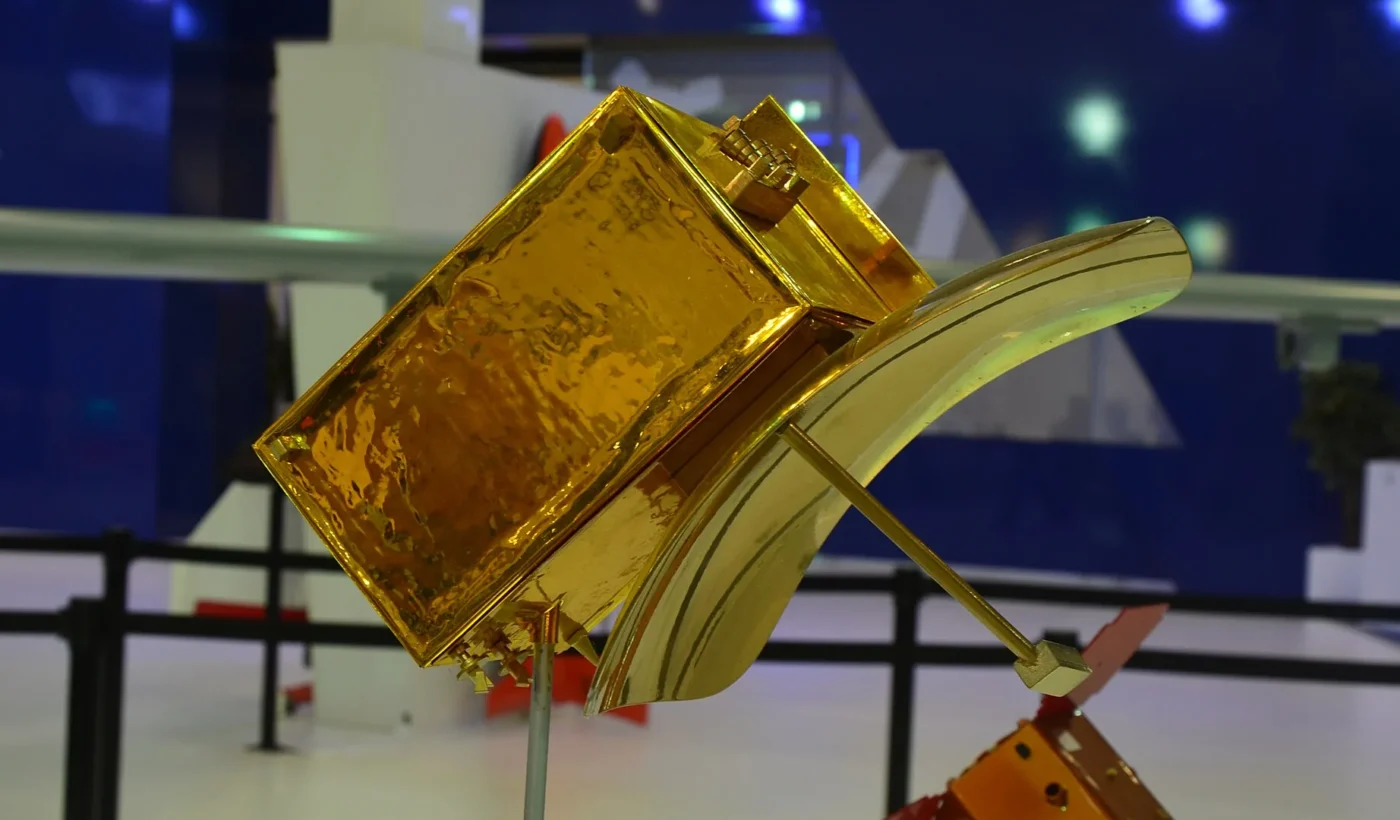
Turkish satellite power rests on the Göktürk family. Göktürk-1, built by Italy’s Telespazio and the French-Italian Thales Alenia Space for the Presidency of Defence Industries (SSB), was launched in December 2016. According to Turkish Aerospace (TUSAŞ), it allows imaging for military intelligence “without geographical restriction”, with sub-metre resolution, a mass of about 1,000 kg, a 700 km orbit and a revisit time of two and a half days. According to the SIPRI database, it cost €262 million, with 20% of its value produced in Turkey. Its design life is seven years, which is why Ankara signed its replacement, Göktürk-Y, in 2021, with a camera that will gradually become domestic. The smaller Göktürk-2, with 2.5-metre resolution, had already been launched from China in 2012 and, according to TUSAŞ, all of its mechanical engineering was done in Turkey.
In 2023 came İMECE, the first Turkish sub-metre observation satellite developed domestically by TÜBİTAK UZAY, with a Turkish star tracker, reaction wheels and electric propulsion. Its successors, İMECE-2 and İMECE-3, are scheduled for the fourth quarter of 2027 and 2028 and will cover “military and civilian needs”, including maritime surveillance. The next big step is Göktürk-3, the first Turkish synthetic aperture radar (SAR) satellite, under a 2024 contract between the SSB and TUSAŞ with ASELSAN taking part, which will provide sub-metre imagery day and night but has no announced launch date yet. In geostationary orbit, Turkey acquired Türksat 6A in July 2024, its first domestic communications satellite, which also covers Europe. TUSAŞ speaks of “secure data communication”, but a military payload has not been officially confirmed. Türksat is in any case already tied to the communications of Turkish UAVs, as we reported when it signed with China Satcom.
That such imagery does not stay only in military archives is also shown by the scientific literature. In a 2023 study in the journal Remote Sensing, E. Gülher and U. Alganci showed that Göktürk-1 images can provide shallow-water bathymetry with accuracy consistent with International Hydrographic Organization standards, and with better spatial resolution than Landsat-8 and Sentinel-2. We assess that such a capability has obvious value in the Aegean, where knowledge of shallows and landing beaches is critical, and shows that dual use is not just theory.
The Greek microsatellite swarm
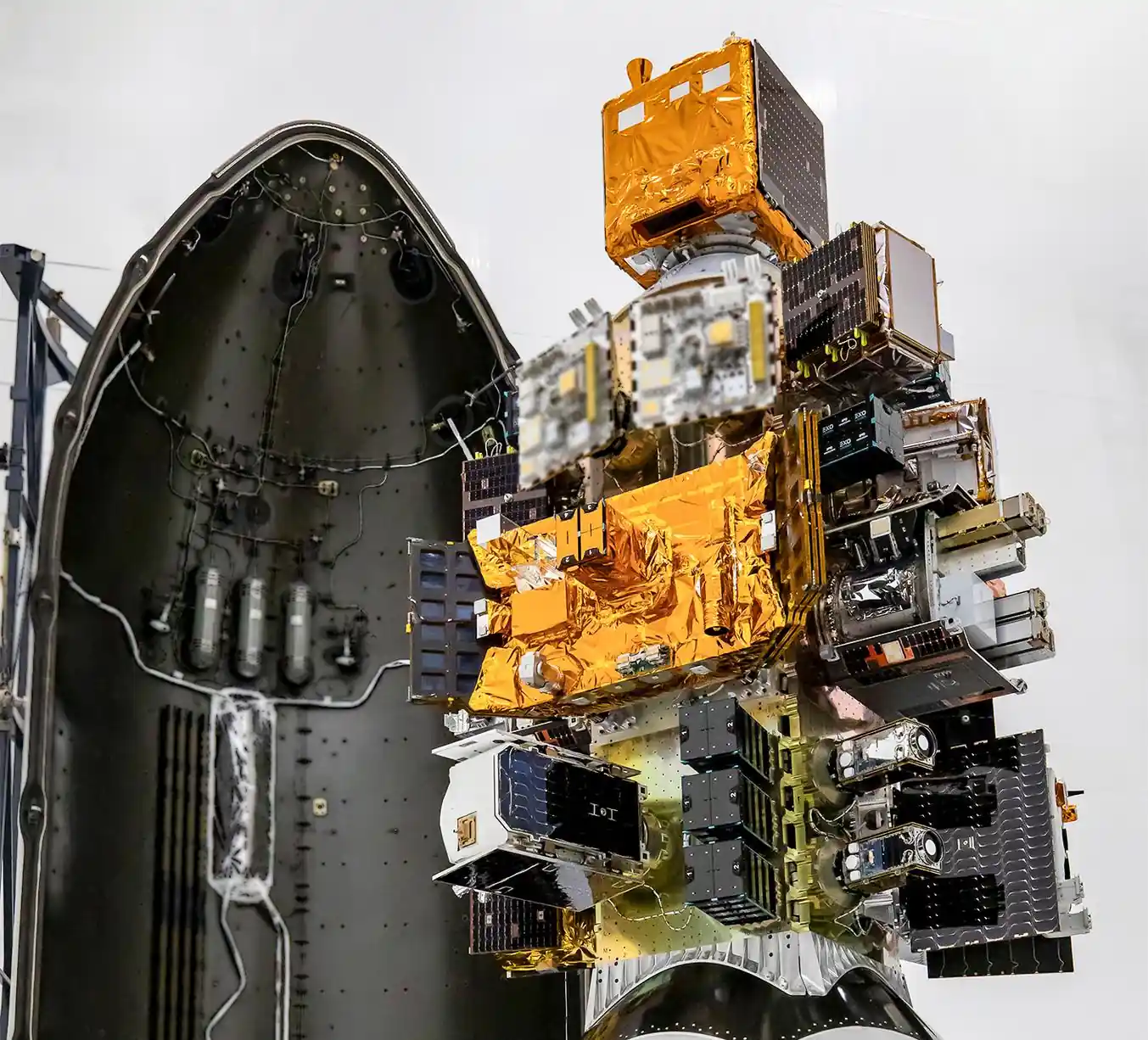
Greece entered the field through the National Microsatellite Programme, a €200.4 million action funded by the Recovery Fund, run by the Ministry of Digital Governance with the support of the European Space Agency (ESA) and the Hellenic Space Center (ELKED). The programme provides for 13 operational satellites: seven optical ones with a best resolution of 0.9 metres, four thermal ones for wildfires and two X-band SAR satellites with resolution from 0.25 to 15 metres. It also includes 11 experimental CubeSats, such as MICE-1 for maritime surveillance and ERMIS, PeakSat and OptiSat. The two ICEYE SAR satellites were launched in November 2025 and, as we have explained, provide imagery day and night regardless of weather. According to ELKED, the four thermal satellites and the first optical one, Hyperion GR-1, are also in orbit, while the rest await launch.
ESA has published an ICEYE radar image of Athens, captured in November 2024 by the company’s commercial constellation, as an example of the imagery Greece will receive from the new satellites, and a page on the launch of the Greek satellites is on its website.
The programme also has an industrial side. A condition was at least 30% Greek participation, and in the end 57 partners took part, 50 of them based in Greece. At Hellenic Aerospace Industry (EAB), assembly and test infrastructure is being set up for microsatellites of up to 500 kg, and on Mount Hymettus a space-debris tracking radar that will see objects down to 5 centimetres at a distance of 1,000 kilometres. The follow-up is the €350 million “Microsatellite Programme 2”, with constellations and a networked architecture. The Hellenic National Defence General Staff (HNDGS), however, appears in ELKED’s official data as a user of the data through the acquisition planning team, not as the owner of the satellites.
The physics of orbit: why numbers matter
The difference between the two models is explained by simple celestial mechanics. By our own calculation from Kepler’s third law, a satellite at 700 kilometres, like Göktürk-1, completes one full orbit in about 99 minutes, or 14.6 orbits a day. That does not mean it passes over the Aegean 14 times. Because the Earth rotates beneath the orbit, a sun-synchronous satellite sees a given area only a few times a day, and TUSAŞ gives Göktürk-1 a revisit time of about two and a half days. A large satellite gives excellent imagery, but rarely. Many small ones give more frequent looks, which for tracking ships or amphibious movements is often more valuable than a few extra centimetres of resolution.
This is also where the value of SAR lies. Optical satellites, Greek and Turkish, are “blind” at night and under cloud, while radar always sees. According to the official data, Greece today has SAR in orbit with resolution of up to 0.25 metres and access to ICEYE’s commercial constellation, while Turkey’s Göktürk-3 is still under development. In optical imaging the two countries are roughly equivalent, with sub-metre resolution for Turkey and 0.9 metres for the Greek very-high-resolution satellites. Turkey, however, is clearly ahead in independence, because it has a national assembly and test centre, domestic subsystems and a geostationary communications satellite, which Greece does not.
The two countries compare as follows, based on official data on their military and dual-use satellites:
- Optical observation: Turkey has Göktürk-1 and İMECE, under 1 m. Greece has seven optical satellites, up to 0.9 m (one in orbit).
- SAR radar: Turkey’s Göktürk-3 is under development. Greece has two ICEYE satellites in orbit, up to 0.25 m.
- Owner: in Turkey, the SSB / Ministry of National Defence. In Greece, the Ministry of Digital Governance, with the HNDGS as a user.
- Geostationary satellite: Turkey has Türksat 6A (2024). Greece has no national one.
- Domestic manufacture: Turkey has TUSAŞ USET and TÜBİTAK UZAY. Greece requires at least 30% Greek participation and is building an AIT facility at EAB.
The next step: national control
Greece’s gap is the purely military satellite. In July 2026 the Government Council for Foreign Affairs and Defence (KYSEA) approved SAR microsatellites “under absolute national control”, and on Diavgeia a study named “ERMIS-4” by the University of Patras has already appeared, for the design of a remote-sensing and telecommunications microsatellite for the Armed Forces, now at the stage of assignment. We assess that these are the first official steps from the logic of the “user” to that of the “owner”. The transition matters because a satellite under national control does not depend on the priorities of a civilian body or a commercial provider in a crisis, and because space assets are now also targets, as the EU acknowledges.
Turkey, for its part, will have to solve the opposite problem, namely the small number of satellites and the sparse revisit, which İMECE-2 and İMECE-3 only partly cover. For Greece, the real opportunity is to combine what it already has, namely a swarm in orbit, an industrial base that has started and a HNDGS that has learned to use satellite data, with a military core under national control. Experience shows that even public satellite imagery is enough for serious open-source analysis. A national system with radar and frequent revisit would give the Armed Forces a permanent picture of the Aegean and the Eastern Mediterranean.
Frequently asked questions about the military satellites of Greece and Turkey
Does Turkey have military satellites?
Yes. Göktürk-1, launched in 2016, is an observation satellite for military intelligence with sub-metre resolution. There are also Göktürk-2 from 2012 and İMECE from 2023, while the Göktürk-3 SAR, the Göktürk-Y and İMECE-2 and İMECE-3 are under development.
What is İMECE?
It is Turkey’s first sub-metre observation satellite developed by TÜBİTAK UZAY. It was launched in April 2023 and has many domestic subsystems.
Is Türksat 6A a military satellite?
Officially it is Turkey’s first domestic communications satellite, in geostationary orbit at 42 degrees east. TUSAŞ cites secure data communication, but a military payload has not been confirmed.
How many satellites does Greece have?
The National Microsatellite Programme provides for 13 operational satellites (7 optical, 4 thermal and 2 SAR) and 11 experimental CubeSats. According to ELKED, the 2 SAR, the 4 thermal and the first optical satellite are in orbit.
Who pays for the Greek programme?
The Recovery Fund, with €200.4 million for the first programme and €350 million for “Microsatellite Programme 2”. The lead body is the Ministry of Digital Governance, with ESA and ELKED.
Do the Armed Forces use the Greek satellites?
Yes, as users of the data through ELKED, which lists the HNDGS among the bodies it serves. A purely military Greek satellite does not yet exist, while in 2026 KYSEA approved SAR microsatellites under national control.
Which country has better satellite capabilities?
In optical imaging the two countries are roughly equivalent. In SAR radar Greece is ahead, with satellites in orbit. In independence Turkey is ahead, with domestic manufacture and a geostationary communications satellite.