
Cyprus
Annan Plan explained: the 2004 Cyprus referendum
What the Annan Plan would have changed in Cyprus, why 75.8 per cent of Greek Cypriots voted no on 24 April 2004, and what the UN Secretary-General wrote afterwards.

The Annan Plan was the United Nations blueprint for reunifying Cyprus as a federation of two constituent states. It was put to separate, simultaneous referendums on 24 April 2004 and failed: according to the UN Secretary-General’s report, 75.8 per cent of Greek Cypriot voters rejected it, while 64.9 per cent of Turkish Cypriot voters approved it. The plan needed a yes on both sides, so it never took effect.
Key points
- Kofi Annan finalised the text on 31 March 2004 after talks in Bürgenstock, Switzerland, under a 13 February 2004 agreement that let him complete the plan if the sides could not.
- The vote on 24 April 2004 split the island: 75.8 per cent no among Greek Cypriots, 64.9 per cent yes among Turkish Cypriots. Cyprus joined the European Union on 1 May 2004 still divided.
- Greek Cypriot objections centred on security and implementation: Turkish troops would stay, the Treaty of Guarantee was left unchanged, and the numbers of settlers from Turkey were disputed.
- The UN report itself describes those fears as resting, “to a significant extent, on historic distrust of Turkish intentions”. The root of that distrust is the 1974 invasion and the continuing occupation.
What was the Annan Plan?
The plan was the UN’s proposed “Comprehensive Settlement of the Cyprus Problem”. Its core text, the Foundation Agreement, would have created a United Cyprus Republic made up of a Greek Cypriot State and a Turkish Cypriot State under a federal government, with a constitution, federal laws and a list of treaties binding the new state. Negotiations ran in three phases between February and March 2004, and under the 13 February agreement Annan could finalise the text himself if deadlock persisted. He did so close to midnight on 31 March 2004, according to his report to the Security Council (S/2004/437), which is hosted by the Republic of Cyprus Permanent Mission to the UN.
The package was more than a constitution. It included a treaty on the “new state of affairs” with additional protocols to the 1960 Treaties of Establishment, Guarantee and Alliance, an act adapting Cyprus’s EU accession terms, and decisions for the Security Council that would have endorsed the agreement, banned arms supplies to Cyprus and authorised a UN operation. The Greek Cypriot leader, Tassos Papadopoulos, asked that the Council not endorse the agreement before the referendum, and that request was passed on, the report says.
What would the plan have changed?
The table summarises provisions as the Secretary-General described them. It is the UN’s account, not a legal reading of the full text.
| Issue | What the plan provided (UN report) |
|---|---|
| Federal government | A Presidential Council of nine members, three of them non-voting. The presidency and vice-presidency would alternate every 20 months between members from the two states, starting with a Greek Cypriot, who would hold the presidency for 40 of the first 60 months. |
| Territory | The map was not changed. A majority of displaced Greek Cypriots, some 120,000 according to the report, could return to homes under Greek Cypriot administration, and about a quarter of Turkish Cypriots would have to relocate. |
| Property | Most Greek Cypriots would have some property reinstated in the Turkish Cypriot State, usually the former home and one third of the land, with more for small landowners and all of it for returnees to four Karpas villages and Kormakiti. |
| Residence | Safeguards would let the Turkish Cypriot State keep at least two thirds of its Cypriot permanent residents as speakers of its official language. The report says this would still allow some 100,000 Greek Cypriots to settle there over time. |
| Troops | The Treaty of Alliance levels of 950 Greek and 650 Turkish troops could remain even after Turkey joined the EU, with reviews aimed at eventual total withdrawal by mutual consent. Interim numbers were significantly reduced from the 6,000 in the earlier draft. |
| Settlers | A list of no more than 45,000 persons on each side would receive citizenship. The report says Papadopoulos put the number of “settlers” at 119,000, a figure the Turkish Cypriot side disputed; on the Greek Cypriot figures about half would have had to leave. |
| Guarantees | The Treaty of Guarantee provisions were not changed, apart from a new reference to international law and the UN Charter. |
| European Court of Human Rights | The federal government would ask the Court to strike out pending property cases and direct claimants to a domestic mechanism. The report says individual recourse to the Court was not limited. |
Why did Greek Cypriots vote no?
Papadopoulos called for a “resounding No” in a broadcast speech on 7 April 2004, the UN report records. It quotes him as questioning “doing away with our internationally recognized state exactly at the very moment it strengthens its political weight, with its accession to the European Union”. The largest party, AKEL, called for a “soft No” unless additional guarantees on security and implementation were provided. Papadopoulos’s two immediate predecessors, Clerides and Vassiliou, and the leader of DISY, Anastasiades, backed the plan, as did the Greek government, the report notes.
The recurring objections were about whether Turkey could be trusted to honour the deal. Turkish forces would remain on the island under the Treaty of Alliance, the Treaty of Guarantee was left as it stood (see our explainer, Treaty of Guarantee explained: what Article IV allows and what it bans), and the number of Turkish settlers was contested. The Secretary-General acknowledged that “fears regarding security and implementation appear to be prominent among Greek Cypriots” and said the Security Council would be “well advised to stand ready to address such fears”.
Those fears have a documented origin. The Republic of Cyprus government’s own account, published by its UN mission, says Turkey invaded on 20 July 1974 using the coup of 15 July as a pretext, in violation of the UN Charter, and that military occupation, forcible division, the displacement of Greek Cypriots and the fate of the missing are the lasting results (Cyprus Problem in Brief). On the missing, the official CMP figures are set out in Missing persons in Cyprus explained: CMP figures and ECHR rulings.
The UN report took a different view of Nicosia’s conduct. It says the Greek Cypriot side presented a 44-page list of demands on 25 March without ranking them, and said the Greek Cypriot leader’s speech of 7 April did not accurately reflect the contents of the plan. These are the Secretary-General’s judgments, and they are quoted here as his, not as established fact.
The result and the UN reaction
On 24 April 2004 the plan was rejected by 75.8 per cent of Greek Cypriot voters and approved by 64.9 per cent of Turkish Cypriot voters, the report states. Annan’s Special Adviser, Alvaro de Soto, said in Nicosia that “a unique and historic chance to resolve the Cyprus problem has been missed”, according to UN News. In his report the Secretary-General wrote: “The decision of the Greek Cypriots must be respected. However, it is a major setback.”
Footage of the vote from the news agency archive is below.

What happened next?
Cyprus joined the European Union on 1 May 2004, a week after the vote, with the island still divided; de Soto noted that it would remain “divided and militarized”. The Secretary-General called the plan “legally null and void” after the referendum and wrote that he saw no basis for resuming his good offices while the stalemate lasted.
The report also dealt with the north. It recalled that Security Council resolution 541 (1983) considered the declaration of the secessionist entity legally invalid and called on states not to recognise any Cypriot state other than the Republic of Cyprus, and that resolution 550 (1984) asked states not to facilitate or assist the secessionist entity. Annan asked states to ease the isolation of Turkish Cypriots “not for the purposes of affording recognition or assisting secession”.
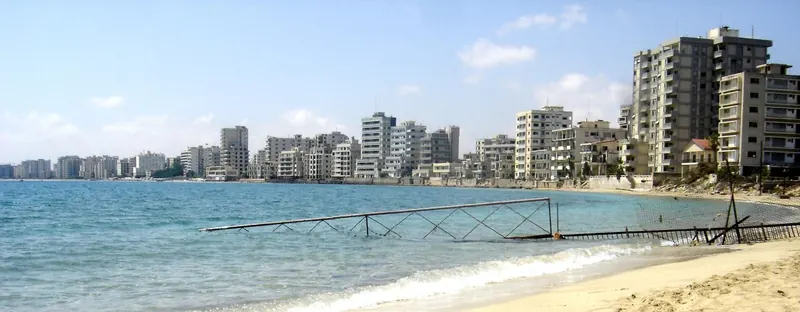
The plan’s fate is the background to later disputes over what a solution must contain, including the fenced-off town of Famagusta (Varosha explained: the fenced-off Famagusta quarter and the UN). The occupation that preceded the plan did not end with the vote, and the report itself describes the status quo as one the Security Council had deemed unacceptable.
Sources: Report of the UN Secretary-General on his mission of good offices in Cyprus, S/2004/437, 28 May 2004; UN News, 24 April 2004; Republic of Cyprus Permanent Mission to the UN, Cyprus Problem in Brief.