
Analysis
Missing persons in Cyprus explained: CMP figures and ECHR rulings
Of 2,002 people on the UN-backed CMP list from Cyprus, 1,082 had been identified by 31 August 2026. This explainer sets out the numbers, the mandate and the rulings of the European Court of Human Rights against Turkey.

More than five decades after the Turkish invasion of Cyprus in July 1974, the fate of hundreds of people who vanished then and in the earlier inter-communal fighting is still unresolved. According to the UN-backed Committee on Missing Persons in Cyprus (CMP), 1,082 of the 2,002 people on its official list had been identified by 31 August 2026, leaving 745 Greek Cypriots and 175 Turkish Cypriots unaccounted for.
Key points
- The CMP is a bicommunal body set up in 1981 with UN participation; its list covers 1,510 Greek Cypriots and 492 Turkish Cypriots who went missing in 1963-64 and in 1974.
- By 31 August 2026 the CMP had exhumed 1,719 sets of remains and identified 765 Greek Cypriots and 317 Turkish Cypriots from its list.
- The CMP is barred by its terms of reference from attributing responsibility for deaths, so accountability has been pursued before the European Court of Human Rights.
- In Cyprus v. Turkey (2001) the Grand Chamber found that the facts fell within Turkey’s jurisdiction and that Turkey had failed to investigate the fate of Greek Cypriot missing persons.
What is the Committee on Missing Persons in Cyprus?
The CMP describes itself as a bicommunal body established in 1981 by the leaders of the Greek Cypriot and Turkish Cypriot communities with the participation of the United Nations. It has three members: a Greek Cypriot member (currently Leonidas Pantelides), a Turkish Cypriot member (currently Hakkı Müftüzade) and a third member appointed by the UN Secretary-General from an official selected by the International Committee of the Red Cross (currently Pierre Gentile).
Its mandate, set out in the 1981 terms of reference, covers persons reported missing in the inter-communal fighting and in “the events of July 1974 and afterwards”. The same text says the Committee “will not attempt to attribute responsibility for the deaths of any missing persons or make findings as to the cause of such deaths”. That limit is central to why the question has also gone to the courts.
How many people are still missing?
The CMP’s official list holds 2,002 names: 1,510 Greek Cypriots and 492 Turkish Cypriots. Its published figures as of 31 August 2026 are:
| Community | On the CMP list | Identified | Still missing |
|---|---|---|---|
| Greek Cypriots | 1,510 | 765 | 745 |
| Turkish Cypriots | 492 | 317 | 175 |
| Total | 2,002 | 1,082 | 920 |
The CMP also reports that 1,719 sets of remains had been exhumed and that 217 further identifications concern people who are not on its official list. Some exhumed remains may prove unrelated to the list, the Committee notes.
How does the CMP find and identify remains?
The work is done in stages. Investigators collect testimony and records, bicommunal teams excavate sites, and an anthropological laboratory analyses the remains. Genetic analysis is carried out by a DNA laboratory in the United States contracted by the CMP, and a match counts as an identification only when it reaches or exceeds a statistical threshold of 99.95 percent. Relatives of the missing give reference samples through Greek Cypriot and Turkish Cypriot laboratories, and the remains are then returned to the families.
The terms of reference also require all parties to cooperate so that the Committee has “access throughout the island”.
What did the Security Council say in 1974?
The UN Security Council reacted to the invasion with Resolution 353 of 20 July 1974. It demanded “an immediate end to foreign military intervention in the Republic of Cyprus” and requested the withdrawal without delay of foreign military personnel present other than under international agreements. Turkish troops were never withdrawn, and the occupation of the north continues.
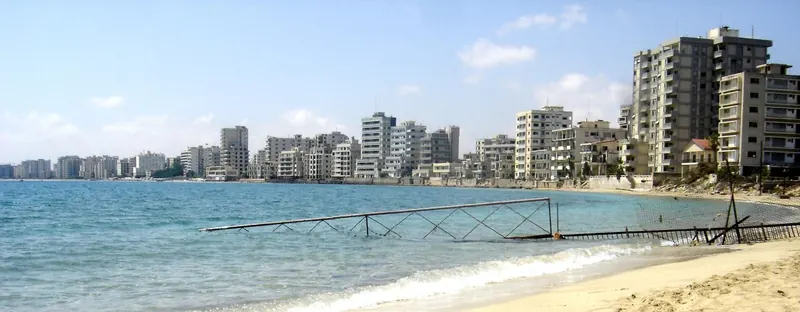
In 1983 the Council went further after the Turkish Cypriot declaration of a separate state. Resolution 541 deplored the declaration, considered it “legally invalid” and called on all States not to recognise any Cypriot state other than the Republic of Cyprus. Resolution 550 of 1984 repeated the condemnation of secessionist actions, and also called attempts to settle any part of Varosha by people other than its inhabitants “inadmissible”. Only Turkey recognises the entity in the north.
What has the European Court of Human Rights ruled?
The Court’s own factsheet on armed conflicts summarises the key judgments. In Cyprus v. Turkey, decided by the Grand Chamber on 10 May 2001, the Court held that the facts complained of fell within the jurisdiction of Turkey, rejecting Ankara’s argument that the entity in the north was an independent state. It found fourteen violations of the Convention.
- Missing persons: continuing violations of Article 2 (right to life) and Article 5 (liberty) because the Turkish authorities had not conducted an effective investigation into the whereabouts and fate of Greek Cypriot missing persons, and of Article 3 because the silence of the Turkish authorities toward the relatives amounted to inhuman treatment.
- Displaced persons: continuing violations of Article 8 and of Article 1 of Protocol No. 1 because no displaced Greek Cypriot was allowed to return to a home in the north and owners were denied access to, and use of, their property.
- Karpas: violations of Articles 3, 8, 9, 10 and 13 and of Protocol No. 1 concerning the Greek Cypriots living in the Karpas peninsula, including restrictions on worship, censorship of school books and discrimination amounting to degrading treatment.
On 12 May 2014 the Grand Chamber ruled on just satisfaction. It ordered Turkey to pay Cyprus EUR 30 million for the non-pecuniary damage suffered by the relatives of the missing persons and EUR 60 million for the enclaved Greek Cypriot residents of Karpas, sums to be distributed to the individual victims under the supervision of the Council of Europe’s Committee of Ministers.
In Varnava and Others v. Turkey (18 September 2009) the Grand Chamber examined the cases of nine Cypriot nationals who disappeared during the Turkish military operations of July and August 1974. It found continuing violations of Article 2 and Article 3, and a continuing violation of Article 5 for two of the men, because Turkey had not effectively investigated their fate.
Why does it matter now?
The missing persons file is one of the few humanitarian questions on which the two communities cooperate, and it is also the clearest example of unresolved obligations from 1974. The CMP’s own figures show that, 52 years on, 745 Greek Cypriot families are still waiting for an answer. For the wider background, see our explainers Cyprus problem explained: 1960, 1974 and the UN buffer zone and Varosha explained: the fenced-off Famagusta quarter and the UN.
Sources: CMP, Facts and Figures (31 August 2026); European Court of Human Rights, Factsheet on armed conflicts; UN Security Council Resolution 353 (1974). Resolutions 541 (1983) and 550 (1984) and the CMP terms of reference were also consulted on the UN and CMP websites.