Military & Defense
Caine names “super intelligence” one of his three strategic priorities, behind only the budget
The chairman of the Joint Chiefs told a logistics conference in Texas that super intelligence will be a “game changer” for combat, logistics and command and control, and that the military must match the private sector’s pace.

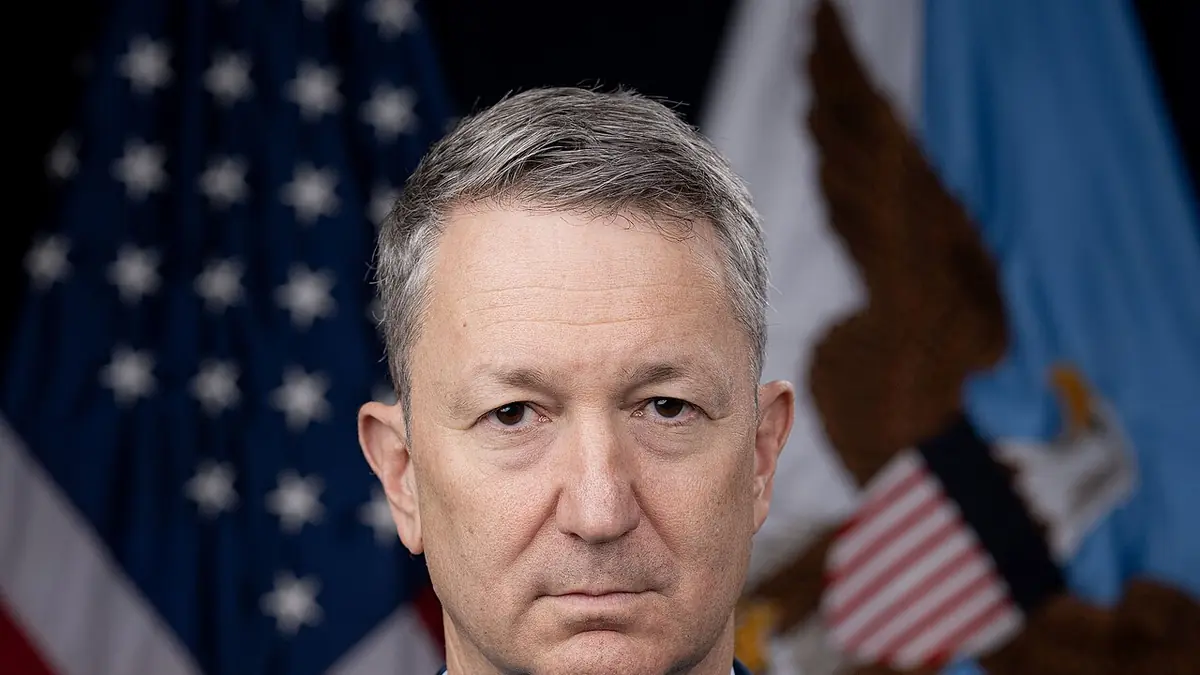
U.S. Air Force Gen. Dan Caine, chairman of the Joint Chiefs of Staff, has named “super intelligence” as one of his three strategic priorities, placing it ahead of ongoing operations and behind only the budget. He said so on 26 October at the fall meeting of the National Defense Transportation Association and U.S. Transportation Command in Grapevine, Texas, according to the Department of War.
Caine spoke in a fireside chat moderated by U.S. Air Force Gen. Randall Reed, the commander of U.S. Transportation Command, which runs the military’s global movement of troops and supplies. “I have sort of three strategic priorities right now,” Caine said, listing the budget first, then super intelligence, then current operations.
What Caine said about super intelligence
“Super intelligence”, often shortened to SI, is a term DefenseScoop describes as the administration’s rebranding of artificial intelligence. Caine used the two terms side by side during the session.
According to the Department of War account, Caine said that using SI well will be essential for the joint force to win in tactical engagements, in logistics and sustainment, and in command and control. He described it as touching every joint function, in both kinetic and non-kinetic domains. “It’s going to be a game changer as we move forward,” he said.
He expects exchanges between an adversary and the United States to include “both kinetic things, missiles and rockets and bombs” and “non-kinetic things in the cyber domain”, and said the volume of that activity will be significant. The private sector is likely to lead in SI, Caine said, and the military “need[s] to match them at the same speed and tempo.”
Caine also stressed training. “We have to train leaders, and train systems, and train models,” he said, so that future commanders can make decisions using SI and AI. Both he and Reed, DefenseScoop reported, said humans must stay appropriately in and on the decision loop, and Caine said the force has to weigh the opportunities against the risks while it “leans in”.
Logistics and industry
The setting shaped much of the message. Caine told the audience of military logisticians and commercial transport firms to be “very creative and entrepreneurial” in thinking about how forces will be moved and sustained when they are in contact with an adversary, across both the physical and the information domains. He said expanding national industrial capacity and strategic mobility will be essential to combat power in the coming years, and that the force needs a mix of high-end systems and autonomous, attritable assets fielded at scale ahead of its adversaries.
Looking further ahead, he predicted that “in our lifetimes, we will do space-based logistics”, including space resupply, adding that this “is not that far away”, DefenseScoop reported.
Context
Geopolitiki has earlier reported on the Pentagon’s effort to build a command for autonomous systems in Pentagon’s Project Agincourt writes to industry as it builds a four-star Autonomous Warfare Command, and on the department’s request that Congress write its new name into law in Pentagon asks Congress to enshrine the name “Department of War” in law: “It belongs in statute, not just in an executive order”.
Neither the Department of War account nor DefenseScoop reported a new programme, funding figure or deadline tied to the remarks. The session set out priorities rather than announcing decisions.
Source: U.S. Department of War.