Cyprus
Crans-Montana 2017 explained: why the Cyprus talks collapsed
The 2017 Crans-Montana conference took Cyprus closer than ever to a settlement, in the UN’s account, then closed without a deal. What was on the table, and why it failed.

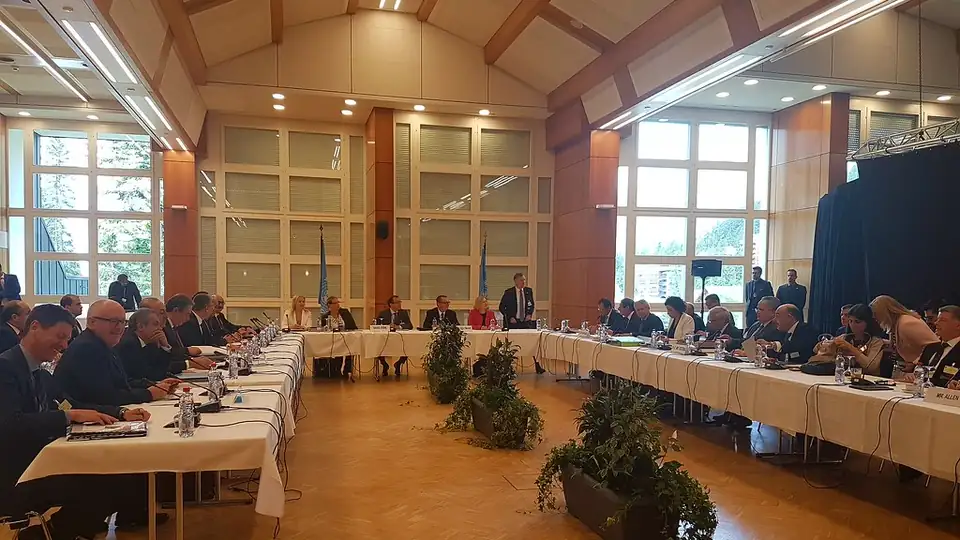
The Crans-Montana conference was the UN-hosted summit that ran from 28 June to 7 July 2017 in Switzerland and, in the UN’s own account, took Cyprus closer than ever before to a settlement, before Secretary-General António Guterres closed it without an agreement. The talks collapsed over a package that tied security and guarantees to every other chapter, and the Cyprus problem has been measured against Crans-Montana ever since.
Key points
- The Conference on Cyprus was convened by Guterres on 12 January 2017 in Geneva and reconvened on 28 June in Crans-Montana with Greece, Turkey and the United Kingdom, the three guarantor powers, at the table.
- On 30 June Guterres presented a framework for resolving six major outstanding issues at once; his report calls the Treaty of Guarantee’s unilateral right of intervention “unsustainable”.
- The conference closed in the early hours of 7 July after a dinner at which, in the Secretary-General’s words, the parties “were unable to finalize a package”.
- Behind the guarantees question lies the 20 July 1974 Turkish invasion, which left more than a third of the Republic of Cyprus under occupation.
What was the Conference on Cyprus?
It was the international phase of negotiations that Greek Cypriot leader Nicos Anastasiades and Turkish Cypriot leader Mustafa Akıncı had been conducting since 15 May 2015, according to the Secretary-General’s report to the Security Council (S/2017/814). The report says the Conference opened on 12 January 2017 in Geneva with the foreign ministers of Greece, Turkey and the United Kingdom, and the President of the European Commission as an observer.
The same report calls the days before it a watershed: for the first time in the history of the negotiations, the two leaders handed each other their preferred maps of the internal administrative boundary, which were then placed in a vault at the United Nations Office at Geneva.
The conference reconvened on 28 June in Crans-Montana with Anastasiades, Akıncı, the three guarantor foreign ministers and the Vice-President of the European Commission as observer. It ran on a “two-table” format: the leaders dealt with territory, property and governance, while a second table, with the guarantors, dealt with security and guarantees.
What did Guterres put on the table?
The report says progress stalled because each table was reluctant to compromise until the other had moved. To break the deadlock, Guterres presented on 30 June a framework for simultaneously resolving six major outstanding issues, covering territory, political equality, property, equivalent treatment, and security and guarantees.
- Governance: by the end, the sides had reached “practically full agreement” on the federal executive and effective participation.
- Property: an understanding on two regimes, one leaning towards current users in areas not subject to territorial adjustment, and one leaning towards dispossessed owners in areas that would be.
- Equivalent treatment: differences were limited mainly to free movement of Turkish nationals, which European Commission officials present described as limited and possible to accommodate.
- Territory: the report says an agreement on territorial adjustment appeared within reach, but could be concluded only as part of a final package.
- Security and guarantees: Guterres proposed that the parties take into account that the current system, in particular Article IV of the Treaty of Guarantee with its unilateral right of intervention, was “unsustainable”, and suggested that Cyprus needed a new system of security and a credible framework for monitoring implementation. Troop questions were to be settled at the level of the three guarantor prime ministers.
Why did the talks collapse?
Guterres returned on 6 July. According to his report, the six elements were largely available during a dinner for the heads of delegation, but the parties were unable to finalize a package. The report says they were moving closer on substance yet “remained far apart” on trust and determination, and no agreement could be reached to convene the three prime ministers. The parties concurred that the conference should be closed.
Speaking to the press in Crans-Montana, Guterres said he was “deeply sorry” that the conference concluded without agreement (UN News). In his report he went further: it was his “firm belief that a historic opportunity was missed in Crans-Montana”.
His Special Adviser, Espen Barth Eide, told reporters after briefing the Security Council that it was not the time for a blame game and described a “collective failure” to stitch together a deal, pointing to the “chicken and egg” problem of what comes first (UN Good Offices Mission). He added that the Council saw the process as having taken Cyprus closer than ever to a settlement.
The United Nations channel carries the Secretary-General’s announcement from the night the conference closed.
Why do guarantees and troops sit at the centre?
Because of what they meant in practice. The 1960 arrangements made Greece, Turkey and the United Kingdom guarantor powers with, in the words of the Republic of Cyprus’s official publication, “vaguely defined rights to interfere in Cypriot affairs”, and allowed contingents of 950 Greek and 650 Turkish troops (The Cyprus Question, Republic of Cyprus).
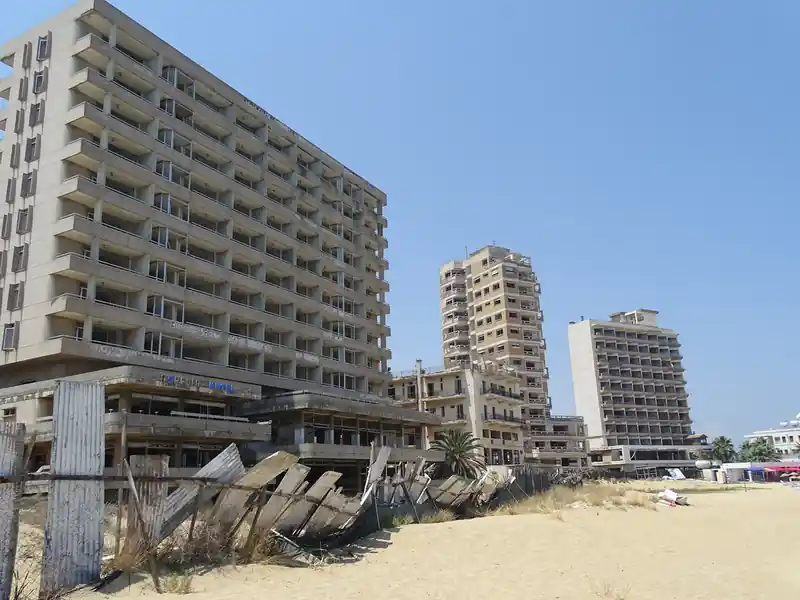
The same publication records what followed. After the coup staged by the Athens junta against President Makarios on 15 July 1974, Turkey invaded Cyprus on 20 July 1974, in violation of the UN Charter, in the Republic’s account using the coup as a pretext. It took Famagusta in the second phase and has occupied over 36 percent of the island ever since. Approximately 200,000 Greek Cypriots fled their homes.
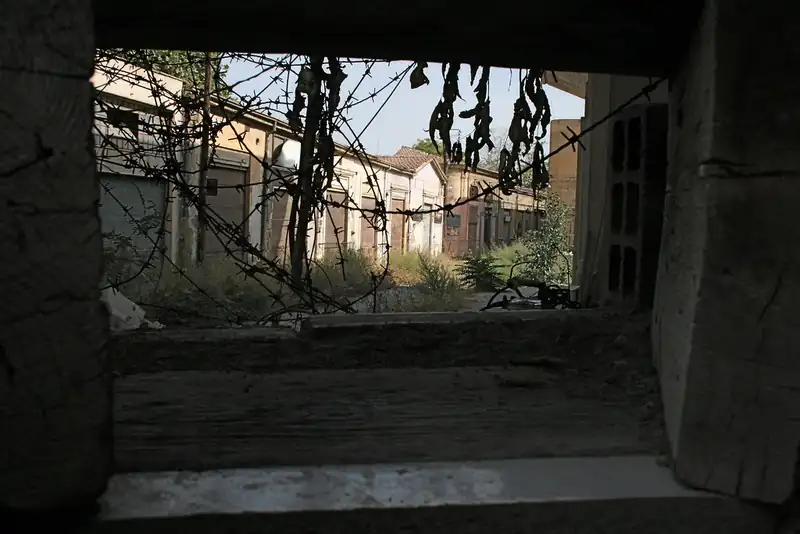
What Turkey’s occupation means for the talks
For Greece and Cyprus, the guarantee question cannot be separated from that record. The Security Council’s resolutions 541 (1983) and 550 (1984), as summarised by the Republic of Cyprus, declared the 1983 secessionist declaration legally invalid, called on states not to recognise it, and described attempts to settle any part of Varosha by anyone other than its legal residents as unacceptable, calling for the area to come under UN administration.
The Republic of Cyprus’s publication also states that the Committee on Missing Persons currently lists 758 Greek Cypriots as still missing, and that in its 10 May 2001 judgment in Cyprus v. Turkey the European Court of Human Rights found continuing violations of Articles 2, 3 and 5 of the Convention over the failure to investigate the fate of missing Greek Cypriots. The publication says the number of enclaved Greek Cypriots and Maronites has fallen to 331 and that Turkey has moved more than 160,000 settlers into the occupied area, which it describes as a breach of Article 49(6) of the Fourth Geneva Convention.
More background is in our explainers on the Cyprus problem explained: 1960, 1974 and the UN buffer zone, on Missing persons in Cyprus explained: CMP figures and ECHR rulings and on Loizidou v. Turkey explained: the ECHR rulings on northern Cyprus.
What has happened since?
The Security Council’s resolution 2369 (2017) noted the outcome of the conference and encouraged the sides to sustain their commitment to a settlement under UN auspices, the report notes. Guterres urged the parties to preserve the “convergences and understandings” built over two years and said that a package approach, with agreement first at the strategic level, would be needed in any future process.
The reference point is live again. At the Greece-Cyprus summit in Nicosia on 18 November 2026, talks were said to be due to resume “from where they stopped at Crans-Montana”, as we reported in Greece–Cyprus summit in Nicosia: talks to resume “from where they stopped at Crans-Montana”, GSI cable “of European interest”, Cyprus to join Schengen on July 1. The UN Good Offices Mission reports that Personal Envoy María Ángela Holguín held a trilateral meeting on 9 November 2026; the new crossing points agreed that month are covered in Cyprus problem: Christodoulides and Erhürman agree on two new crossing points – what the UN statement says.
Sources
Report of the Secretary-General on his mission of good offices in Cyprus, S/2017/814 (28 September 2017); UN News, 7 July 2017; UN Good Offices Mission, 20 July 2017; Republic of Cyprus, The Cyprus Question: a brief introduction.