Middle East & North Africa
CENTCOM marks 100 days of Iran blockade, claiming $25 billion in crude kept off the market as the IRGC threatens US bases
U.S. Central Command says its naval blockade of Iranian ports has lasted 100 days and kept at least $25 billion in crude off the market. Iran’s Revolutionary Guards warned the conflict will extend to U.S. bases.

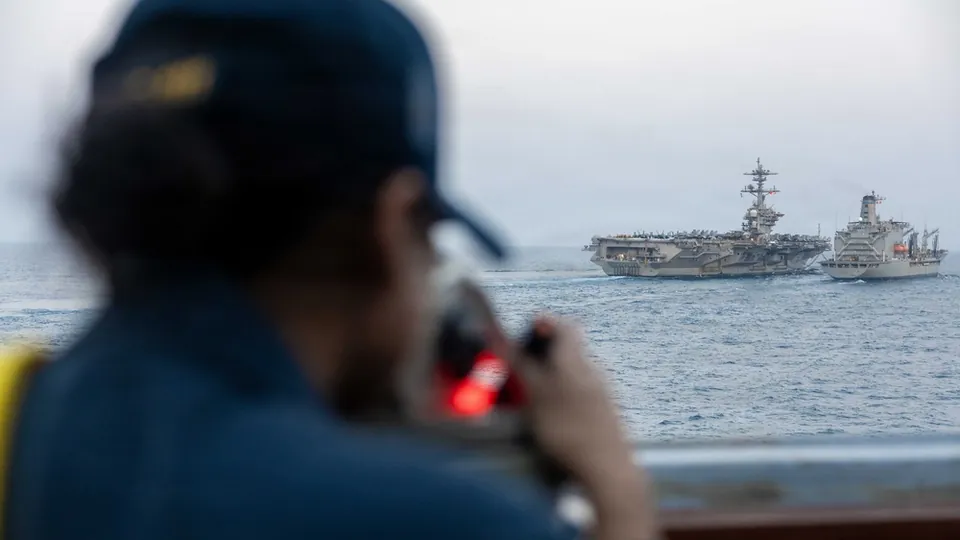
U.S. Central Command (CENTCOM) said on Thursday 22 October that its forces have now enforced a naval blockade of Iranian ports for 100 days, and claimed the measure has kept at least $25 billion worth of Iranian crude oil off the market. The statement came on the same day that Iran’s Revolutionary Guards (IRGC) warned that the conflict will reach U.S. bases in the region if American forces keep escorting ships through the Strait of Hormuz.
What CENTCOM said
In a post on X, CENTCOM wrote: “Today marks 100 days since CENTCOM forces resumed America’s steel wall naval blockade against Iran.” It added that “there have been no exports or imports to Iran by sea except for the humanitarian aid U.S. forces have allowed.”
According to the command, the blockade has also limited the IRGC’s ability to finance proxy militias and other networks. The $25 billion figure is CENTCOM’s own estimate, and no independent body has confirmed it. Reports of the statement say the blockade was first established in April and that U.S. forces resumed enforcement on 14 July.
Iran’s warning
The IRGC said on 22 October that its forces had struck four ships in the Persian Gulf, which it said were carrying out ship-to-ship oil transfers, according to Iran’s Tasnim news agency. In a statement quoted by AFP, the Guards said: “The US military must know that if this trend continues, the conflict will extend to its bases in the region.” These are claims by one party to the conflict. Geopolitiki reported the IRGC’s earlier claims of ships hit and mines struck in Iran’s Revolutionary Guards claim four ships hit in the Gulf and three more struck mines, warning US bases.
CENTCOM has previously disputed Iranian accounts of attacks at sea. U.S. President Donald Trump said on 23 October that Iran is inventing attacks on tankers, a claim covered in Trump: “Iran is making up fake attacks” on tankers to push up oil prices before the midterms.
Talks and possible new strikes
The Fox News live blog reported that CENTCOM spokesman U.S. Navy Capt. Tim Hawkins, asked about a New York Times report that the United States and Israel are drafting plans to resume strikes on Iran after 3 November, said that U.S. forces remain vigilant and ready to protect American personnel and interests across the region. Geopolitiki has also reported on Iran’s stated conditions for reopening Hormuz in Iran’s Rezaei: Hormuz will not reopen without Tehran’s seven conditions, with threats against US cables, data centres and AI facilities.
The Strait of Hormuz typically carries roughly one fifth of global petroleum consumption and seaborne crude trade, according to the Tampa Free Press account of the CENTCOM statement, which is why every announcement from either side on shipping there moves oil markets. Neither the CENTCOM figures nor the IRGC’s claims about ships struck have been verified by an independent body such as the UN or the IAEA.