Military & Defense
Estonian officer: Russian missile ship Naro-Fominsk was hit by multiple drones in the Baltic, with casualties
Col. Aron Kalmus of the Estonian Defence Forces said the Russian Baltic Fleet ship was struck by a significant number of Ukrainian drones in the Gulf of Finland, with dead and wounded, and could not continue under its own power.

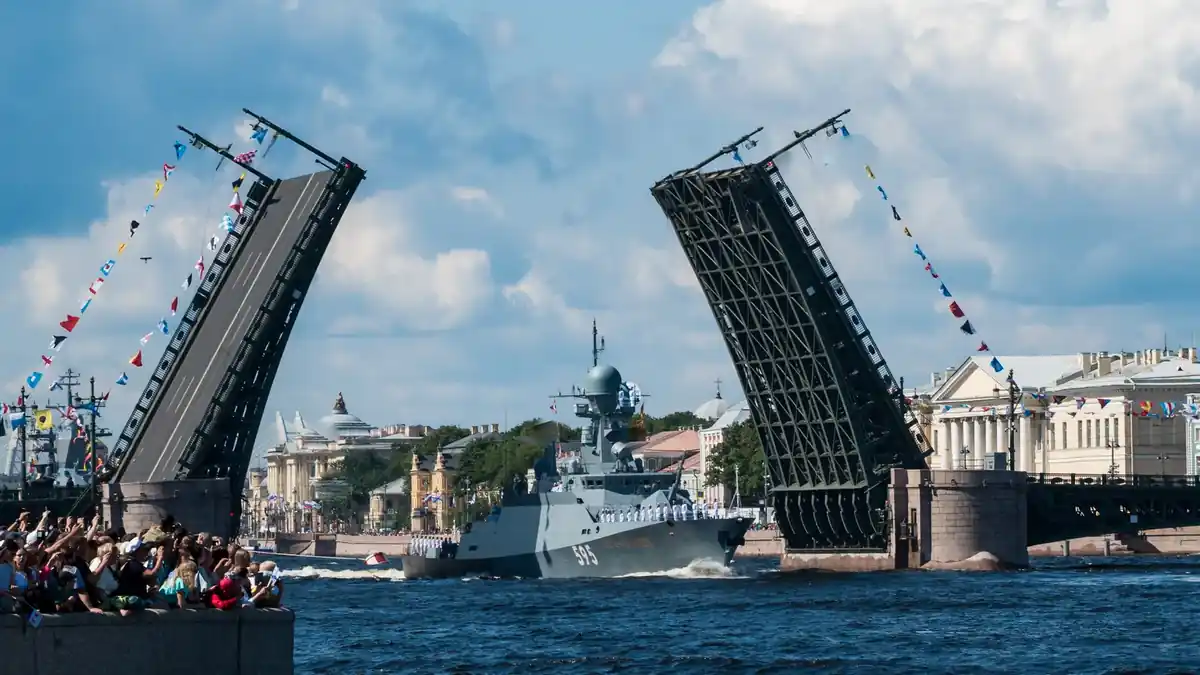
The Russian small missile ship Naro-Fominsk of the Baltic Fleet was hit by multiple Ukrainian drones in the Gulf of Finland, with dead and wounded among the crew, and could not continue under its own power. The details came from Colonel Aron Kalmus, deputy commander of the Division of the Estonian Defence Forces, at the Estonian Ministry of Defence’s weekly briefing on Friday, November 13, reported by Estonian public broadcaster ERR. It is the ship the SBU said it had struck on the night before Wednesday, November 11.
“It was hit by a significant number of drones. We also know quite precisely how many hit it,” Kalmus said, declining to give the number so as not to reveal what Tallinn sees and by what means. “It was hit by more than one, which the armed forces would call luck, more than two, which they would call coincidence, and more than three, which they would call a pattern,” he added. According to the Estonian officer, the Naro-Fominsk initially set out under its own propulsion for St Petersburg, but at some point stopped. An additional escort vessel arrived, and only with its help did the missile ship manage to continue toward the Russian port.
Kalmus explained that this type of ship is not designed for air defence, which is why it could not shoot down the approaching drones. It is designed for long-range strikes with Kalibr cruise missiles and for escort missions, and also carries Onyx anti-ship missiles. The written weekly review of the Estonian Defence Forces Intelligence Centre on the war in Ukraine adds one more detail: in the same operation at least one Russian Mi-8/17 helicopter taking part in the air defence was destroyed by friendly fire from Russian air defences.
The colonel also described what happened in Estonian skies that night. NATO fighters stationed in the Baltic states took off after midnight, among them Turkish fighters from Ämari air base, before the drones approached the border. The drones briefly entered south-eastern Estonia and Estonian airspace over the Gulf of Finland. “We are talking about minutes, not hours,” Kalmus said. They were not shot down because they were flying close to the border and debris or munitions could fall on Russian territory, something Estonia and NATO treat with extreme caution to avoid escalation.
The Estonian review places the incident within Ukrainian attacks on Russia’s oil industry. Within two weeks at least nine refineries were damaged, at Novokuybyshevsk, Ufa, Kstovo, Yaroslavl, Ryazan, Afipsky, Saratov, Kirishi and Omsk, along with the Ust-Luga terminal. On the basis of public data, the Intelligence Centre estimates that Russia’s liquid-fuel production fell by about 30%, from 700,000 to 500,000 tonnes a day. Kalmus described Ust-Luga as effectively Russia’s second-largest port and estimated that the strike will affect all Russian exports through the Baltic. Finland, for its part, contacted Ukraine after the strike to stress how sensitive the narrow part of the gulf is.