Middle East & North Africa
Turkey publishes Law 7597 ratifying the Mecca Pact with Pakistan and Saudi Arabia in its Official Gazette
Law 7597 approving the trilateral Mecca joint defence agreement appeared in Turkey's Resmî Gazete on November 14 and entered into force on publication, one day after Ankara signed a separate mutual defence deal with Qatar.

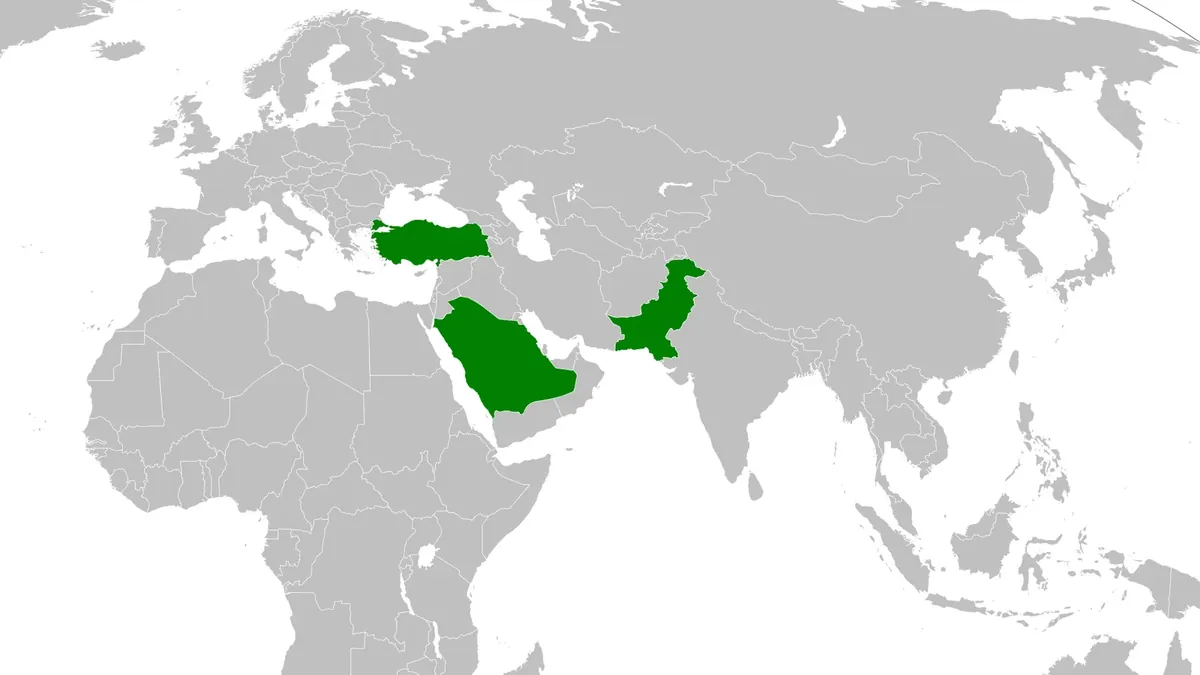
Turkey has completed the legislative process for the Mecca Pact on Joint Defence (Mekke Anlaşması) with Pakistan and Saudi Arabia. Law 7597, approving the ratification of the trilateral agreement, was published in Turkey’s Official Gazette (Resmî Gazete) on Saturday, November 14, in issue 33430, and entered into force on publication. Recep Tayyip Erdoğan signed the law on Friday, November 13, and its execution is assigned to the President.
The text of the law has only three articles. The first approves the ratification of the agreement signed in Mecca on August 7 by Turkey, Pakistan and Saudi Arabia, the second sets entry into force on publication, and the third assigns execution to the President. The Grand National Assembly of Turkey had ratified the agreement on Thursday, November 5, with 279 votes in favour and 119 against. The agreement itself enters into force on the day the last instrument of ratification is deposited with the secretariat of the joint committee of the three countries.
Ankara was the last of the three countries that had not completed its domestic procedures. Pakistani Foreign Ministry spokesman Sajjad Haider Khan announced on Friday, October 23, that Pakistan had completed ratification and that Saudi Arabia had done the same. He added that ratification and the operational functioning of the agreement are being discussed by the three countries, among other places in the Strategic Policy and Defence Committee, which met on October 5. Khan described the agreement as defensive in nature and consistent with the UN Charter.
At the core of the agreement is the principle of collective defence: an armed attack on any one of the three countries is considered an attack on all. It also provides for joint defence production, technology transfer and joint research and development programmes, personnel exchanges, joint training and exercises for interoperability. The three countries will exchange intelligence through secure channels and provide each other logistic support, including weapons, ammunition, fuel and spare parts, in peacetime, war and emergencies. Counter-terrorism cooperation is also strengthened at the operational level.
The Strategic Policy and Defence Committee consists of the foreign ministers, the defence ministers and the chiefs of the general staffs, and meets twice a year. Its secretariat is based in Saudi Arabia and headed by a secretary-general with a three-year term, rotating among the three countries, with a Pakistani as the first. The agreement is of indefinite duration. No country may withdraw before ten years have passed since entry into force, and after that only with at least three months’ written notice. Other countries may join with the approval of the parties.
The completion of the Turkish procedure came a day after Turkey and Qatar signed a mutual defence agreement in Istanbul. Under that bilateral deal the two countries commit to a joint stance against any external armed attack on either of them, to consultations on threats to their security, and to more joint exercises.