Middle East & North Africa
Hormuz: Iran says a third tanker hit a mine and caught fire within hours – claim unconfirmed
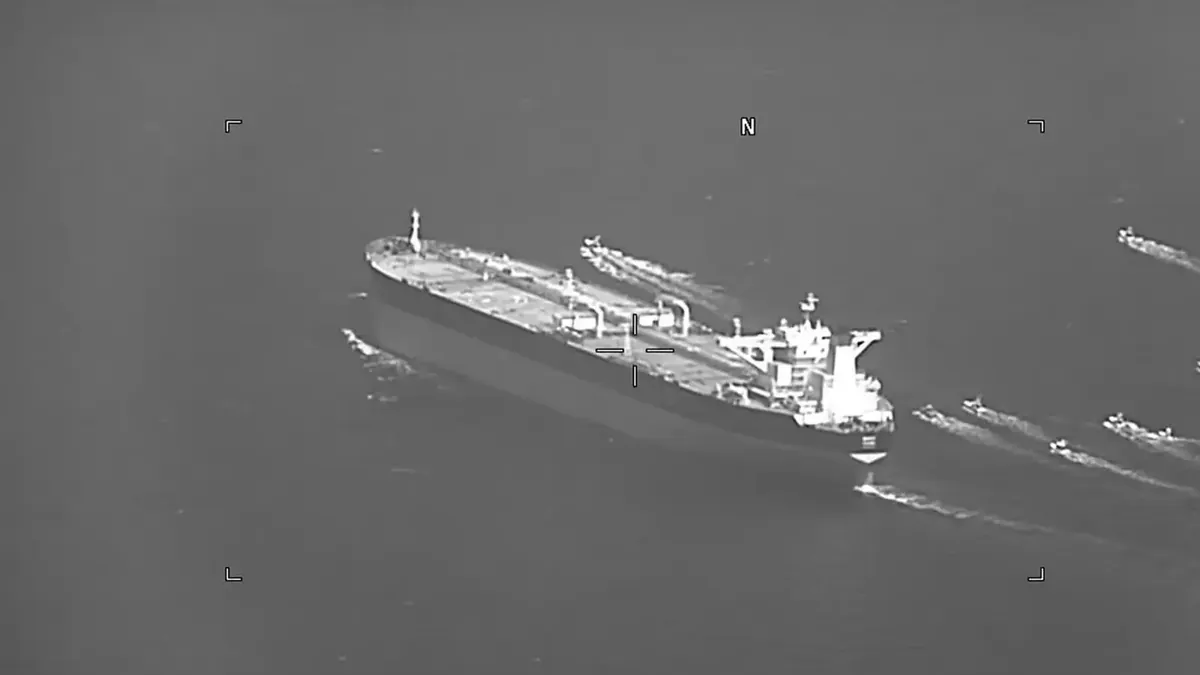
Iran’s regular navy says another oil tanker hit a mine and caught fire in the eastern Strait of Hormuz on November 14. Tehran speaks of three tankers in a few hours; no independent source has confirmed it.

Another oil tanker hit a mine and caught fire in the eastern part of the Strait of Hormuz, Iran’s regular navy (Artesh) announced on Saturday, November 14. According to the statement of the army’s Public Relations Office, the ship was moving in the zone east of the Strait that Tehran has declared “unsafe and prohibited,” with its tracking and identification systems switched off. After the explosion, the Iranian army says, fire broke out and the tanker was forced to stop. The claim has not been confirmed by an independent source, and Tehran gave no name, flag or exact position for the ship, nor any information about the crew.
With this statement the Iranian armed forces speak of three tankers that hit mines and caught fire within a few hours. A few hours earlier the Revolutionary Guards Navy (IRGC Navy) had announced that two oil tankers, one of them a supertanker, struck mines in the southern part of the Strait, exploded and caught fire. According to the Guards, the ships had turned off their radars and positioning systems and tried to slip through an “unapproved route.” The Guards repeated that any ship crossing the Strait without coordination with their own traffic-control centre “will face similar consequences.”
The Artesh warned that any tanker that tries to pass along a prohibited route in the eastern Hormuz “will hit a mine and catch fire,” and called it “regrettable” that shipowners keep risking their investments. On Friday, November 13, the Guards had also announced that a liquefied-gas tanker hit a mine and exploded, releasing video with a large column of smoke. On Thursday Iranian media reported explosions on four oil tankers in areas Tehran considers off limits.
The US says it has cleared the main routes
The US military says it has cleared the main transit routes through the Strait of mines, while the United States maintains a naval blockade of Iranian ports. The UK Maritime Trade Operations centre (UKMTO) recorded in its weekly overview at least seven attacks on tankers in and around Hormuz in the week to November 11, with traffic about 65% below pre-war levels. According to figures from the Washington Institute for Near East Policy, at least 10 ships were hit in the first ten days of November, after 37 attacks in October.
Tension also rose elsewhere in the Gulf on Friday. The Guards claimed they destroyed a US early-warning radar in Bahrain (our report), which US Central Command (CENTCOM) denied, while the US military shot down two Iranian attack drones. Earlier this week, the destroyer USS Michael Murphy returned to Pearl Harbor after 11 months, with 12 contested Hormuz transits behind it (our report).