Greek-Turkish Relations
Illegal Turkish-Libyan memorandum published in Libya’s Official Gazette, with a map that does not match its own coordinates
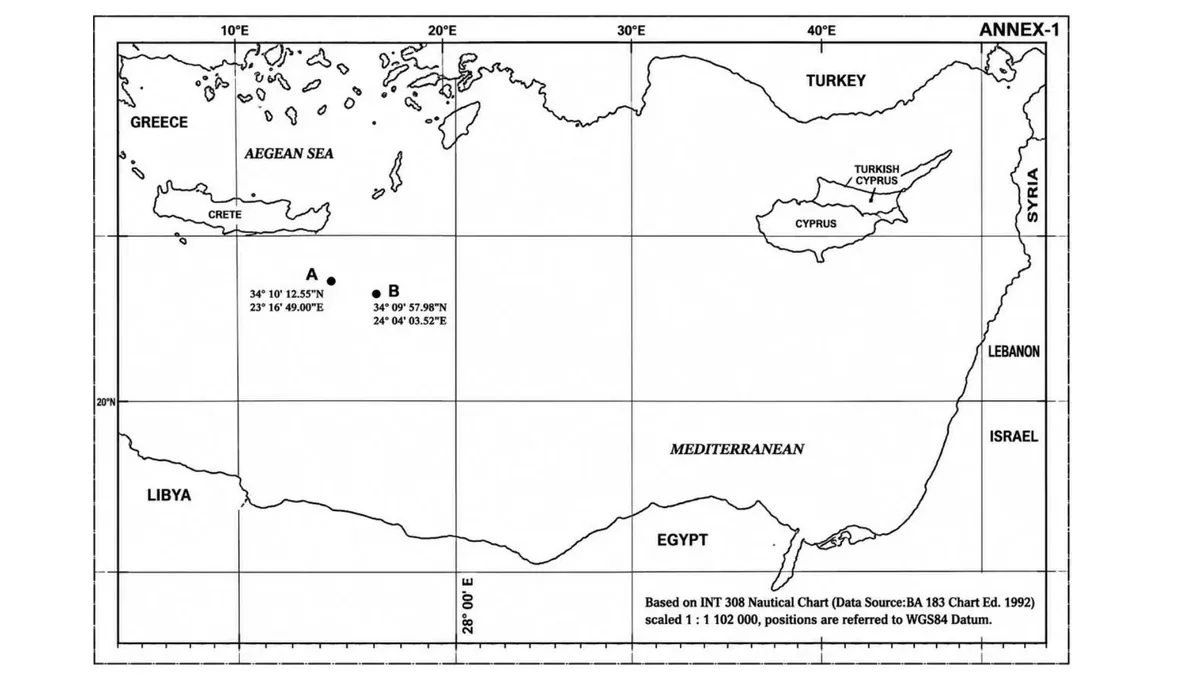
The text of the 2019 memorandum and the law ratifying it were published in the House of Representatives' gazette. The map in Annex 1 shows longitudes that match neither Article 1 nor the text filed with the UN.

The 2019 Turkish-Libyan memorandum on the delimitation of maritime zones in the Mediterranean was published on Wednesday, November 25 in the Official Gazette of Libya’s House of Representatives, together with the law that ratifies it. Issue 17 of the fourth year, posted on the Libyan parliament’s official website, contains the full Arabic text of the agreement, the map of Annex 1 and the tables with the coordinates of the base points on the coasts of the two countries, for the delimitation of the continental shelf and the Exclusive Economic Zone (EEZ).
It is Law 8/2026, which has just two articles. The first ratifies and adopts the memorandum signed by the then Government of National Accord in Tripoli and Turkey on November 27, 2019. The second states that the law is in force from the day of its issue and repeals any contrary provision. It was issued in Benghazi on October 22, 2026, two days after the plenary vote of October 20, which according to reports was unanimous. The preamble refers to the report of the Supreme National Committee for Libya’s land and maritime borders, set up by the speaker under Decision 40/2026. The committee recommended ratification because, in its view, the agreement has “supreme economic and strategic importance” for the country.
Two points southeast of Crete
According to Article 1 of the memorandum, the Turkish-Libyan line starts from point A (34°16′13.720″ N, 26°19′11.640″ E) and ends at point B (34°09′07.9″ N, 26°39′06.3″ E), that is, in a sea area southeast of Crete. The reference nautical chart is INT 308, at a scale of 1:1,102,000 and in the WGS-84 system. Annex 2 lists 36 base points for drawing the line: 18 on the southwestern coasts of Turkey and 18 on the coasts of eastern Libya (Cyrenaica). None is on Greek territory, that is, Crete, Kasos, Karpathos and Rhodes are not taken into account as base points.
On the map of Annex 1, as reproduced in the issue, next to points A and B the coordinates shown have eastern longitudes of 23°16′ and 24°04′. These values match neither Article 1 nor the map of the text filed with the UN since 2019, where 26°19′ is written. No explanation has been given so far for the discrepancy.
Third countries and joint exploitation of resources
Beyond the line, the text includes two clauses that directly concern Athens. The first provides that, if natural resources extend across both EEZs, Libya and Turkey may conclude agreements for their joint exploitation. The second obliges whichever side begins delimitation negotiations with a third country, or talks that affect the agreed coordinates, to inform the other and consult it. The article on revising the memorandum explicitly exempts the delimitation line and the two annexes from any amendment.
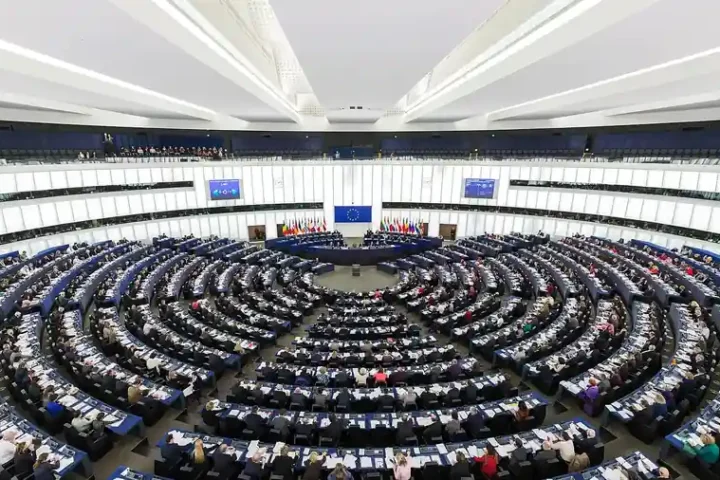
Athens considers the memorandum illegal, null and void, because it ignores the rights of the Greek islands to maritime zones and runs contrary to the UN Convention on the Law of the Sea (UNCLOS). The European Union took the same position in a statement by the High Representative immediately after the ratification vote (October 21), while on November 24 the Commission repeated in the European Parliament that the memorandum produces no legal effects for third states. The plenary vote on the related resolution is set for Thursday, November 26.
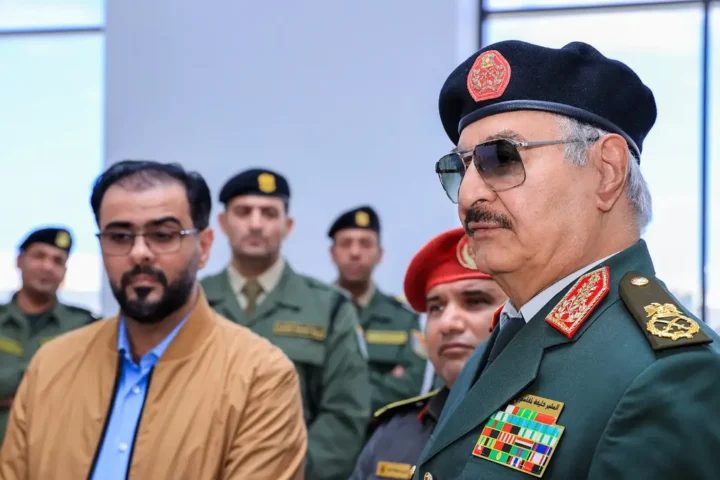
The publication coincides with Khalifa Haftar’s visit to Ankara, the Libyan field marshal’s first visit to Turkey. There is no official link between the two developments, but the eastern-based House, which for six years rejected the memorandum, is now the body that gives it force in the country’s domestic law. The field marshal’s son, Saddam Haftar, had welcomed the ratification in October.