Air Force
Lakenheath: satellite images show fencing of 22 shelters for US nuclear bombs in Britain – it will surpass Incirlik
The Federation of American Scientists says new satellite images show a larger security perimeter around 22 shelters at RAF Lakenheath for US B61-12 bombs, which would make it the largest US nuclear weapons store in Europe.

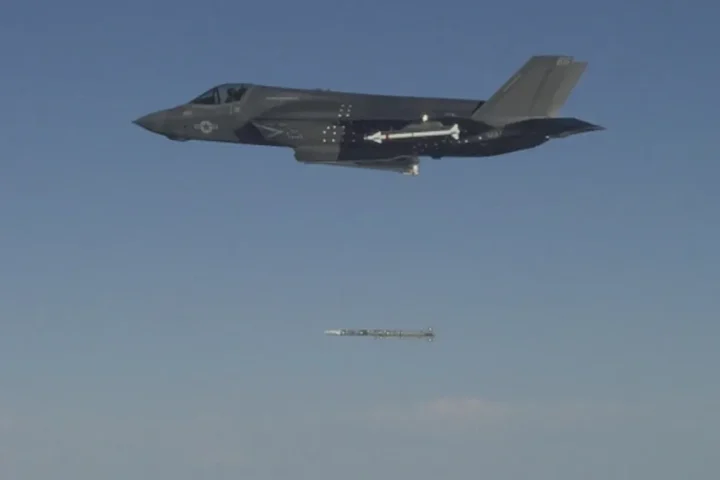
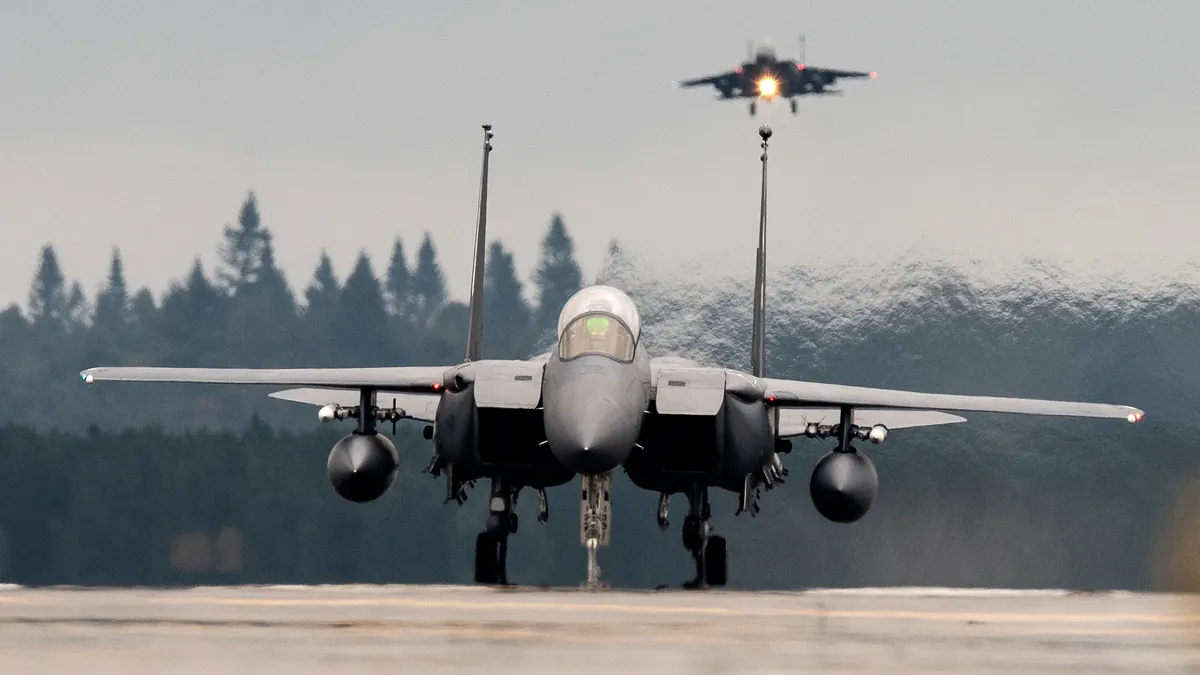
The Royal Air Force base at Lakenheath in eastern England could soon become the largest store of US nuclear weapons in Europe. That is the conclusion of the Federation of American Scientists (FAS), which on Thursday, November 5 published new satellite images of the works at the base. The images show construction of a larger security perimeter around 22 hardened aircraft shelters, each with an underground vault for US B61-12 gravity bombs. The bombs can be carried by the F-15Es and F-35As of the US Air Force’s 48th Fighter Wing, based at Lakenheath.
In their study, Celia McDowell and Hans Kristensen speak of the largest nuclear build-up on NATO’s northern flank since the end of the Cold War. Until recently the fencing covered just 10 shelters. It is now being extended to another 12, as the plans submitted in January 2026 by Britain’s Defence Infrastructure Organisation (DIO) to West Suffolk Council provide. The application includes patrol and convoy roads, vehicle barriers, guard posts, camera towers, lighting and backup generators.
The USAF documents and the question of the bombs
The project corresponds to the “Surety Barrier System”, which first appeared in the US Air Force’s fiscal 2025 military construction budget, submitted to Congress in February 2024. There the USAF writes that without the permanent perimeter Lakenheath “will not be able to receive” the “Surety” mission, which the FAS links to the re-establishment of US nuclear weapons at the base. Work was scheduled to begin in May 2026 and finish in October 2029, but the USAF now estimates it will finish in November 2028. It will be the first time since 2008 that the US Air Force takes on a nuclear mission in Britain.
The FAS thus revives the question whether the bombs are already at the base. It has been widely reported that two C-17 flights in July 2025 carried B61-12s to Lakenheath. The budget documents themselves, however, say the base lacks the physical security measures required to protect them from theft, sabotage or unauthorised use. The researchers note that the images still show extensive work by private contractors around the shelters.
One shelter more than Incirlik
When the project is finished, Lakenheath’s nuclear perimeter will have one shelter more than that of Incirlik Air Base in Turkey, which for two decades has been the largest store of US nuclear weapons in Europe. The centre of gravity is thus shifting from the south of the Alliance to the north. The shift will be reinforced when Britain acquires 12 American F-35As for RAF Marham, under NATO’s nuclear sharing mission, at some point in the 2030s. If Marham’s nuclear vaults are also reactivated, the number of active shelters on the northern flank could almost double compared with 2020.
The researchers place the changes in a wider reshaping of nuclear deterrence in Europe, which they attribute mainly to Russia’s invasion of Ukraine. They recall the new French doctrine of “forward deterrence”, presented by Emmanuel Macron in March 2026, which by October ten allies had joined, among them Greece. Its aim is for France’s nuclear force to offer selected allies increased support with nuclear-capable aircraft; see our report on RAF Typhoons joining a French nuclear air exercise. In October, in the US Strategic Command’s Global Thunder exercise, three British F-35Bs and three Norwegian F-35As escorted a US B-52 bomber, for the first time as part of the exercise, in the same period that NATO was discussing in Helsinki the modernisation of its nuclear capabilities.